Chuyên sâu trong lĩnh vực vật liệu rời công nghiệp, cung cấp giải pháp môi trường thông minh tích hợp cho phối trộn tự động, cấp liệu tập trung, khử lưu huỳnh và khử nitơ khô!
When it comes to the efficient and safe transportation of lithium-ion battery cathode materials, selecting the right method is crucial for industrial operations. Among the various options available, pneumatic conveying stands out as a highly effective solution, especially for handling fine powders and ensuring minimal contamination. This article provides an overview of common transportation methods for lithium-ion battery cathode materials, with a focus on the advantages and applications of pneumatic conveying systems.

Understanding Lithium-Ion Battery Cathode Materials
Lithium-ion battery cathode materials, such as lithium cobalt oxide (LiCoO₂), lithium nickel manganese cobalt oxide (NMC), and lithium iron phosphate (LFP), are critical components in modern energy storage systems. These materials are typically in powder form and require precise handling to maintain their chemical properties and prevent degradation. The transportation process must ensure that the materials remain intact, free from moisture, and protected from external contaminants. This is where specialized conveying systems come into play, with pneumatic conveying being a preferred choice for many manufacturers.
Common Transportation Methods for Lithium-Ion Battery Cathode Materials
Several methods are used to transport lithium-ion battery cathode materials, each with its own set of advantages and limitations. These include bulk bag handling, screw conveyors, and pneumatic conveying systems. Bulk bag handling is often used for large-scale bulk shipments, while screw conveyors are suitable for horizontal or slight incline transport. However, for applications requiring high precision, low contamination, and flexibility, pneumatic conveying offers superior performance. The key to effective material transport lies in understanding the material's properties and choosing the appropriate system to meet operational demands.

Pneumatic Conveying Systems: How They Work
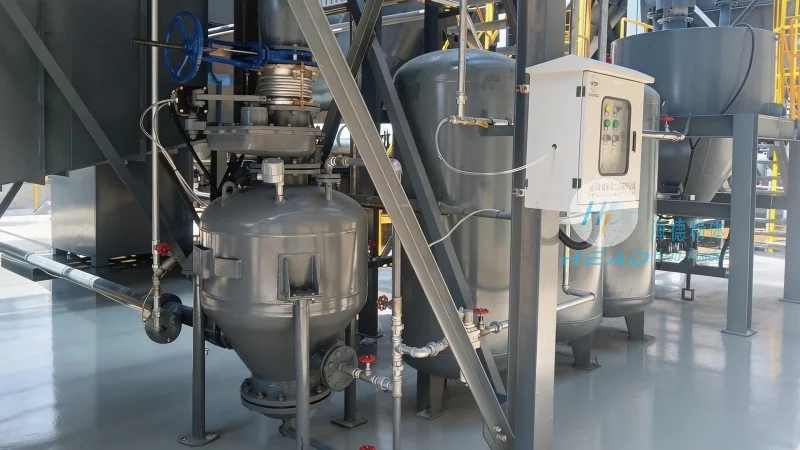
Pneumatic conveying systems utilize air or other gases to move powders and granules through a pipeline. There are two main types: pressure and vacuum systems. Pressure systems use compressed air to push material through the line, while vacuum systems use a vacuum to draw material from a hopper or storage container. For lithium-ion battery cathode materials, pressure systems are commonly preferred due to their ability to handle fine powders and maintain consistent flow rates. The system typically consists of a hopper, a feeder, a pipeline, and a receiver. The feeder controls the flow of material into the pipeline, and the compressed air propels the material forward, ensuring a smooth and continuous transport process.
Advantages of Pneumatic Conveying for Lithium-Ion Battery Cathode Materials
There are several advantages that make pneumatic conveying an ideal choice for transporting lithium-ion battery cathode materials. First, it provides a closed system, which minimizes exposure to air and moisture, thus preserving the material's quality and preventing oxidation. Second, it offers high efficiency and speed, allowing for rapid transport over long distances without the need for manual handling. Third, the system is flexible and can be easily integrated into existing production lines, adapting to changes in production volume or material type. Additionally, pneumatic conveying reduces labor costs and improves workplace safety by eliminating the need for manual handling of powders, which can be hazardous if not handled properly.
Applications in Lithium-Ion Battery Manufacturing
Pneumatic conveying systems are widely used in the lithium-ion battery manufacturing process, from raw material handling to final product assembly. In the production of cathode materials, these systems are used to transport powders from storage silos to mixing and coating lines. The precision and control offered by pneumatic conveying ensure that the material is mixed with other components in the correct proportions, which is critical for achieving the desired battery performance. Furthermore, the system's ability to handle fine powders without segregation makes it suitable for applications where uniformity is essential, such as in the production of high-capacity batteries.
Key Considerations for Implementing Pneumatic Conveying
When implementing a pneumatic conveying system for lithium-ion battery cathode materials, several factors must be considered to ensure optimal performance. First, the material's properties, such as particle size, density, and flowability, must be carefully evaluated to select the appropriate system design. For example, fine powders may require a pressure system with a higher air pressure to maintain flow, while larger particles may be better suited for a vacuum system. Second, the system's capacity and throughput must match the production requirements to avoid bottlenecks or overloading. Third, the system must be designed to minimize pressure drops and energy consumption, as these factors directly impact operational costs. Finally, regular maintenance and cleaning are essential to prevent clogging and ensure the longevity of the system.
Conclusion
Pneumatic conveying is a highly effective method for transporting lithium-ion battery cathode materials, offering numerous advantages over traditional methods. By providing a closed system, high efficiency, and flexibility, it helps manufacturers maintain product quality and improve operational efficiency. As the demand for lithium-ion batteries continues to grow, the importance of reliable and efficient material transport systems cannot be overstated. For companies in the battery manufacturing industry, investing in a well-designed pneumatic conveying system is a strategic decision that can enhance productivity and ensure long-term success.

 Shandong Headpowder Engineering Co., Ltd.
 156-6277-7102(Quản lý Trương)
  0531-83386006
  Thành phố Tế Nam, Tỉnh Sơn Đông, Trung Quốc
Điện thoại
WeChatTư vấn
Lên đầu