

Comparison of Common Cement Additive Conveying Methods
In the production and processing of cement, the efficient and reliable transportation of additives is a critical factor that directly impacts the quality and productivity of the final product. Cement additives, such as fly ash, slag, and limestone, are essential components that enhance the performance of cement. However, due to their varying physical properties—ranging from fine powders to granular materials—choosing the right conveying method is crucial. This article provides a detailed comparison of common cement additive conveying methods, focusing on their operational principles, advantages, and practical applications.
1. Screw Conveyor (Auger Conveyor)

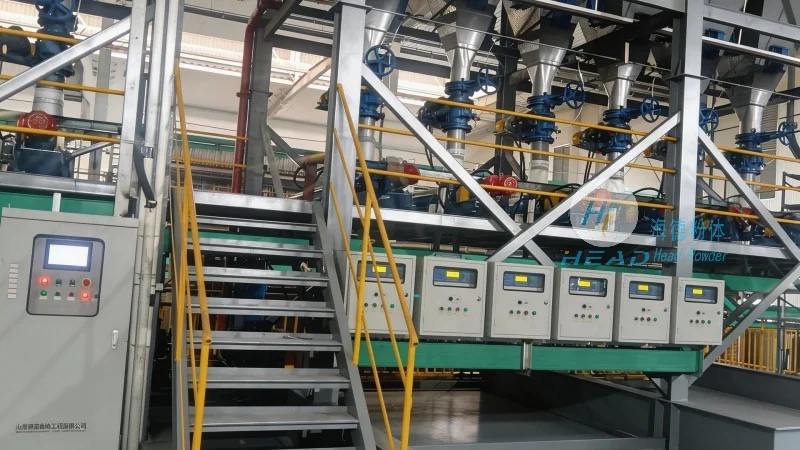
The screw conveyor, also known as an auger conveyor, is one of the most widely used equipment for transporting bulk materials, including cement additives. It operates by rotating a helical screw within a closed trough. As the screw rotates, it pushes the material forward along the trough. This method is particularly suitable for conveying fine powders and granular materials with low to moderate moisture content. The screw conveyor offers several advantages, including its simplicity, low maintenance requirements, and ability to handle materials with varying particle sizes. It is often used in vertical or inclined applications, making it ideal for elevating materials from lower to higher levels. However, it has limitations, such as the potential for material degradation due to friction and the need for regular cleaning to prevent clogging, especially with sticky or high-moisture additives.
2. Pneumatic Conveying System
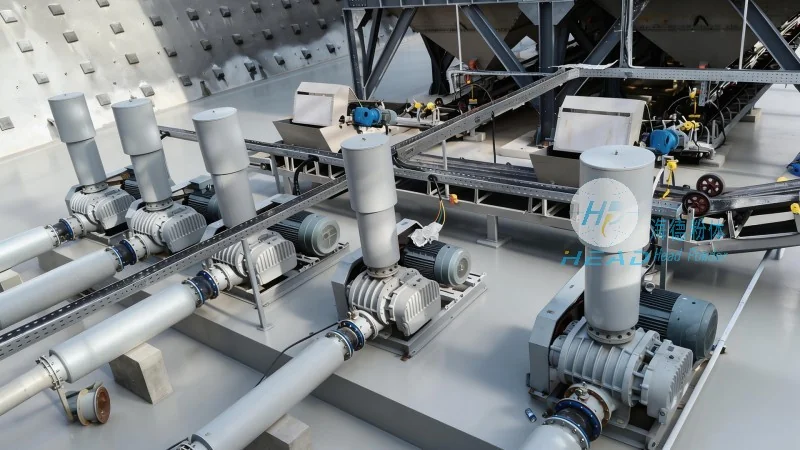
Pneumatic conveying, or air-pneumatic transport, uses compressed air to move cement additives through a pipeline. This method is highly effective for transporting fine powders over long distances and can handle both dry and slightly moist materials. There are two main types of pneumatic conveying systems: pressure and vacuum. Pressure systems use positive pressure to push the material through the pipeline, while vacuum systems use negative pressure to draw the material in. Pneumatic conveying offers advantages like continuous operation, minimal space requirements, and the ability to integrate with other processing equipment. It is particularly suitable for applications where dust control and material cleanliness are critical. However, it requires a stable air supply and may experience pressure drops over long distances, which can affect conveying efficiency. Additionally, the system can be more complex and costly to install and maintain compared to other methods.
3. Belt Conveyor
Belt conveyors are another common option for transporting cement additives, especially for larger volumes and bulkier materials. This system consists of a continuous belt that moves over rollers or pulleys, transporting the material from one point to another. Belt conveyors are highly efficient for horizontal and slightly inclined transport and can handle a wide range of material types, including granular and lumpy additives. They offer advantages such as high capacity, low energy consumption, and the ability to transport materials over long distances without the need for intermediate storage. However, belt conveyors require more space and are more complex to install and maintain. They are also susceptible to material spillage and wear, which can affect the conveyor's lifespan and the quality of the transported material.
4. Bucket Elevator
Bucket elevators are vertical or inclined conveyors that use a series of buckets attached to a chain or belt to transport materials. The buckets are filled with the additive as they move up the elevator and then discharge the material at the top. This method is ideal for vertical transport and is commonly used in cement plants to move additives from ground level to higher storage silos. Bucket elevators offer advantages such as high lifting capacity, low power consumption, and the ability to handle materials with high moisture content or sticky properties. They are also relatively simple to operate and maintain. However, bucket elevators have limitations, including the need for regular inspection of the bucket chain or belt to prevent breakage and the potential for material spillage at the discharge point.
Conclusion and Recommendations

When selecting a conveying method for cement additives, it is essential to consider several factors, including the type of material, the required capacity, the distance to be covered, and the available space. The screw conveyor is an excellent choice for short to medium distances and fine powders, while pneumatic conveying is ideal for long-distance transport and fine materials. Belt conveyors are suitable for large volumes and bulkier materials, and bucket elevators are best for vertical transport. Shandong HeadPowder Engineering Co., Ltd., a leading manufacturer of cement processing equipment, offers a range of conveying solutions tailored to meet the specific needs of cement plants. With years of experience and a commitment to quality, HeadPowder provides reliable and efficient equipment that enhances the overall performance of cement production processes.