Chuyên sâu trong lĩnh vực vật liệu rời công nghiệp, cung cấp giải pháp môi trường thông minh tích hợp cho phối trộn tự động, cấp liệu tập trung, khử lưu huỳnh và khử nitơ khô!
When it comes to managing the transport of light calcium powder in industrial applications, selecting the appropriate pneumatic conveying system is crucial for ensuring efficiency, reliability, and cost-effectiveness. Light calcium powder, with its specific physical properties such as particle size, density, and flow characteristics, requires tailored solutions to avoid issues like clogging, degradation, or inefficient material movement. This article provides a comprehensive guide to help you choose the right pneumatic conveying system for your light calcium powder handling process, focusing on key factors and considerations that impact system performance. The guidance is based on the expertise of Shandong HeadPowder Engineering Co., Ltd., a leading provider of industrial conveying solutions with years of experience in handling diverse powder materials.
Understanding the Core Requirements for Light Calcium Powder Handling
Before diving into system selection, it's essential to understand the unique characteristics of light calcium powder. This material, commonly used in industries like construction, plastics, and food, typically consists of fine particles with a relatively low bulk density and specific flowability. The particle size distribution, moisture content, and potential for agglomeration all play a role in determining the most suitable conveying method. For instance, if the powder is prone to sticking or forming clumps, a system that offers high-velocity air flow or pulse-jet technology may be necessary to maintain consistent material transport. Additionally, the required conveying distance and the number of transfer points will influence the choice between positive pressure, negative pressure, or hybrid systems.
Key Factors to Consider When Selecting a Pneumatic Conveying System
Several critical factors must be evaluated when choosing a pneumatic conveying system for light calcium powder. The first is the system's ability to handle the material's flow characteristics. Light calcium powder often has a low bulk density, which means that the conveying air velocity needs to be optimized to prevent settling or clogging in the pipeline. Systems designed for low-density materials, such as pressure or vacuum-assisted systems, are commonly used. Another important factor is the system's efficiency in terms of energy consumption and material throughput. High-efficiency systems can reduce operational costs and improve overall productivity. For example, a positive pressure system with a well-designed airlock and cyclone separator can minimize air loss and maximize material recovery, making it a cost-effective choice for long-distance or high-volume applications.
Types of Pneumatic Conveying Systems for Light Calcium Powder
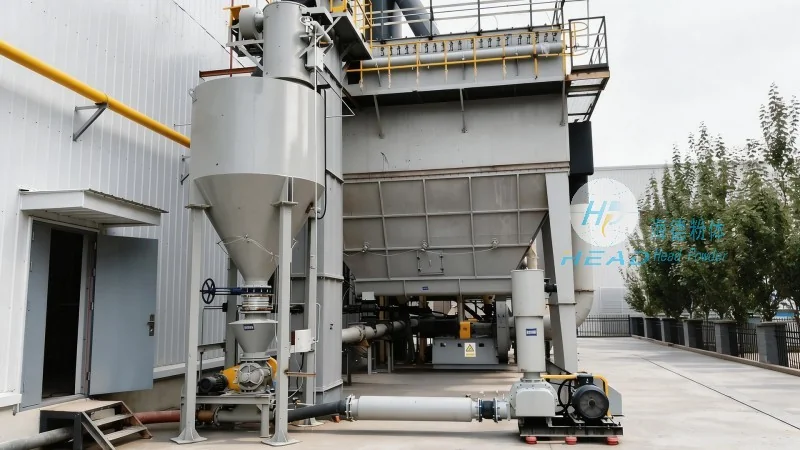
There are primarily two types of pneumatic conveying systems: positive pressure and negative pressure. Positive pressure systems use compressed air to push the material through the pipeline, while negative pressure systems use vacuum to draw the material. For light calcium powder, positive pressure systems are often preferred due to their ability to handle high volumes and long distances without the risk of material degradation. These systems typically include components like a rotary airlock feeder, a conveying pipeline, and a receiver or discharge unit. The rotary airlock ensures a controlled and continuous feed of the powder, preventing backflow and maintaining consistent flow rates. The conveying pipeline is designed with smooth internal surfaces to minimize friction and clogging, while the receiver or discharge unit allows for safe and efficient material unloading.

Special Considerations for Light Calcium Powder Handling

When selecting a pneumatic conveying system for light calcium powder, there are several special considerations to keep in mind. One is the potential for dust generation and air quality concerns. Light calcium powder is a fine particulate material that can create dust during handling, which may require dust collection systems or air filtration to comply with environmental regulations. Another consideration is the risk of material degradation due to high temperatures or friction. Some systems, such as those using low-velocity air flow or vacuum, may be better suited to prevent heat buildup and maintain the powder's quality. Additionally, the system's maintenance requirements and availability of spare parts are important factors, especially for industrial applications where downtime can be costly.
Conclusion: Choosing the Right System for Your Light Calcium Powder Process
Choosing the right pneumatic conveying system for your light calcium powder handling process requires a thorough understanding of the material's properties, the operational requirements, and the available system options. By considering factors such as flow characteristics, conveying distance, energy efficiency, and material handling capabilities, you can select a system that maximizes performance, minimizes costs, and ensures long-term reliability. It's important to work with experienced suppliers who can provide tailored solutions and technical support to meet your specific needs. With the right system in place, you can achieve efficient and safe transport of light calcium powder, supporting the smooth operation of your industrial processes.

 Shandong Headpowder Engineering Co., Ltd.
 156-6277-7102(Quản lý Trương)
  0531-83386006
  Thành phố Tế Nam, Tỉnh Sơn Đông, Trung Quốc
Điện thoại
WeChatTư vấn
Lên đầu