Chuyên sâu trong lĩnh vực vật liệu rời công nghiệp, cung cấp giải pháp môi trường thông minh tích hợp cho phối trộn tự động, cấp liệu tập trung, khử lưu huỳnh và khử nitơ khô!
The production of lithium-ion batteries relies heavily on the precise handling of positive and negative electrode materials, which are typically in powder or granular form. These materials, such as lithium cobalt oxide (LiCoO₂) for positive electrodes and graphite or silicon-carbon composites for negative electrodes, have specific physical and chemical properties that require specialized handling to maintain their quality and performance. The transportation of these materials from raw material storage to the mixing and coating stages is a critical step in the battery manufacturing process, as any inefficiency or contamination can lead to defects in the final product. Therefore, selecting an appropriate conveying method is essential to ensure the integrity of the electrode materials throughout the production cycle.
Common conveying methods for lithium-ion battery electrode materials include mechanical conveying and pneumatic conveying. Mechanical conveying typically involves equipment such as belt conveyors, screw conveyors, and bucket elevators, which are widely used in traditional material handling due to their simplicity and cost-effectiveness. However, these methods often face challenges like material agglomeration, dust generation, and limited conveying distance, which can impact production efficiency and environmental compliance. For instance, belt conveyors may struggle with fine powders that tend to slip or fall off the belt, while screw conveyors can cause excessive friction and heat that degrade the material's properties.

Overview of Pneumatic Conveying for Electrode Materials
Pneumatic conveying, or air-pneumatic conveying, has emerged as a more advanced solution for transporting lithium-ion battery electrode materials. This method uses compressed air to transport materials through a pipeline system, offering advantages such as dust-free operation, high conveying efficiency, and the ability to handle materials with different particle sizes and moisture content. Pneumatic conveying systems are particularly suitable for the transportation of powders and granules, which are common in lithium-ion battery electrode material processing. The system works by creating a pressure differential between the inlet and outlet of the pipeline, drawing the material into the air stream and transporting it to the destination.
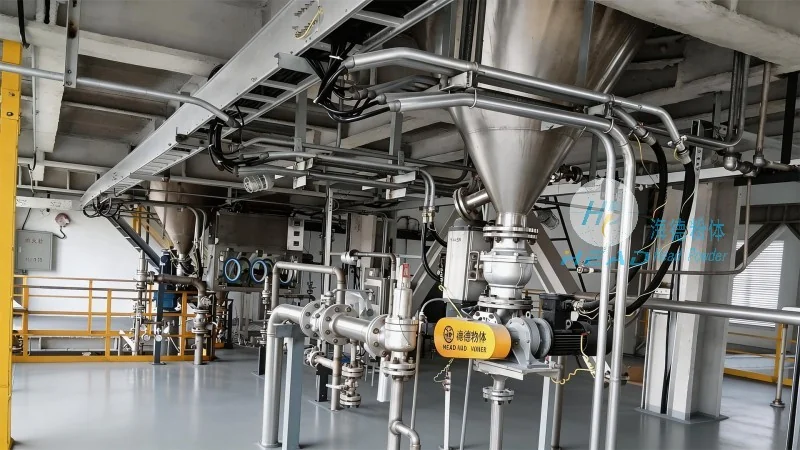
There are two main types of pneumatic conveying systems: pressure and vacuum. Pressure systems use compressed air to push the material through the pipeline, while vacuum systems use a vacuum to pull the material. For lithium-ion battery electrode materials, pressure systems are often preferred as they can handle larger volumes and longer conveying distances without the need for multiple vacuum pumps. However, vacuum systems are more suitable for short-distance or low-volume applications where the material needs to be transported from a low elevation to a higher one.
Advantages of HeadPowder's Air-Pneumatic Conveying System for Electrode Materials

HeadPowder, a leading manufacturer in the field, offers specialized air-pneumatic conveying systems tailored for lithium-ion battery electrode material handling. The company's systems are designed to address the unique challenges of electrode material transportation, ensuring high performance and reliability in production environments. One of the key advantages of HeadPowder's systems is their ability to maintain the quality of the electrode materials during transportation. The sealed pipeline design prevents exposure to air and moisture, which can cause oxidation or degradation of the materials. This is critical for sensitive materials like lithium cobalt oxide, which can lose its performance if exposed to air for extended periods.
Another advantage is the high conveying efficiency and speed of the system. HeadPowder's air-pneumatic conveyors can transport materials at speeds of up to 20 meters per second, significantly reducing the time required to move materials between production stages. This not only increases production throughput but also minimizes downtime caused by material handling delays. The system's ability to handle materials with varying particle sizes and moisture content without clogging or degradation is another critical advantage, as it maintains the quality of the electrode materials throughout the conveying process.
Additionally, HeadPowder's systems are designed with flexibility and scalability in mind. They can be customized to fit the specific requirements of different production lines, accommodating changes in production volume or material types as needed. The company's expertise in material handling technology ensures that the conveying systems are optimized for the unique properties of lithium-ion battery electrode materials, such as their reactivity and sensitivity to moisture. This customization allows battery manufacturers to integrate the conveying system seamlessly into their existing production lines, reducing the need for major modifications or investments.
About HeadPowder: Shandong HeadPowder Engineering Co., Ltd.

HeadPowder, the brand name used by Shandong HeadPowder Engineering Co., Ltd., is a professional manufacturer dedicated to providing high-quality material handling solutions for the lithium-ion battery industry. The company is headquartered in Shandong, China, and has established itself as a trusted partner for battery manufacturers seeking reliable and efficient conveying systems. HeadPowder's commitment to innovation and customer satisfaction has enabled it to deliver solutions that meet the evolving needs of the battery production sector. The company's research and development team continuously works on improving the performance and efficiency of its conveying systems, ensuring that they remain at the forefront of the industry.

 Shandong Headpowder Engineering Co., Ltd.
 156-6277-7102(Quản lý Trương)
  0531-83386006
  Thành phố Tế Nam, Tỉnh Sơn Đông, Trung Quốc
Điện thoại
WeChatTư vấn
Lên đầu