Chuyên sâu trong lĩnh vực vật liệu rời công nghiệp, cung cấp giải pháp môi trường thông minh tích hợp cho phối trộn tự động, cấp liệu tập trung, khử lưu huỳnh và khử nitơ khô!
Wood ash, a byproduct of biomass combustion, is often transported using pneumatic conveying systems due to its fine particle size and potential for dust generation. Designing an efficient and reliable system for handling wood ash requires careful consideration of material properties, system components, and operational parameters. This guide outlines the key steps and considerations for developing a reasonable wood ash pneumatic conveying system plan.
Company Overview: Shandong HeadPowder Engineering Co., Ltd.

Shandong HeadPowder Engineering Co., Ltd., commonly known as headpowder, is a professional engineering firm based in Shandong, China. With years of experience in the field of material handling and pneumatic conveying, the company specializes in designing, manufacturing, and implementing customized solutions for various industrial applications, including wood ash transportation.
Key Design Factors for Wood Ash Pneumatic Conveying
Several critical factors must be evaluated when designing a wood ash pneumatic conveying system. The first is the physical properties of the wood ash, such as particle size distribution, moisture content, and bulk density. These characteristics influence the selection of the conveying method (e.g., dilute phase vs. dense phase) and the required air velocity. For example, fine wood ash particles may require higher air velocities to prevent blockages and ensure smooth flow.
System Components and Their Roles

A typical wood ash pneumatic conveying system consists of several key components. The primary components include a hopper or feeder to feed the wood ash into the system, a blower or compressor to generate the necessary air pressure, a pipeline network to transport the material, and a receiver or silo to collect the conveyed ash. Each component plays a crucial role in ensuring the system operates efficiently and safely. The hopper design must be capable of handling the bulk density and flow characteristics of the wood ash, while the blower must provide sufficient pressure and airflow to overcome system resistance.
Selection of Conveying Method
The choice between dilute phase and dense phase pneumatic conveying depends on the specific application and material properties. Dilute phase systems use low air velocities and are suitable for transporting fine particles over short to medium distances. Dense phase systems, on the other hand, use higher air velocities and are ideal for handling abrasive or sticky materials, as they reduce wear on equipment and minimize dust emissions. For wood ash, which is often fine and can be abrasive, a combination of both methods may be used in some cases, such as using a dense phase system for the initial transport and a dilute phase system for the final delivery.

Material Handling and Safety Considerations
Proper material handling is essential to prevent system blockages and ensure safe operation. Wood ash can be prone to bridging in hoppers, which can lead to flow disruptions. To mitigate this, the hopper may be equipped with a vibratory feeder or a rotary valve to promote material flow. Additionally, the system must be designed with safety features, such as dust collection systems and pressure relief valves, to prevent dust explosions and overpressure situations. The use of explosion-proof components is also recommended, especially in industrial settings where wood ash may be stored or processed.
System Sizing and Performance Evaluation
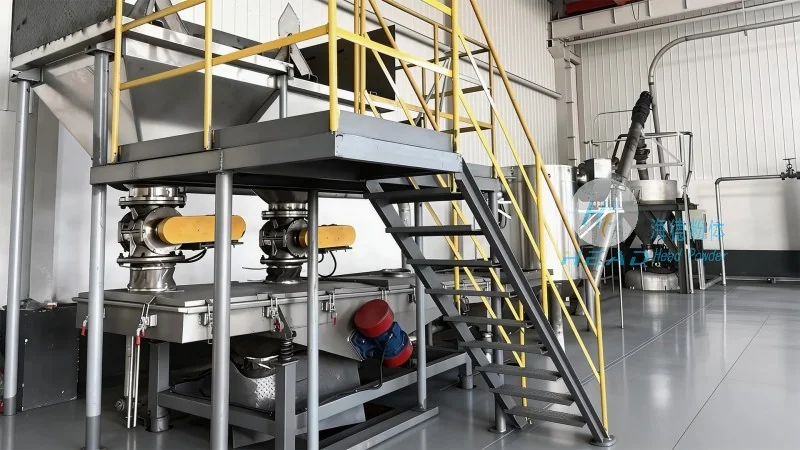
System sizing involves determining the appropriate air volume and pressure required to transport the wood ash at the desired flow rate. This is typically calculated based on the material's bulk density, pipeline length, and diameter, as well as the system's pressure losses. Performance evaluation is crucial to ensure the system meets the operational requirements and is energy-efficient. Regular maintenance and monitoring of key parameters, such as air pressure and flow rate, are necessary to identify any issues and optimize system performance.
Customization and Integration
Given the variability in wood ash properties and application requirements, a one-size-fits-all approach is not suitable. Shandong HeadPowder Engineering Co., Ltd. offers customized solutions tailored to each client's specific needs. The company works closely with clients to understand their operational goals, material characteristics, and site constraints, and then designs a system that maximizes efficiency and reliability. Integration with existing facilities or processes is also a key consideration, ensuring the new system can be seamlessly incorporated without disrupting current operations.

 Shandong Headpowder Engineering Co., Ltd.
 156-6277-7102(Quản lý Trương)
  0531-83386006
  Thành phố Tế Nam, Tỉnh Sơn Đông, Trung Quốc
Điện thoại
WeChatTư vấn
Lên đầu