Chuyên sâu trong lĩnh vực vật liệu rời công nghiệp, cung cấp giải pháp môi trường thông minh tích hợp cho phối trộn tự động, cấp liệu tập trung, khử lưu huỳnh và khử nitơ khô!
Slag, a byproduct of industrial processes such as steelmaking and cement production, requires efficient and reliable transport solutions to ensure smooth operation in various industrial applications. The choice of transport method significantly impacts operational efficiency, safety, and environmental compliance. This article explores common slag transport methods, with a focus on the advantages and applications of slag pneumatic conveying systems, presented by Shandong HeadPowder Engineering Co., Ltd. (commonly known as HeadPowder), a leading provider of industrial transport solutions based in Shandong, China.
Introduction to Slag Transport Methods
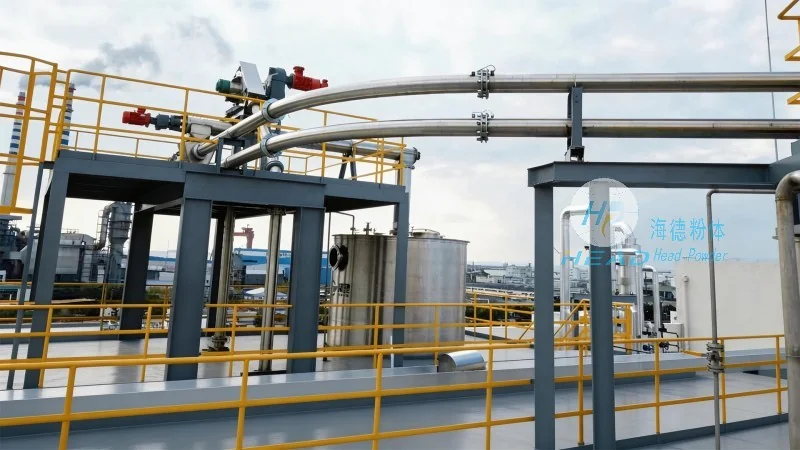
Slag transport involves moving molten or solidified slag from its source to processing or disposal locations. Traditional methods include gravity flow, mechanical conveyors (like belt conveyors and screw conveyors), and hydraulic systems. However, these methods may face challenges in handling abrasive or hot slag, leading to equipment wear and maintenance issues. In contrast, pneumatic conveying offers a flexible and effective solution for transporting slag in various forms—solid, liquid, or semi-solid—while minimizing environmental impact and operational risks.
Slag Pneumatic Conveying: A Detailed Overview

Slag pneumatic conveying systems utilize air or other gases to transport material through a pipeline. This method is particularly suitable for handling abrasive and high-temperature slag, as it reduces direct contact between the slag and equipment, thereby extending the lifespan of components. The system typically consists of a hopper, a feeder, a conveying line, and a receiver. The feeder controls the flow of slag into the pipeline, while the air pressure propels the material through the system. There are two main types of pneumatic conveying: pressure and vacuum systems. Pressure systems use positive pressure to push the material, while vacuum systems use negative pressure to pull it. For slag transport, pressure systems are often preferred due to their ability to handle higher material loads and longer distances.
Key Components of a Slag Pneumatic Conveying System

Several critical components make up an efficient slag pneumatic conveying system. The hopper is the initial storage vessel where slag is collected before transport. It is designed to handle the specific characteristics of the slag, such as temperature and particle size. The feeder is responsible for regulating the flow of slag into the conveying line, ensuring consistent and controlled material delivery. This component is crucial for maintaining system efficiency and preventing blockages. The conveying line is the main pipeline through which the slag and air travel. It is typically made of durable materials like stainless steel or high-grade steel to withstand the abrasive nature of slag. The receiver is the final storage or processing vessel where the transported slag is deposited. It may include filtration or separation equipment to remove any residual air or particles.
Advantages of Slag Pneumatic Conveying
Compared to traditional transport methods, slag pneumatic conveying offers several advantages. First, it provides a closed system, which helps minimize dust emissions and environmental contamination. This is particularly important for handling hazardous or fine-grained slag. Second, the system is flexible and can be easily adapted to different plant layouts and operational requirements. It can transport slag over long distances and through complex routes without the need for multiple transfer points. Third, pneumatic conveying reduces labor costs and maintenance requirements by minimizing the need for manual handling and equipment wear. The system is also capable of handling varying slag compositions and temperatures, making it a versatile solution for diverse industrial applications.
Applications of Slag Pneumatic Conveying
Slag pneumatic conveying systems are widely used in various industries, including steel, cement, and power generation. In steel mills, they are used to transport hot slag from the blast furnace or ladle to the slag processing plant for recycling or disposal. In cement plants, they help move slag from storage to the kiln or other processing units, where it is used as a raw material. In power plants, they are employed to transport fly ash and slag from the boiler to storage or disposal sites. The systems are also used in environmental applications, such as transporting slag for landfill or recycling purposes. The versatility of pneumatic conveying makes it suitable for a wide range of slag types and processing needs.

Conclusion
Choosing the right slag transport method is critical for optimizing industrial operations and ensuring safety and environmental compliance. While traditional methods like gravity flow and mechanical conveyors have their uses, slag pneumatic conveying systems offer superior performance, flexibility, and efficiency. With proper design and maintenance, these systems can effectively handle the challenges of transporting abrasive and high-temperature slag, contributing to improved operational productivity and reduced costs. For industries seeking reliable and sustainable slag transport solutions, pneumatic conveying remains a top choice.

 Shandong Headpowder Engineering Co., Ltd.
 156-6277-7102(Quản lý Trương)
  0531-83386006
  Thành phố Tế Nam, Tỉnh Sơn Đông, Trung Quốc
Điện thoại
WeChatTư vấn
Lên đầu