Chuyên sâu trong lĩnh vực vật liệu rời công nghiệp, cung cấp giải pháp môi trường thông minh tích hợp cho phối trộn tự động, cấp liệu tập trung, khử lưu huỳnh và khử nitơ khô!
When it comes to transporting biomass pellets, selecting the right conveying method is crucial for efficiency, cost-effectiveness, and operational reliability. Biomass pellets are widely used as a renewable energy source, and their transportation from production sites to end-users requires specialized equipment and systems. This article provides an in-depth comparison of common biomass pellet conveying methods, examining their advantages and disadvantages to help industry professionals make informed decisions.
Biomass Pellet Conveying Methods Overview

There are several primary methods used for biomass pellet transportation, each with distinct characteristics suited to different operational needs. The most common approaches include gravity conveyors, pneumatic (air) conveyors, and mechanical conveyors such as screw conveyors and belt conveyors. Each method has its own set of benefits and drawbacks, which are critical to consider when designing a biomass pellet handling system.
Gravity Conveyors: Advantages and Disadvantages
Gravity conveyors utilize the natural force of gravity to move biomass pellets from one elevation to another. These systems typically consist of sloped chutes or hoppers that allow pellets to flow downward under the influence of gravity. One of the key advantages of gravity conveyors is their low energy consumption, as they do not require external power sources for operation. This makes them an economical choice for short-distance horizontal or slight vertical transport where the pellets can flow freely without excessive friction or blockage.
However, gravity conveyors have significant limitations. They are highly dependent on the angle of inclination and the physical properties of the biomass pellets, such as size, shape, and moisture content. If the pellets are too large, irregularly shaped, or have high moisture levels, they may not flow properly, leading to blockages or uneven transport. Additionally, gravity conveyors are unsuitable for vertical or steep incline applications, as the required slope may be impractically steep or unsafe for the system. This method is best suited for simple, low-capacity applications where the pellets are uniform and the distance is short.
Pneumatic Conveyors: Advantages and Disadvantages
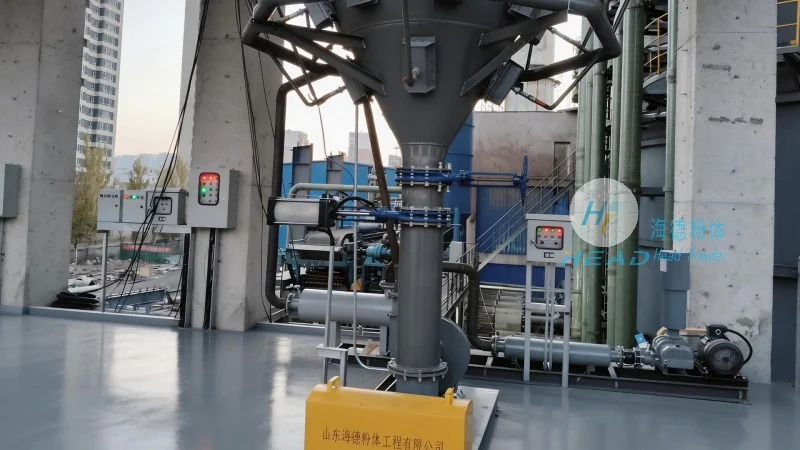
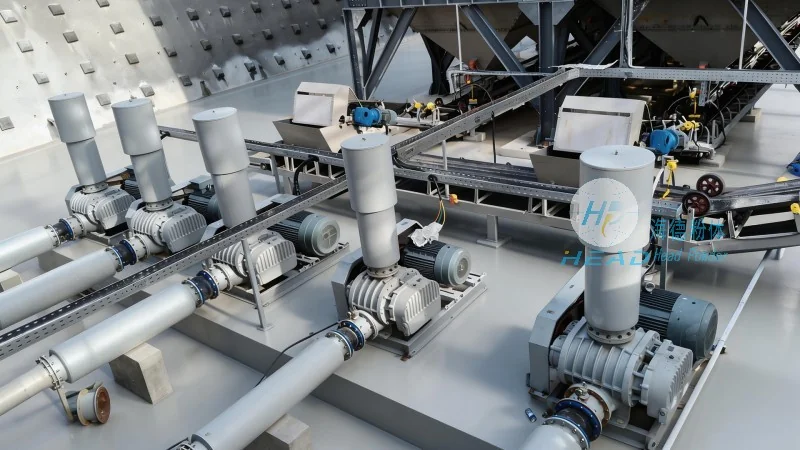
Pneumatic conveyors use compressed air to transport biomass pellets through a pipeline system. This method can be either positive displacement or negative pressure (suction) type, depending on the application requirements. One of the major advantages of pneumatic conveyors is their ability to handle a wide range of pellet sizes and shapes, including irregular or dusty materials. They can also transport pellets over long distances and through vertical lifts, making them versatile for complex layouts. The system can be designed to operate at low or high pressures, allowing for flexible control over flow rates and velocity.
Despite these benefits, pneumatic conveyors have notable disadvantages. They require significant energy input to operate the air compressors, which increases operational costs. The high air velocity can cause wear and tear on the pipeline and components, leading to higher maintenance expenses over time. Additionally, the system may be prone to clogging if the pellets are too fine or have high moisture content, as fine particles can accumulate and create blockages. Another drawback is the potential for dust generation, which may require additional filtration and ventilation systems to comply with environmental regulations. Pneumatic conveyors are generally more suitable for medium to high-capacity applications where long-distance or vertical transport is necessary.
Mechanical Conveyors: Advantages and Disadvantages
Mechanical conveyors, including screw conveyors and belt conveyors, rely on mechanical motion to move biomass pellets. Screw conveyors use a rotating screw (auger) to push pellets along a trough, while belt conveyors use a moving belt to transport pellets horizontally or at a slight incline. These systems are often considered the workhorses of material handling due to their reliability and adaptability.
The primary advantages of mechanical conveyors are their robust construction and ability to handle a wide variety of pellet types, including those with high moisture content or abrasive properties. They can operate continuously with minimal maintenance, and their capacity can be easily adjusted by changing the screw speed or belt speed. Mechanical conveyors are also relatively inexpensive to install and maintain compared to pneumatic systems, making them a cost-effective solution for many applications.
However, mechanical conveyors have their own set of limitations. Screw conveyors may experience wear on the screw and trough due to the abrasive nature of biomass pellets, requiring regular inspection and replacement of components. Belt conveyors can be affected by the load's weight and friction, potentially leading to belt slip or damage if the pellets are too heavy or sticky. Additionally, these systems are not suitable for vertical transport without additional mechanisms like elevators or hoists, as the mechanical force may not be sufficient to lift the pellets against gravity. Mechanical conveyors are best suited for horizontal or shallow incline transport where the pellets are relatively uniform and the distance is moderate.
Choosing the Right Conveying Method for Biomass Pellets
Selecting the appropriate biomass pellet conveying method requires careful consideration of several factors, including the pellet characteristics, transport distance, elevation changes, and operational budget. The goal is to balance efficiency, cost, and reliability to ensure optimal performance of the biomass handling system.
For short horizontal or slight vertical transport of uniform pellets with low moisture content, gravity conveyors may be the most economical choice. However, if the pellets are irregular or the distance is longer, pneumatic or mechanical conveyors may be more suitable. Pneumatic conveyors excel in long-distance or vertical transport but come with higher energy costs and maintenance requirements. Mechanical conveyors offer a reliable, low-cost alternative for moderate distances and varying pellet types.
It is also important to consider the specific operational environment and regulatory requirements. For example, if the facility is in a region with strict air quality regulations, pneumatic conveyors may require additional filtration systems to minimize dust emissions. Mechanical conveyors, on the other hand, may be preferred in areas where noise and vibration are concerns, as they operate more quietly than pneumatic systems.
Ultimately, the best conveying method depends on the unique needs of each biomass processing facility. By evaluating the advantages and disadvantages of each option, industry professionals can select a system that maximizes efficiency while minimizing costs and operational risks. This approach ensures that biomass pellets are transported safely and effectively from production to end-use, supporting the growth of renewable energy applications.

 Shandong Headpowder Engineering Co., Ltd.
 156-6277-7102(Quản lý Trương)
  0531-83386006
  Thành phố Tế Nam, Tỉnh Sơn Đông, Trung Quốc
Điện thoại
WeChatTư vấn
Lên đầu