

Common Lithium-Ion Battery Powder Conveying Methods: Comparison of Advantages and Disadvantages
When it comes to the production and processing of lithium-ion battery powders, efficient and reliable material handling is crucial. The choice of conveying method directly impacts production efficiency, product quality, and operational costs. Shandong HeadPowder Engineering Co., Ltd., a leading manufacturer in the field, specializes in providing tailored solutions for various powder conveying applications. This article provides a detailed comparison of common lithium-ion battery powder conveying methods, highlighting their advantages and disadvantages to help manufacturers make informed decisions.

Introduction to Lithium-Ion Battery Powder Conveying
Lithium-ion battery powders, such as cathode active materials (e.g., lithium cobalt oxide, lithium iron phosphate) and anode materials (e.g., graphite, silicon), require precise handling to maintain their physical and chemical properties. Conveying these powders involves moving them from storage to processing equipment, such as mixers, classifiers, and extruders. The primary goal is to ensure minimal material degradation, consistent flow rates, and safe operation. Shandong HeadPowder Engineering Co., Ltd. understands these challenges and offers a range of conveying solutions designed to meet the specific needs of battery manufacturers.
1. Screw Conveyors: Traditional and Versatile
Screw conveyors, also known as auger conveyors, are one of the most common methods for transporting lithium-ion battery powders. These systems consist of a rotating helical screw inside a trough, which moves material along the length of the conveyor. The design is simple, making it suitable for a wide range of powder types and production scales. Shandong HeadPowder Engineering Co., Ltd. offers screw conveyors with adjustable speeds and materials to prevent powder adhesion or degradation.
Advantages of screw conveyors include their ability to handle a variety of powder characteristics, including moisture content and particle size. They are also relatively low-cost to install and maintain. However, screw conveyors have limitations, such as the risk of material degradation due to friction and heat generation. Additionally, they are not suitable for long-distance transport or vertical lifting, as the power consumption increases significantly with distance.
2. Pneumatic Conveying Systems: High-Pressure and Vacuum Options
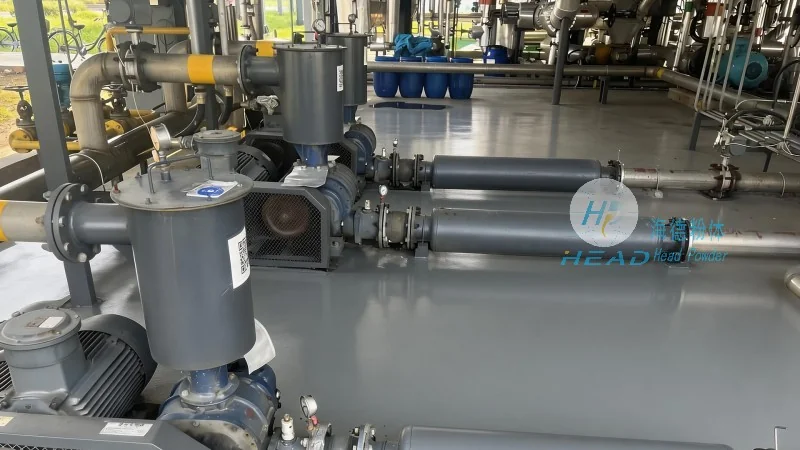
Pneumatic conveying systems use air or other gases to transport lithium-ion battery powders. These systems are divided into two main types: high-pressure and vacuum. High-pressure systems use compressed air to push the powder through a pipeline, while vacuum systems use a vacuum to draw the powder into the system. Shandong HeadPowder Engineering Co., Ltd. provides both types of pneumatic conveyors, allowing manufacturers to choose the most suitable option based on their specific requirements.
Advantages of pneumatic conveying include its ability to transport powders over long distances and to different elevations without the need for multiple pieces of equipment. It also offers a closed system, which helps maintain material purity and prevents contamination. However, pneumatic systems require more energy compared to other methods and can be more complex to install and maintain. The risk of material degradation due to high air velocities and pressure fluctuations also needs to be considered.
3. Vibrating Conveyors: Gentle and Continuous Movement
Vibrating conveyors use vibration to move lithium-ion battery powders along a trough. The system consists of a conveyor bed that is mounted on springs and driven by an electric motor, creating a sinusoidal motion. This gentle movement minimizes material degradation and is ideal for handling delicate powders. Shandong HeadPowder Engineering Co., Ltd. designs vibrating conveyors with adjustable vibration frequencies and amplitudes to optimize material flow.

Advantages of vibrating conveyors include their ability to handle a wide range of powder types, including those with high moisture content or sticky properties. They are also relatively low-maintenance and can be used for both horizontal and inclined transport. However, vibrating conveyors have a lower capacity compared to screw or pneumatic systems and are not suitable for long-distance transport.
4. Belt Conveyors: High-Capacity and Versatile
Belt conveyors use a continuous belt to transport lithium-ion battery powders. The belt is supported by rollers and moves over a frame, allowing for the movement of materials over long distances. Shandong HeadPowder Engineering Co., Ltd. offers belt conveyors with various belt materials and widths to accommodate different powder types and production rates.
Advantages of belt conveyors include their high capacity and ability to transport materials over long distances. They are also relatively simple to operate and maintain. However, belt conveyors require more space compared to other methods and are not suitable for vertical lifting. The risk of material spillage and contamination is also higher compared to enclosed systems like pneumatic or screw conveyors.
Conclusion: Choosing the Right Conveying Method
Choosing the appropriate conveying method for lithium-ion battery powders is a critical decision that impacts overall production efficiency and product quality. Shandong HeadPowder Engineering Co., Ltd. recommends evaluating factors such as material properties, transport distance, required capacity, and operational costs when selecting a conveying system. By understanding the advantages and disadvantages of each method, manufacturers can make informed choices that align with their specific production needs. Whether using screw conveyors, pneumatic systems, vibrating conveyors, or belt conveyors, the goal is to ensure efficient, safe, and cost-effective material handling throughout the lithium-ion battery production process.