Chuyên sâu trong lĩnh vực vật liệu rời công nghiệp, cung cấp giải pháp môi trường thông minh tích hợp cho phối trộn tự động, cấp liệu tập trung, khử lưu huỳnh và khử nitơ khô!
Gypsum powder, a critical material in construction and industrial applications, demands efficient and reliable conveying systems to ensure smooth operational flow. Various methods are employed for transporting gypsum powder, each with distinct advantages and disadvantages. This article provides a detailed comparison of common gypsum powder conveying methods, helping users make informed decisions based on their specific operational needs.

1. Screw Conveyor (Auger Conveyor)

Screw conveyors are widely utilized for gypsum powder transportation due to their simplicity and effectiveness. These systems consist of a rotating screw inside a trough, which moves material forward through the mechanism. The primary advantages of screw conveyors include low cost, minimal maintenance requirements, and the ability to operate in vertical or inclined positions. They are particularly suitable for short to medium distance conveying and can handle a wide range of bulk materials, including gypsum powder. However, screw conveyors have limitations when dealing with abrasive or sticky materials, as the screw and trough can experience wear over time. Additionally, they may not be ideal for high-volume applications or long-distance transport, as the material can degrade or become compacted within the system.
2. Pneumatic Conveying System
Pneumatic conveying systems use air or gas to transport gypsum powder through a pipeline network. This method is highly versatile and can handle both dry and slightly moist gypsum powder. The main advantages of pneumatic conveying include the ability to transport materials over long distances, the option for vertical or horizontal transport, and the potential for integration with other processing equipment. It also offers a relatively clean and dust-free operation, which is beneficial for maintaining a safe working environment. However, pneumatic conveying systems require more complex setup and higher energy consumption compared to other methods. They may also be less efficient for very fine or lightweight powders, as these materials can settle in the pipeline or cause blockages. Furthermore, the system's performance can be affected by air pressure and flow rate, requiring careful calibration to ensure optimal operation.
3. Belt Conveyor
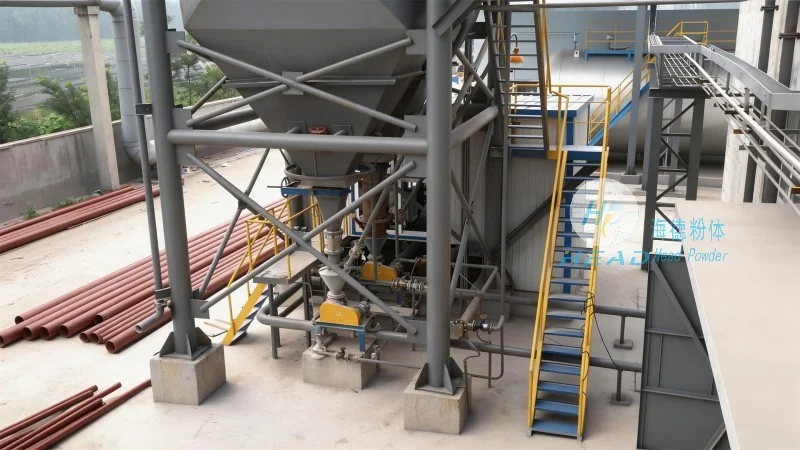
Belt conveyors are another common choice for gypsum powder handling, especially in large-scale industrial settings. These systems use a continuous belt to transport material from one point to another. The advantages of belt conveyors include high capacity, the ability to cover long distances, and the simplicity of operation. They are particularly effective for transporting large volumes of gypsum powder over horizontal or slightly inclined paths. However, belt conveyors have limitations when dealing with fine powders, as the material can cause the belt to slip or accumulate on the sides. They also require regular maintenance to prevent belt wear and ensure proper alignment. Additionally, the system's initial cost is higher compared to screw or pneumatic conveyors, and it may not be suitable for applications requiring high precision or gentle handling of the material.
4. Bucket Elevator
Bucket elevators are specialized equipment designed for vertical transport of gypsum powder. These systems use a series of buckets attached to a chain or belt, which lifts material upward. The primary advantages of bucket elevators include high vertical lifting capacity, minimal material spillage, and the ability to handle a wide range of bulk materials. They are particularly suitable for vertical conveying in construction and industrial plants, where space is limited. However, bucket elevators have higher installation and maintenance costs compared to other methods. They also require careful design to prevent material blockage or belt tension issues, which can affect performance. Additionally, the system's speed and capacity are limited by the bucket size and chain speed, making it less suitable for very high-volume applications.

5. Comparison and Recommendations
When selecting a gypsum powder conveying method, it is essential to consider factors such as the distance of transport, the volume of material, the material's properties (e.g., fineness, moisture content), and the operational environment. Screw conveyors are ideal for short-distance, low-volume applications with relatively dry gypsum powder. Pneumatic conveying systems are suitable for long-distance, high-volume transport, especially when dust control is a priority. Belt conveyors are best for large-scale horizontal transport in industrial settings. Bucket elevators are preferred for vertical lifting in confined spaces. By evaluating these factors, users can choose the most appropriate conveying method to ensure efficient and reliable operation.

 Shandong Headpowder Engineering Co., Ltd.
 156-6277-7102(Quản lý Trương)
  0531-83386006
  Thành phố Tế Nam, Tỉnh Sơn Đông, Trung Quốc
Điện thoại
WeChatTư vấn
Lên đầu