Chuyên sâu trong lĩnh vực vật liệu rời công nghiệp, cung cấp giải pháp môi trường thông minh tích hợp cho phối trộn tự động, cấp liệu tập trung, khử lưu huỳnh và khử nitơ khô!
In industrial production, the conveying of coke pellets is a critical process. The choice of an appropriate conveying method is crucial for ensuring production efficiency, reducing operational costs, and maintaining equipment safety. This article will compare and analyze several common coke pellet conveying methods, including their advantages and disadvantages, to help users make informed decisions based on their actual needs.

Gas-Pneumatic Conveying Systems: Efficient and Flexible Solutions
Gas-pneumatic conveying systems use compressed air or inert gases to transport coke pellets from one location to another. This method excels in handling fragile or dust-like materials. A key advantage is the ability to achieve enclosed conveying, effectively preventing dust pollution and material loss. Additionally, gas-pneumatic systems offer good adaptability, allowing flexible changes in the conveying route, suitable for complex production layouts. However, there are some limitations. For instance, larger or higher-density coke pellets may require higher air pressure, leading to increased energy consumption. The system maintenance is relatively complex, requiring regular checks of valves and pipelines to avoid blockages or leaks. Furthermore, the conveying distance of gas-pneumatic systems is typically limited, and for long-distance conveying, multiple pressure stations are needed, increasing system costs.
Belt Conveyors: Reliable for Large Capacity and Long Distances
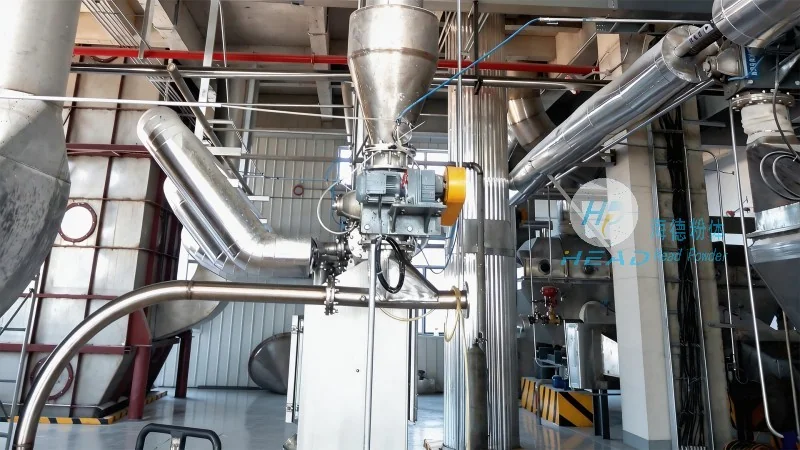

Belt conveyors are one of the most commonly used equipment for coke pellet conveying, renowned for their large capacity and ability to transport over long distances. They move materials by means of a continuous conveyor belt from the starting point to the destination, suitable for various granular materials. The advantages of belt conveyors include simple structure, stable operation, and the ability to handle large volumes of coke pellets with relatively easy maintenance. For long-distance conveying needs, belt conveyors are an ideal choice as they can maintain high conveying speeds and cover distances of several kilometers. However, there are some drawbacks. First, for coke pellets that are prone to sticking or are moist, the conveyor belt may require special materials or coatings to prevent material adhesion. Second, the initial investment for belt conveyors is relatively high, especially for long-distance or high-power systems. Additionally, static electricity generated by friction during the conveying process may require anti-static measures to ensure safety. Moreover, belt conveyors have a larger turning radius, which may not be suitable for spaces with limited area.
Screw Conveyors: Compact and Enclosed Transport Equipment
Screw conveyors are a type of equipment that uses rotating screw blades to push materials along a trough. They are typically used for short-distance or medium-capacity coke pellet conveying, especially suitable for compact layouts. The advantages of screw conveyors include compact structure, small footprint, and the ability to achieve enclosed conveying to prevent dust leakage. For small batches or applications requiring precise control of the conveying volume, screw conveyors have good adaptability. However, there are some limitations. For example, larger or highly abrasive coke pellets can wear out the screw blades, leading to a decrease in conveying efficiency. Additionally, the conveying distance of screw conveyors is short, usually not exceeding 30 meters, and for long-distance conveying, multiple units need to be connected in series, increasing system complexity. Furthermore, screw conveyors have higher energy consumption, especially when handling high-density materials, requiring larger power input. Another point is that for coke pellets that tend to agglomerate, screw conveyors may not be effective and may need to be paired with crushing equipment.
Comparison and Selection Recommendations

When selecting a coke pellet conveying method, multiple factors need to be considered. First, the characteristics of the material, such as particle size, density, moisture content, and whether it is fragile, should be taken into account. For fragile or dust-like coke pellets, gas-pneumatic conveying may be more appropriate; for large particles or long-distance conveying, belt conveyors are a better choice; for short-distance or compact layout applications, screw conveyors are more economical. Second, the conveying distance and volume should be considered. For long-distance and large-volume conveying, belt conveyors are suitable, while for short-distance and small-volume conveying, screw conveyors are more appropriate. Cost is also an important factor. Gas-pneumatic systems have a higher initial investment but lower operating costs; belt conveyors have a higher initial investment but stable operation; screw conveyors have a lower initial investment but higher operating costs. Finally, maintenance and operational convenience are also factors. Belt conveyors are relatively easy to maintain, while gas-pneumatic systems require more specialized maintenance knowledge. By weighing all these factors, users should choose the most suitable method based on their actual production needs.

 Shandong Headpowder Engineering Co., Ltd.
 156-6277-7102(Quản lý Trương)
  0531-83386006
  Thành phố Tế Nam, Tỉnh Sơn Đông, Trung Quốc
Điện thoại
WeChatTư vấn
Lên đầu