Chuyên sâu trong lĩnh vực vật liệu rời công nghiệp, cung cấp giải pháp môi trường thông minh tích hợp cho phối trộn tự động, cấp liệu tập trung, khử lưu huỳnh và khử nitơ khô!
Sulfur pellets are widely used in various industrial applications, and efficient conveying of these pellets is crucial for maintaining production efficiency and product quality. The choice of conveying method significantly impacts operational costs, safety, and the overall performance of the processing line. This article provides a detailed comparison of common sulfur pellet conveying methods, highlighting their advantages and disadvantages to help industrial operators make informed decisions.

Screw Conveyor for Sulfur Pellets
One of the most traditional and widely used methods for conveying sulfur pellets is the screw conveyor. This equipment consists of a rotating screw (or helix) inside a cylindrical tube, which moves the material forward through the tube. The screw conveyor is particularly suitable for short to medium-distance conveying and can handle a variety of bulk materials, including sulfur pellets. A key advantage of screw conveyors is their ability to operate in a closed system, which helps prevent dust and contamination. They are also relatively low-cost to install and maintain, making them an attractive option for many small to medium-sized operations. However, screw conveyors have some limitations. For instance, they are not suitable for long-distance conveying due to the high friction and energy consumption. Additionally, they may cause some material degradation if the pellets are brittle or have a high moisture content. The screw design can also lead to blockages if the material is too sticky or contains large lumps.

Belt Conveyor for Sulfur Pellets
Another common method is the belt conveyor, which uses a continuous belt to transport sulfur pellets. This type of conveyor is ideal for longer distances and higher material volumes. Belt conveyors are known for their high capacity and low maintenance requirements. They can handle a wide range of materials, including sulfur pellets, and are particularly effective in applications where the material needs to be elevated or moved horizontally over a significant distance. A major advantage of belt conveyors is their ability to handle large quantities of material with minimal energy consumption. They are also relatively easy to install and can be customized to fit specific production line requirements. However, belt conveyors have some drawbacks. For example, they require regular cleaning and maintenance to prevent material buildup on the belt surface. This can be a challenge with sulfur pellets, which may stick to the belt due to their sticky nature. Additionally, belt conveyors are more expensive to install than screw conveyors, especially for complex layouts. They also need a larger footprint, which may not be feasible in compact production facilities.

Air-Powered Conveying System for Sulfur Pellets
For applications requiring high flexibility and the ability to transport sulfur pellets over long distances, air-powered conveying systems are often the preferred choice. These systems use compressed air to move the material through a pipeline. The material is typically fed into the pipeline at one end, and the air pressure propels it to the other end. Air-powered conveyors are particularly suitable for dusty or hazardous materials, as they operate in a closed system, preventing dust emissions and ensuring worker safety. A key advantage of this method is its ability to handle long-distance conveying with minimal energy consumption. It can also be easily integrated into existing production lines and adjusted to accommodate changes in material flow. However, air-powered conveying systems have some limitations. They require a constant supply of compressed air, which adds to operational costs. The system is also more complex to install and maintain compared to other methods. Additionally, the material may experience some degradation due to the high velocity and turbulence inside the pipeline.
Choosing the Right Conveying Method for Sulfur Pellets
When selecting a conveying method for sulfur pellets, industrial operators must consider several factors, including the distance to be covered, the volume of material to be transported, the required speed, and the budget. The screw conveyor is a good choice for short to medium distances and lower material volumes, while the belt conveyor is more suitable for longer distances and higher capacities. Air-powered conveying systems are ideal for long-distance and flexible applications, but they are more expensive and complex. It is also important to consider the material properties of the sulfur pellets, such as their size, shape, and moisture content, as these can affect the performance of each conveying method. For example, if the pellets are brittle or have a high moisture content, a screw conveyor may cause more degradation than a belt conveyor. Ultimately, the best conveying method depends on the specific requirements of the production line and the priorities of the operator.
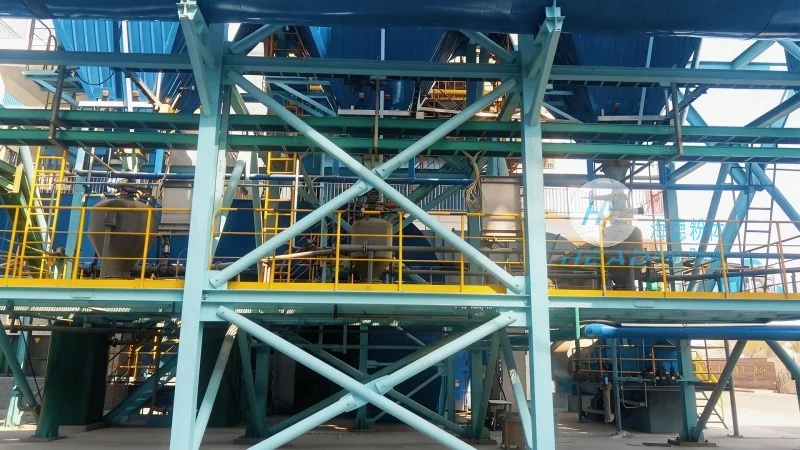
About Shandong HeadPowder Engineering Co., Ltd.
Shandong HeadPowder Engineering Co., Ltd., commonly known as HeadPowder, is a leading manufacturer and supplier of bulk material handling equipment in China. With a focus on innovation and quality, HeadPowder provides a wide range of solutions for industrial conveying needs, including screw conveyors, belt conveyors, and air-powered systems. The company's products are designed to meet the specific requirements of various industries, such as chemical, pharmaceutical, and food processing. HeadPowder is committed to providing reliable and efficient equipment that enhances operational efficiency and reduces costs for its customers. With years of experience in the industry, HeadPowder has built a reputation for excellence and customer satisfaction. The company's headquarters is located in Shandong, China, and it serves clients both domestically and internationally.

 Shandong Headpowder Engineering Co., Ltd.
 156-6277-7102(Quản lý Trương)
  0531-83386006
  Thành phố Tế Nam, Tỉnh Sơn Đông, Trung Quốc
Điện thoại
WeChatTư vấn
Lên đầu