Chuyên sâu trong lĩnh vực vật liệu rời công nghiệp, cung cấp giải pháp môi trường thông minh tích hợp cho phối trộn tự động, cấp liệu tập trung, khử lưu huỳnh và khử nitơ khô!
For industrial operations that rely on coke pellets, efficient and reliable transportation of these materials is crucial to maintaining production flow and operational efficiency. Coke pellets, as a key component in steelmaking and other industrial processes, require specialized handling to ensure they are moved from storage to processing areas without degradation or loss. The methods used for transporting coke pellets vary based on the specific requirements of the facility, including distance, volume, and environmental considerations. This article explores the primary methods employed for coke pellet transport, highlighting the advantages and typical applications of each approach.

1. Belt Conveyor Systems for Coke Pellet Transport
Belt conveyors are among the most common and widely used methods for transporting coke pellets. These systems consist of a continuous loop of belt, typically made from durable materials such as rubber or synthetic fabrics, that moves over rollers or pulleys. The belt is supported by a series of idlers and is driven by a motor, allowing it to transport coke pellets over horizontal and inclined distances. Belt conveyors are particularly effective for long-distance transport, as they can cover distances of several hundred meters with minimal maintenance. They are also suitable for transporting large volumes of coke pellets at a consistent speed, making them ideal for continuous production lines. The key advantage of belt conveyors is their ability to handle high capacities while maintaining low operational costs. Additionally, they can be designed with multiple inclines and declines, adapting to the layout of the facility. However, belt conveyors may require regular inspection and maintenance to prevent belt wear or damage, which could affect the integrity of the coke pellets during transport.
2. Pneumatic Conveying Systems
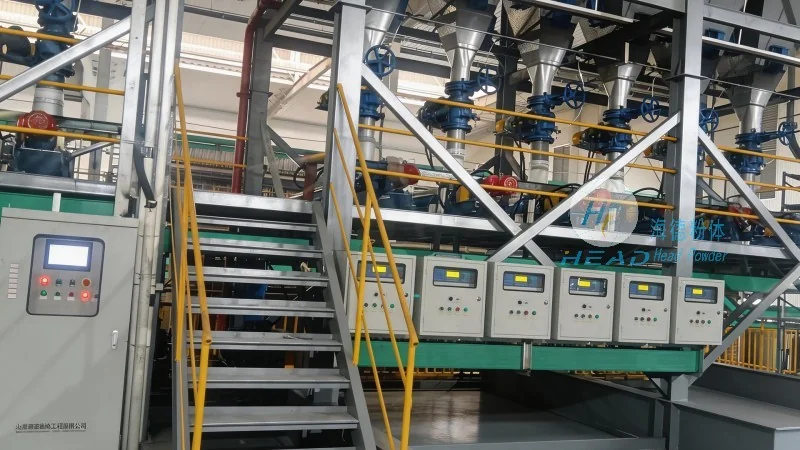
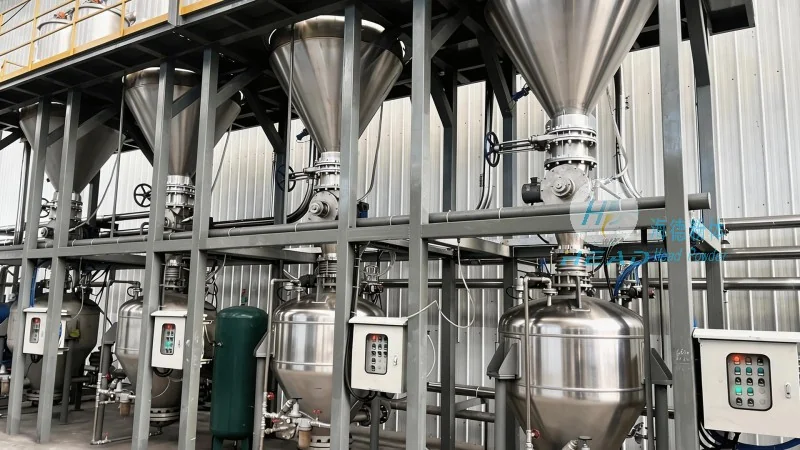
Pneumatic conveying, or air-based transport, is another popular method for moving coke pellets, especially in applications where dust control and contamination prevention are critical. This system uses compressed air to create a flow that propels the coke pellets through a pipeline. There are two main types of pneumatic conveying: dilute-phase and dense-phase. Dilute-phase systems use low air velocities to move pellets in a cloud-like state, suitable for short to medium distances. Dense-phase systems, on the other hand, use higher air velocities and pressure to move pellets in a more concentrated stream, ideal for longer distances and higher material loads. Pneumatic conveying offers several benefits, including the ability to transport coke pellets in a closed system, reducing dust emissions and environmental impact. It also allows for vertical and horizontal transport in a single line, simplifying the layout of the facility. However, pneumatic systems can be more complex and require higher energy consumption compared to belt conveyors. The cost of compressed air and the need for regular maintenance of the air handling equipment are additional considerations for facilities considering pneumatic conveying.
3. Screw Conveyors for Coke Pellet Handling
Screw conveyors, also known as auger conveyors, are a versatile and compact solution for transporting coke pellets, particularly in applications with limited space or where vertical transport is required. These systems consist of a rotating screw (auger) inside a cylindrical housing, which moves the material along the length of the conveyor. Screw conveyors are effective for both horizontal and vertical transport, making them suitable for elevating coke pellets from lower to higher levels in a facility. They are often used in storage silos or feed systems where coke pellets need to be moved from a lower storage area to a processing unit. The advantages of screw conveyors include their compact design, which saves space in the facility, and their ability to handle a wide range of materials, including those with varying moisture content. Screw conveyors are also relatively simple to install and maintain, with fewer moving parts compared to other systems. However, they may not be as efficient for high-volume transport over long distances, as the screw can experience wear and tear more quickly under heavy loads. Additionally, the risk of material bridging or clogging in the screw is higher with cohesive or sticky coke pellets, requiring regular cleaning and maintenance.
4. Hydraulic Conveying Systems
Hydraulic conveying systems use water or a liquid medium to transport coke pellets, primarily in applications where the material is prone to dust or where the facility is located in an area with strict environmental regulations. This method involves mixing the coke pellets with water to create a slurry, which is then pumped through a pipeline to the processing area. The slurry is then separated from the water, and the coke pellets are recovered for use. Hydraulic conveying offers the advantage of effectively controlling dust emissions and preventing material loss during transport. It is particularly useful for transporting coke pellets over long distances or in hilly terrain, as the liquid medium can be easily pumped through pipelines with minimal friction. However, hydraulic systems require additional equipment for slurry preparation and separation, increasing the initial investment and operational costs. The need for water treatment and disposal of the wastewater is also a consideration, as the slurry may contain contaminants that need to be managed. Additionally, the hydraulic system may be less suitable for applications where the coke pellets need to be handled in a dry state, as the slurry process may affect the material's properties.

 Shandong Headpowder Engineering Co., Ltd.
 156-6277-7102(Quản lý Trương)
  0531-83386006
  Thành phố Tế Nam, Tỉnh Sơn Đông, Trung Quốc
Điện thoại
WeChatTư vấn
Lên đầu