Chuyên sâu trong lĩnh vực vật liệu rời công nghiệp, cung cấp giải pháp môi trường thông minh tích hợp cho phối trộn tự động, cấp liệu tập trung, khử lưu huỳnh và khử nitơ khô!
When it comes to handling PVC powder in industrial settings, selecting the right conveying method is crucial for efficiency, safety, and product integrity. As a leading manufacturer in the field, Shandong HeadPowder Engineering Co., Ltd. understands the importance of choosing appropriate equipment for transporting PVC powder. This article explores various conveying methods used in the industry, providing insights into their applications and benefits.
About Shandong HeadPowder Engineering Co., Ltd.
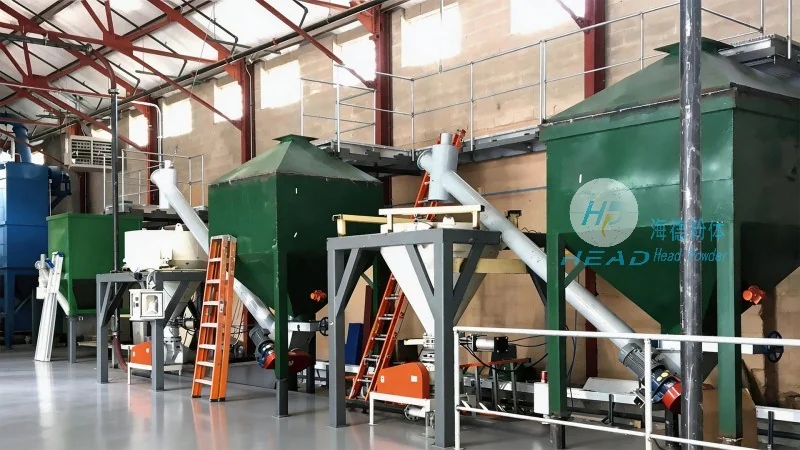
HeadPowder, a division of Shandong HeadPowder Engineering Co., Ltd., specializes in providing high-quality solutions for powder handling and processing. With years of experience and a commitment to innovation, HeadPowder offers reliable equipment and services tailored to meet the needs of clients in various industries. Headquartered in Shandong, China, the company leverages advanced technology and expert knowledge to deliver efficient and safe conveying solutions for PVC powder and other materials.
1. Screw Conveyors for PVC Powder
Screw conveyors, also known as auger conveyors, are a common choice for transporting PVC powder horizontally or at a slight incline. These systems consist of a rotating helical screw inside a trough, which moves the powder forward through the conveyor. Screw conveyors are particularly effective for handling dry, free-flowing materials like PVC powder, as they provide consistent and controlled movement. They are often used in applications where the powder needs to be moved over short to medium distances, such as in mixing or blending operations. The design of screw conveyors allows for easy integration with other processing equipment, making them a versatile option for industrial use.

2. Pneumatic Conveying Systems
Pneumatic conveying systems use air or other gases to transport PVC powder through a pipeline. These systems can be categorized into two main types: pressure and vacuum. Pressure systems force air into a container or hopper, pushing the powder through the pipeline, while vacuum systems create a negative pressure to draw the powder from a source. Pneumatic conveying is ideal for applications requiring long-distance transport or when the powder needs to be transferred between different locations within a facility. It offers advantages such as low maintenance, minimal product contamination, and the ability to handle fine or abrasive powders. However, proper design and maintenance are essential to prevent clogging and ensure efficient operation.

3. Belt Conveyors
Belt conveyors are widely used for transporting PVC powder over longer distances, especially in bulk handling operations. These systems consist of a continuous belt that moves the powder along a path, supported by rollers or idlers. Belt conveyors are suitable for both horizontal and inclined transport, and they can handle large volumes of material. They are often used in combination with other equipment, such as feeders or elevators, to create a complete material handling system. The design of belt conveyors allows for easy adjustment of speed and capacity, making them adaptable to different production requirements. However, they may require more space and maintenance compared to other conveying methods, and they are not suitable for fine powders that might cause the belt to slip or wear.
4. Bucket Elevators
Bucket elevators are vertical or inclined conveyors that use buckets attached to a chain or belt to lift and transport PVC powder. These systems are ideal for moving powder vertically or over significant vertical distances, such as from a hopper to a processing unit. Bucket elevators are capable of handling high volumes of material and can operate at high speeds, making them efficient for large-scale operations. They are often used in applications where space is limited vertically, and the powder needs to be elevated to a higher level. The design of bucket elevators ensures that the powder is contained within the buckets, reducing dust and spillage. However, they may require more power and maintenance compared to other horizontal conveying systems.
5. Vibrating Conveyors
Vibrating conveyors use vibration to move PVC powder along a trough. These systems consist of a conveyor bed that vibrates at a specific frequency and amplitude, causing the powder to move forward. Vibrating conveyors are suitable for handling sticky or cohesive materials, as the vibration helps to break up agglomerates and ensure smooth movement. They are often used in applications where the powder needs to be transported over long distances or at a slight incline. Vibrating conveyors offer advantages such as low maintenance, minimal wear on components, and the ability to handle a wide range of materials. However, they may not be as effective for very fine powders, as the vibration can cause the material to become airborne and cause dust issues.
Conclusion and Recommendations
Selecting the appropriate PVC powder conveying method depends on several factors, including the material characteristics, distance to be covered, and specific application requirements. Shandong HeadPowder Engineering Co., Ltd. offers a range of conveying solutions tailored to meet these needs, ensuring efficient and reliable transport of PVC powder. By considering factors such as material flowability, distance, and operational environment, industrial facilities can choose the most suitable conveying method to enhance productivity and maintain product quality. HeadPowder's expertise in powder handling technology enables clients to optimize their conveying systems and achieve better results in their operations.

 Shandong Headpowder Engineering Co., Ltd.
 156-6277-7102(Quản lý Trương)
  0531-83386006
  Thành phố Tế Nam, Tỉnh Sơn Đông, Trung Quốc
Điện thoại
WeChatTư vấn
Lên đầu