Chuyên sâu trong lĩnh vực vật liệu rời công nghiệp, cung cấp giải pháp môi trường thông minh tích hợp cho phối trộn tự động, cấp liệu tập trung, khử lưu huỳnh và khử nitơ khô!
Calcium oxide, commonly known as quicklime, is a vital industrial material utilized across sectors including construction, steel production, and chemical manufacturing. The efficient and safe transportation of calcium oxide powder from production sites to processing units is a critical challenge for many industries. Traditional methods such as belt conveyors or manual handling often encounter limitations, including dust generation, material degradation, and operational inefficiencies. In response to these challenges, pneumatic conveying has emerged as a preferred solution for calcium oxide powder transport. This article explores various calcium oxide powder conveying methods and highlights the advanced pneumatic conveying solutions offered by Shandong HeadPowder Engineering Co., Ltd., a leading provider in the field.

Pneumatic Conveying Technology Overview
Pneumatic conveying systems utilize air or gas to transport bulk materials through a pipeline network. This method is particularly suitable for fine powders like calcium oxide due to its ability to handle abrasive and dusty materials without causing wear or contamination. Unlike mechanical conveyors, pneumatic systems eliminate the need for physical contact between the material and the conveyor, reducing the risk of product degradation and ensuring a cleaner operation. The technology operates on the principle of creating a pressure differential within the pipeline, which propels the powder particles through the system. There are two main types of pneumatic conveying: pressure and vacuum systems, each with distinct applications and advantages.
HeadPowder's Pneumatic Conveying System Features

Shandong HeadPowder Engineering Co., Ltd. specializes in designing and manufacturing customized pneumatic conveying systems tailored to the specific needs of calcium oxide powder handling. Their systems are engineered to deliver high efficiency, reliability, and safety. Key features include: advanced material handling capabilities that can handle high volumes of calcium oxide powder with minimal pressure drop; robust and corrosion-resistant components to withstand the abrasive nature of the material; and integrated dust control mechanisms that ensure compliance with environmental regulations. The company's expertise lies in optimizing the conveying process to minimize energy consumption while maximizing throughput, making their solutions cost-effective and sustainable.
System Composition and Working Principle
HeadPowder's pneumatic conveying systems typically consist of several key components, including a hopper for material storage, a feeder to control the flow rate, a conveying line with appropriate pipe diameter and length, and a receiver for material discharge. The system operates by first loading the calcium oxide powder into the hopper. The feeder then regulates the material flow into the conveying line, where it is entrained by a high-velocity air stream. The air-powder mixture travels through the pipeline to the receiver, where the material is separated from the air using a cyclone or filter system. The separated air is then recirculated back into the system, while the calcium oxide powder is collected for further processing. This closed-loop system minimizes material loss and ensures a clean operation, reducing the need for manual cleaning and maintenance.

Application Scenarios and Advantages
The pneumatic conveying solutions from HeadPowder are widely used in various applications involving calcium oxide powder transport. For instance, in steel plants, calcium oxide is used as a flux in the blast furnace process, and the system efficiently conveys it from storage silos to the furnace. In construction material production, the powder is used as a raw material for cement and mortar, and the system ensures seamless transfer from production lines to packaging units. The advantages of using HeadPowder's systems include: reduced labor costs due to automated material handling; improved safety by eliminating manual handling of dusty materials; and enhanced product quality by preventing contamination and degradation. Additionally, the systems are designed to be flexible, allowing for easy integration with existing production lines and future expansion.
Installation and Maintenance Recommendations
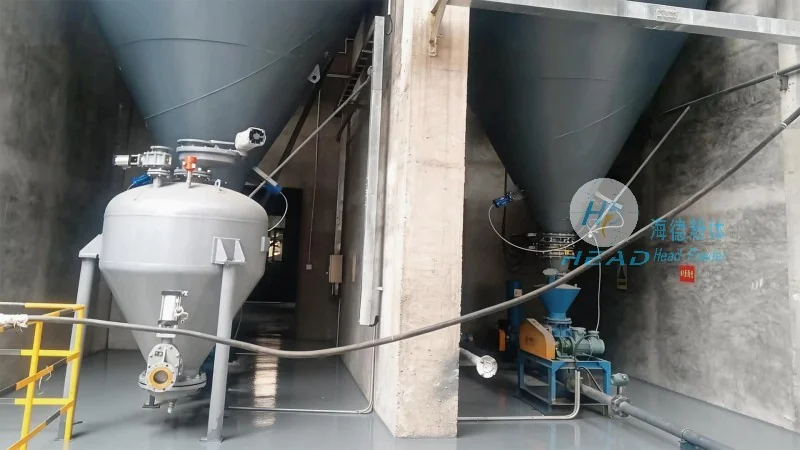
Proper installation and regular maintenance are crucial for the optimal performance and longevity of pneumatic conveying systems. HeadPowder provides comprehensive guidance on system setup, emphasizing the importance of selecting the correct pipe diameter and length based on the material characteristics and conveying distance. The company recommends regular inspection of components such as hoppers, feeders, and filters to ensure they are functioning correctly. Routine maintenance tasks include cleaning the system to prevent dust accumulation, checking for leaks in the air supply, and replacing worn-out parts. By following these recommendations, users can maximize the system's lifespan and maintain consistent performance. HeadPowder also offers technical support and training services to help clients operate and maintain their systems effectively.
In conclusion, pneumatic conveying has revolutionized the way calcium oxide powder is transported, offering a more efficient, safe, and environmentally friendly alternative to traditional methods. Shandong HeadPowder Engineering Co., Ltd. stands out as a trusted partner in providing advanced pneumatic conveying solutions tailored to the unique needs of calcium oxide powder handling. With their expertise in system design, robust manufacturing, and comprehensive support, HeadPowder ensures that clients can achieve reliable and cost-effective material transport, supporting their industrial operations in the most efficient manner.

 Shandong Headpowder Engineering Co., Ltd.
 156-6277-7102(Quản lý Trương)
  0531-83386006
  Thành phố Tế Nam, Tỉnh Sơn Đông, Trung Quốc
Điện thoại
WeChatTư vấn
Lên đầu