Chuyên sâu trong lĩnh vực vật liệu rời công nghiệp, cung cấp giải pháp môi trường thông minh tích hợp cho phối trộn tự động, cấp liệu tập trung, khử lưu huỳnh và khử nitơ khô!
When designing a glass fiber pneumatic conveying system, several key factors must be considered to ensure efficiency, reliability, and cost-effectiveness. The system's design involves understanding the material properties of glass fiber, the required conveying distance, and the desired flow rates. A well-planned system can significantly enhance production efficiency and reduce operational costs.

Key Design Considerations for Glass Fiber Pneumatic Conveying
First, the material characteristics of glass fiber, such as its density, particle size, and moisture content, play a crucial role in system design. These factors influence the selection of the appropriate conveying method—whether it's a dilute phase or dense phase system. For example, fine glass fiber particles may require a dilute phase system with higher air velocity to prevent clogging, while larger particles might benefit from a dense phase system that uses lower air velocity and higher pressure to maintain flow.
System Components and Their Functions

The core components of a glass fiber pneumatic conveying system include the hopper, feeder, air compressor, conveying line, and receiver. Each component serves a specific function to ensure smooth material transport. The hopper is designed to store the glass fiber and provide a consistent feed to the feeder. The feeder controls the material flow rate, which is critical for maintaining system stability. The air compressor generates the necessary air pressure to move the material through the conveying line. The conveying line, typically made of stainless steel or other corrosion-resistant materials, must be able to withstand the abrasive nature of glass fiber. The receiver collects the conveyed material and can be equipped with a dust collection system to ensure environmental compliance.
Selection of Conveying Method
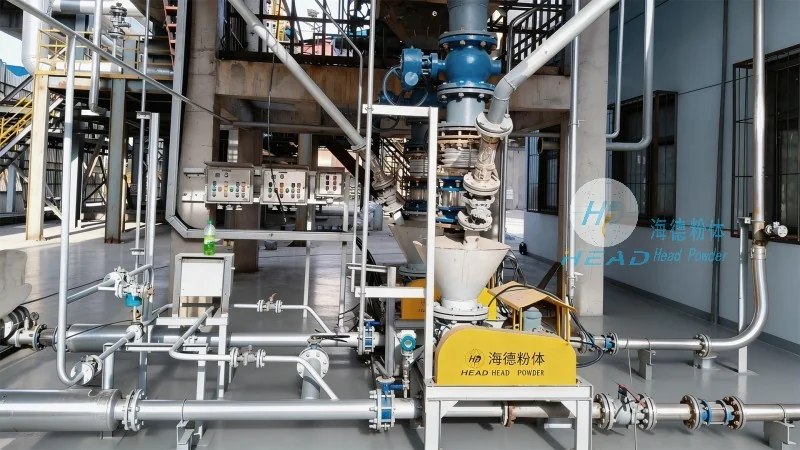
Choosing the right conveying method is essential for optimal performance. Dilute phase systems use high air velocity to transport material in a suspended state, suitable for short to medium distances and fine particles. Dense phase systems, on the other hand, use lower air velocity and higher pressure to push material in a slurry-like state, ideal for longer distances and larger particles. The choice depends on the specific application and operational requirements. For instance, in a glass fiber manufacturing plant, a combination of both methods might be used to handle different production stages efficiently.
System Sizing and Capacity Planning
Proper system sizing is vital to meet production demands without over-engineering. This involves calculating the required air volume and pressure based on the material flow rate and conveying distance. The system must be designed to handle peak loads while maintaining consistent performance. HeadPowder, a leading engineering company based in Shandong, China, specializes in designing and implementing such systems, ensuring that each project is tailored to the client's specific needs and operational conditions.
Installation and Maintenance Considerations

After system design and installation, regular maintenance is essential to ensure long-term reliability. This includes checking for wear and tear in components like the feeder and conveying line, cleaning the system to prevent material buildup, and monitoring air pressure and flow rates. Proper maintenance can extend the system's lifespan and reduce downtime. HeadPowder provides comprehensive maintenance services to its clients, ensuring that their glass fiber pneumatic conveying systems operate at peak efficiency.

 Shandong Headpowder Engineering Co., Ltd.
 156-6277-7102(Quản lý Trương)
  0531-83386006
  Thành phố Tế Nam, Tỉnh Sơn Đông, Trung Quốc
Điện thoại
WeChatTư vấn
Lên đầu