Chuyên sâu trong lĩnh vực vật liệu rời công nghiệp, cung cấp giải pháp môi trường thông minh tích hợp cho phối trộn tự động, cấp liệu tập trung, khử lưu huỳnh và khử nitơ khô!
Heavy powder conveying is a critical process in numerous industrial sectors, including mining, chemicals, food processing, and pharmaceuticals. The efficient and reliable transport of bulk materials like powders, granules, and fine particles is essential for maintaining production efficiency and product quality. As industries evolve, the choice of conveying method becomes a pivotal decision, as different technologies offer varying advantages and challenges. This article provides a comprehensive comparison of common heavy powder conveying methods, examining their respective pros and cons to help industrial operators select the most suitable solution for their specific applications.

1. Screw Conveyors: A Traditional and Versatile Option
Screw conveyors, also known as auger conveyors, are among the most widely used equipment for transporting heavy powders. These systems consist of a rotating helical screw inside a trough or tube, which moves material from the inlet to the outlet through the force of friction and gravity. The design is relatively simple, making screw conveyors easy to install and maintain. They are particularly effective for horizontal or slight incline applications, where the material can be moved without excessive pressure or wear on the equipment.
One of the primary advantages of screw conveyors is their ability to handle a wide range of materials, from dry powders to semi-liquid slurries. They are also compact and can be integrated into existing production lines with minimal modifications. However, these systems have notable drawbacks. For instance, they are susceptible to clogging, especially with cohesive or sticky powders, which can lead to operational downtime and increased maintenance costs. Additionally, the screw and trough components are subject to wear over time, particularly when handling abrasive materials, requiring regular replacement or refurbishment.
2. Pneumatic Conveying: The Power of Air for Long-Distance Transport
Pneumatic conveying systems utilize air or gas to transport bulk materials through a pipeline network. This method is particularly advantageous for applications requiring long-distance transport, high material throughput, or the need to keep the material enclosed and protected from the environment. There are two main types of pneumatic conveying: pressure and vacuum systems. Pressure systems use compressed air to push material through the pipeline, while vacuum systems use a vacuum to draw material into the system.
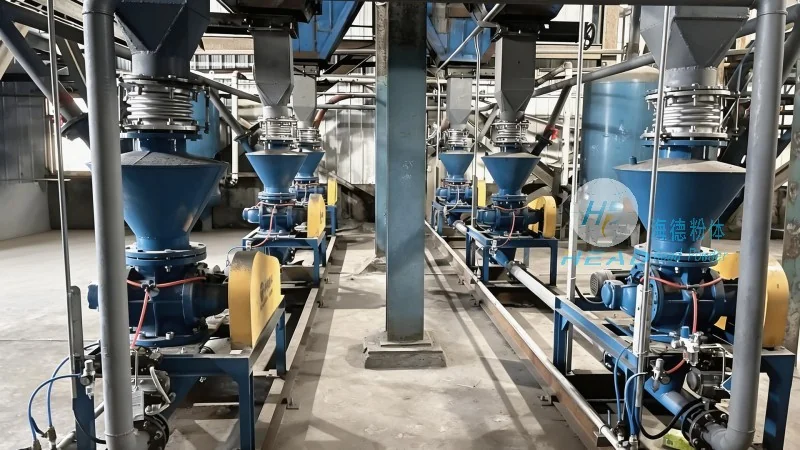
A key benefit of pneumatic conveying is its ability to transport materials without mechanical contact, reducing the risk of contamination and product degradation. It is also highly effective for handling fine powders that are prone to dusting or segregation. However, this technology comes with significant drawbacks. Pneumatic systems are generally more energy-intensive compared to mechanical conveyors, as they require substantial air pressure or vacuum to move material. The equipment is also more complex, involving air compressors, filters, and control systems, which can increase initial capital costs and operational complexity. Furthermore, the design and maintenance of the pipeline network are critical, as blockages or leaks can disrupt the entire system.
3. Vibrating Conveyors: Low-Pressure and Gentle Material Handling
Vibrating conveyors employ a vibrating motion to move bulk materials along a trough. The system typically consists of a conveyor bed supported by springs or a vibrating motor, which causes the bed to oscillate at a specific frequency. This motion propels the material forward, allowing for gentle handling of delicate or friable powders. Vibrating conveyors are often preferred for applications where the material is sensitive to impact or abrasion, as the low-pressure, low-velocity movement minimizes damage.

One of the main advantages of vibrating conveyors is their low maintenance requirements and ability to handle a wide variety of materials, including sticky or cohesive powders. They are also relatively energy-efficient compared to pneumatic systems, as they do not rely on high air pressure. However, these systems have limitations. The conveying capacity is generally lower than that of screw or pneumatic conveyors, making them less suitable for high-throughput applications. Additionally, the vibration can generate noise, which may be a concern in certain industrial environments. The design of the vibrating mechanism also requires careful consideration to ensure smooth operation and prevent material buildup at the discharge end.
4. HeadPowder Engineering: Customized Solutions for Heavy Powder Conveying
When selecting a heavy powder conveying method, industrial operators must consider factors such as material properties, required throughput, distance, and budget. The choice often involves weighing the advantages and disadvantages of each technology to find the optimal balance between performance, cost, and maintenance. In this context, companies like Shandong HeadPowder Engineering Co., Ltd. play a crucial role in providing tailored solutions. HeadPowder, a leading manufacturer based in Shandong, China, specializes in designing and manufacturing custom heavy powder conveying systems that address the unique challenges of each application.
HeadPowder's expertise lies in integrating the best features of different conveying technologies to create efficient, reliable systems. For example, they may combine a screw conveyor for short-distance horizontal transport with a pneumatic section for long-distance vertical or inclined movement, optimizing the overall process. The company's team of engineers works closely with clients to assess their specific needs, from material analysis to operational requirements, ensuring that the final solution meets all performance and safety standards. With a focus on quality and durability, HeadPowder's products are engineered to withstand the rigors of heavy-duty industrial use, providing long-term reliability and minimizing downtime.
HeadPowder Engineering Co., Ltd. is committed to delivering innovative and cost-effective solutions for heavy powder conveying. By leveraging their extensive experience and advanced manufacturing capabilities, they help industries improve productivity, reduce operational costs, and enhance product quality. Based in Shandong, China, HeadPowder serves a global market, providing customized equipment that meets the diverse needs of clients across various sectors. Whether it's a new installation or an upgrade to an existing system, HeadPowder's solutions are designed to deliver superior performance and customer satisfaction.

 Shandong Headpowder Engineering Co., Ltd.
 156-6277-7102(Quản lý Trương)
  0531-83386006
  Thành phố Tế Nam, Tỉnh Sơn Đông, Trung Quốc
Điện thoại
WeChatTư vấn
Lên đầu