Chuyên sâu trong lĩnh vực vật liệu rời công nghiệp, cung cấp giải pháp môi trường thông minh tích hợp cho phối trộn tự động, cấp liệu tập trung, khử lưu huỳnh và khử nitơ khô!
Fiber materials, such as wood chips, pulp, and other fibrous substances, are widely used in various industries including paper manufacturing, biomass energy, and chemical processing. Efficient and reliable conveying methods are crucial for the smooth operation of production lines. This article provides a detailed comparison of common fiber material conveying methods, focusing on their applications, advantages, and limitations.

About HeadPowder Engineering
HeadPowder, a leading manufacturer in the field of material handling equipment, specializes in providing customized solutions for fiber material conveying. With years of experience and advanced technology, HeadPowder offers a range of high-quality conveying systems tailored to meet the specific needs of different industries. The company is headquartered in Shandong, China, and serves clients globally with its innovative products and professional services.
1. Screw Conveyors for Fiber Materials

Screw conveyors, also known as auger conveyors, are one of the most common and versatile methods for transporting fibrous materials. They consist of a rotating screw (auger) inside a cylindrical tube, which pushes the material forward through the system. Screw conveyors are particularly suitable for handling dry or slightly moist fiber materials, such as wood chips or sawdust. The key advantages of screw conveyors include their compact design, low maintenance requirements, and ability to operate in a vertical or inclined position. However, they may not be ideal for very fine or abrasive fiber materials, as the screw and tube can cause wear and tear over time.
2. Belt Conveyors for Bulk Fiber Transport
Belt conveyors are widely used for the horizontal or slight inclined transport of bulk fiber materials. They feature a continuous belt that moves over rollers or pulleys, carrying the material from one point to another. Belt conveyors are highly efficient for long-distance transport and can handle large volumes of material. The main benefits include high capacity, low energy consumption, and the ability to transport materials over long distances without the need for intermediate transfers. However, belt conveyors require regular maintenance to ensure the belt remains in good condition and to prevent material buildup or slippage. They are also less suitable for vertical transport due to the need for steep inclines or multiple sections.
3. Pneumatic Conveying Systems for Fine Fibers
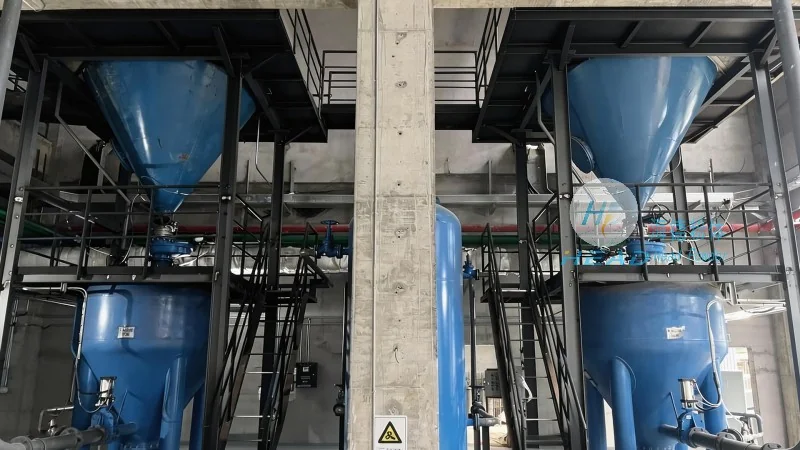
Pneumatic conveying systems use air or other gases to transport fine fiber materials through a pipeline. This method is particularly effective for handling dust, powders, and other fine fibrous substances that are difficult to move with mechanical systems. The system typically consists of a blower, a hopper, and a pipeline with appropriate fittings. Pneumatic conveying offers advantages such as the ability to transport materials over long distances, the flexibility to change the direction of the pipeline, and the reduction of material handling noise. However, it requires a higher initial investment and may need additional equipment for air filtration and pressure control. The system is also less efficient for very coarse or heavy fiber materials.
Comparison and Selection Criteria
When selecting a fiber material conveying method, several factors need to be considered, including the type and properties of the material, the distance and direction of transport, the required capacity, and the available space. Screw conveyors are often preferred for short to medium distances and vertical transport due to their simplicity and low cost. Belt conveyors are ideal for long horizontal transport and large volumes, while pneumatic systems are better suited for fine or dusty materials and flexible routing. The choice of system also depends on the budget and maintenance capabilities of the operation. HeadPowder Engineering provides comprehensive solutions, including the design, manufacturing, and installation of custom conveying systems that match the specific requirements of each client, ensuring optimal performance and efficiency.
Conclusion
Fiber material conveying is a critical aspect of many industrial processes, and the choice of conveying method significantly impacts the overall efficiency and cost-effectiveness of operations. By understanding the characteristics and limitations of different methods, such as screw conveyors, belt conveyors, and pneumatic systems, industries can select the most appropriate solution for their needs. HeadPowder Engineering, with its expertise and advanced technology, continues to provide reliable and efficient conveying solutions to clients worldwide, helping them optimize their production lines and improve overall performance.

 Shandong Headpowder Engineering Co., Ltd.
 156-6277-7102(Quản lý Trương)
  0531-83386006
  Thành phố Tế Nam, Tỉnh Sơn Đông, Trung Quốc
Điện thoại
WeChatTư vấn
Lên đầu