Chuyên sâu trong lĩnh vực vật liệu rời công nghiệp, cung cấp giải pháp môi trường thông minh tích hợp cho phối trộn tự động, cấp liệu tập trung, khử lưu huỳnh và khử nitơ khô!
When it comes to efficiently moving corn kernels from one location to another, selecting the right conveying method is crucial for maintaining product quality, reducing operational costs, and ensuring smooth workflow in agricultural and processing facilities. The choice of conveying system depends on several factors, including the volume of corn kernels, the distance to be covered, the environment (e.g., indoor or outdoor), and the specific requirements of the processing line. Below, we explore the primary methods used for corn kernel conveyance, highlighting their advantages and typical applications.
1. Mechanical Conveyors: Traditional and Reliable Solutions

Mechanical conveyors are among the most common and reliable methods for transporting corn kernels. These systems utilize mechanical components such as belts, chains, or screws to move the kernels. The most widely used types include:
Belt Conveyors: Ideal for horizontal or slightly inclined transport, belt conveyors use a continuous belt to carry corn kernels. They are suitable for medium to high volumes and can handle a wide range of kernel sizes and moisture contents. Belt conveyors are often used in grain handling facilities, storage silos, and processing plants.
Chain and Flight Conveyors: These conveyors consist of a series of flights attached to a chain that moves along a frame. They are particularly effective for vertical or steeply inclined transport, making them suitable for elevating corn kernels from lower to higher levels in processing lines. Chain and flight conveyors can handle bulk materials with minimal product degradation.
Screw Conveyors (Augers): Screw conveyors use a rotating screw to push corn kernels forward. They are excellent for handling granular materials and are often used in applications where space is limited or where the material needs to be mixed or blended. Screw conveyors are commonly employed in feed mills and processing plants for transporting corn kernels to grinding or mixing equipment.
HeadPowder, a leading provider of grain handling solutions, offers a range of mechanical conveyor systems tailored to the specific needs of corn kernel transport. Our products are designed to ensure durability, efficiency, and minimal maintenance, helping businesses optimize their operations and maintain product integrity throughout the conveying process.
2. Pneumatic Conveying Systems: Efficient and Flexible Transport
Pneumatic conveying systems use air or gas to transport corn kernels through a pipeline. This method is highly flexible and can be used for both short and long distances, making it suitable for complex processing lines where multiple transfer points are required. There are two main types of pneumatic conveyors:
Positive Displacement Pneumatic Conveyors: These systems use a pump to create a positive pressure, pushing corn kernels through the pipeline. They are ideal for high-volume, long-distance transport and can handle a wide range of particle sizes. Positive displacement conveyors are commonly used in large-scale grain handling operations.
Pressure Conveyors: Also known as dilute-phase or dense-phase systems, pressure conveyors use compressed air to move corn kernels. They are effective for both short and long distances and can handle abrasive materials without causing excessive wear. Pressure conveyors are often used in applications where product purity is critical, such as in food processing facilities.

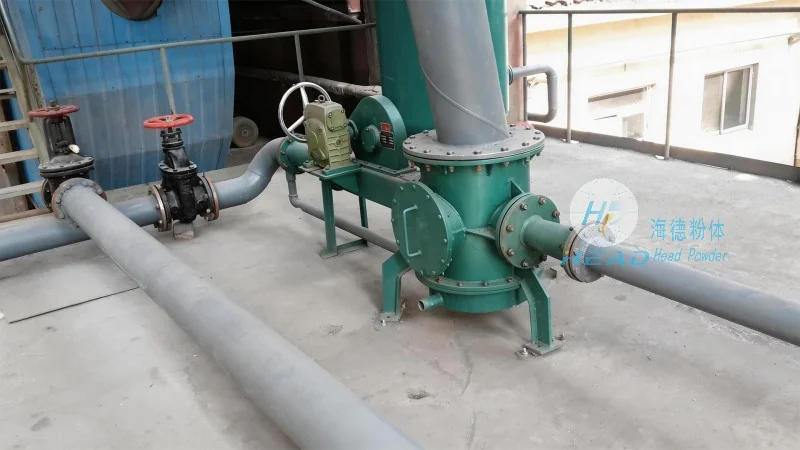
HeadPowder specializes in designing and manufacturing pneumatic conveying systems that meet the demands of corn kernel transport. Our systems are engineered to minimize product degradation, reduce energy consumption, and provide reliable performance, ensuring that corn kernels are transported safely and efficiently from one stage of processing to the next.
3. Hydraulic Conveying: Gentle and Controlled Movement
Hydraulic conveying systems use water or other liquids to transport corn kernels through a pipeline. This method is particularly suitable for delicate or high-value corn kernels, as it provides a gentle and controlled movement that minimizes product damage. Hydraulic conveyors are commonly used in applications where the quality of the corn kernels is paramount, such as in the production of high-quality feed or specialty corn products.
HeadPowder offers hydraulic conveying solutions that are designed to handle the specific requirements of corn kernel transport. Our systems are equipped with advanced control mechanisms to ensure precise and consistent movement, helping businesses maintain product quality and meet the highest standards in the industry.
4. Air-Lift and Bucket Elevators: Vertical Transport Solutions

For vertical transport of corn kernels, air-lift and bucket elevators are widely used. These systems are designed to lift corn kernels from lower levels to higher levels in processing lines, such as from storage silos to processing equipment. Air-lift systems use compressed air to create a vacuum that lifts the kernels, while bucket elevators use a series of buckets attached to a chain or belt to transport the kernels vertically.
HeadPowder provides bucket elevators and air-lift systems that are specifically designed for corn kernel transport. Our products are built to withstand the demands of continuous operation and are equipped with features such as wear-resistant materials and efficient air distribution systems, ensuring reliable and efficient vertical transport of corn kernels.
5. Combining Methods: Hybrid Conveying Systems
In many industrial settings, a single conveying method may not be sufficient to meet all the requirements of corn kernel transport. Hybrid systems, which combine two or more of the above methods, are often used to achieve optimal performance. For example, a system might use a mechanical conveyor to transport corn kernels horizontally and then use a pneumatic conveyor to move them vertically to a higher level.

 Shandong Headpowder Engineering Co., Ltd.
 156-6277-7102(Quản lý Trương)
  0531-83386006
  Thành phố Tế Nam, Tỉnh Sơn Đông, Trung Quốc
Điện thoại
WeChatTư vấn
Lên đầu