Chuyên sâu trong lĩnh vực vật liệu rời công nghiệp, cung cấp giải pháp môi trường thông minh tích hợp cho phối trộn tự động, cấp liệu tập trung, khử lưu huỳnh và khử nitơ khô!
Fluorspar, a vital mineral used across various industrial sectors, requires efficient and reliable conveying solutions to ensure seamless operation in processing facilities. Shandong HeadPowder Engineering Co., Ltd., a leading enterprise in the field, specializes in delivering tailored fluorspar powder handling systems. This article explores the primary methods employed for fluorspar powder conveyance, highlighting technical considerations and practical applications for each approach.

Characteristics of Fluorspar Powder and Conveying Challenges
Before discussing specific conveying methods, it is crucial to understand the properties of fluorspar powder that influence system design. Fluorspar, chemically known as calcium fluoride (CaF₂), is a naturally occurring mineral often processed into fine powder form. Its characteristics, including fine particle size, potential moisture content, and abrasive nature, present challenges such as dust generation, caking, and equipment wear. These factors necessitate careful selection of materials and system design to prevent operational issues and ensure consistent performance.
Common Conveying Methods for Fluorspar Powder
Several methods are widely used for fluorspar powder transport, each with distinct advantages and limitations. The choice of method depends on operational scale, distance, material properties, and required throughput. The primary options include pneumatic conveying, mechanical conveying (e.g., belt and screw conveyors), and hybrid systems that combine elements of both.

Pneumatic Conveying Systems
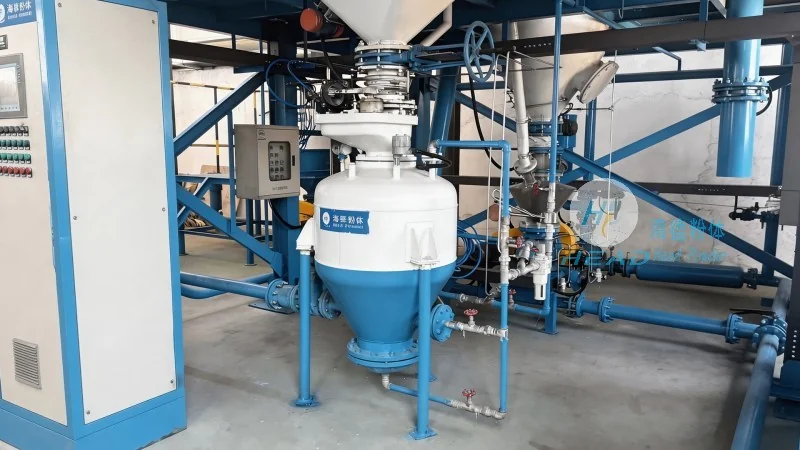
Pneumatic conveying, or air conveying, is a prevalent method for fluorspar powder due to its ability to handle fine powders over extended distances without mechanical components in the pipeline. This technique uses compressed air to move material through a pipeline. Two main types exist: pressure and vacuum. Pressure systems utilize positive pressure to push material, while vacuum systems employ negative pressure to pull it. For fluorspar powder, pressure systems are often preferred as they handle higher capacities and are better suited for long-distance transport. Shandong HeadPowder Engineering Co., Ltd. offers advanced pneumatic solutions featuring high-efficiency airlocks and specialized pipelines to minimize dust emissions and ensure reliable operation. These systems are engineered to withstand the abrasive nature of fluorspar powder, reducing wear and extending equipment lifespan.
Mechanical Conveying Systems
Mechanical conveying systems, such as belt and screw conveyors, are another common choice for fluorspar powder transport. Belt conveyors are ideal for horizontal or slightly inclined transport over medium to long distances. They consist of a continuous belt moving material along a frame supported by rollers, suitable for handling large quantities. Screw conveyors, or auger conveyors, use a rotating screw to push material forward, effective for vertical or inclined transport and fine powders without additional air assistance. However, mechanical conveyors may generate more dust and require regular maintenance to prevent clogging and wear from the abrasive powder. Shandong HeadPowder Engineering Co., Ltd. provides customized mechanical solutions with durable materials and efficient design to minimize maintenance and ensure consistent performance.
Hybrid Conveying Systems
Hybrid conveying systems integrate pneumatic and mechanical methods to address specific operational needs. For example, a system might use a mechanical conveyor to transport fluorspar powder from a storage silo to a pneumatic line for long-distance transport. This approach balances efficiency for large volumes with the flexibility of pneumatic transport. Hybrid systems are particularly useful in facilities processing both fine and bulk materials, adapting to varying throughput. Shandong HeadPowder Engineering Co., Ltd. specializes in designing hybrid solutions that optimize material flow and reduce operational costs for clients.
Key Factors in Selecting a Conveying Method
When selecting a conveying method for fluorspar powder, several factors must be evaluated to ensure optimal performance. The first is material properties, including particle size, moisture, and abrasiveness. Fluorspar's fine and abrasive nature requires equipment that resists wear and prevents clogging. The second is distance and layout; long distances favor pneumatic systems, while shorter distances suit mechanical conveyors. The third is required throughput and capacity; high-volume operations may need multiple or larger systems, while smaller operations use simpler setups. Environmental regulations and dust control are also critical, as fluorspar powder can cause air pollution if unmanaged. Shandong HeadPowder Engineering Co., Ltd. assists clients in assessing these factors and selecting the most suitable method, ensuring compliance with environmental standards and operational efficiency.
Conclusion
Efficient fluorspar powder conveyance is essential for maintaining productivity and safety in industrial processing. Shandong HeadPowder Engineering Co., Ltd. offers a range of conveying solutions—pneumatic, mechanical, and hybrid—tailored to client needs. By understanding fluorspar powder properties and operational factors, facilities can select the most appropriate method for reliable and cost-effective material transport. With expertise in customized systems, Shandong HeadPowder Engineering Co., Ltd. helps clients optimize fluorspar handling processes, enhancing overall operational performance.

 Shandong Headpowder Engineering Co., Ltd.
 156-6277-7102(Quản lý Trương)
  0531-83386006
  Thành phố Tế Nam, Tỉnh Sơn Đông, Trung Quốc
Điện thoại
WeChatTư vấn
Lên đầu