Chuyên sâu trong lĩnh vực vật liệu rời công nghiệp, cung cấp giải pháp môi trường thông minh tích hợp cho phối trộn tự động, cấp liệu tập trung, khử lưu huỳnh và khử nitơ khô!
Flavoring ingredients are fundamental components in food production, and their efficient conveyance is essential for maintaining product quality and operational efficiency. The methods used to transport these ingredients vary based on ingredient type, production scale, and specific manufacturing requirements. Understanding these conveyance techniques is crucial for businesses to select the most suitable system for their operations.

Gravity Conveyance Systems
Gravity conveyance systems leverage the force of gravity to move flavoring ingredients. These systems are ideal for free-flowing, low-density ingredients like spices or powdered seasonings. The primary components include sloped conveyor belts or chutes that allow ingredients to slide downward naturally. This method is cost-effective and requires minimal maintenance, making it suitable for small to medium-sized facilities. For example, in spice production, gravity chutes transport ingredients from storage bins to processing equipment. The gentle movement preserves ingredient integrity, ensuring flavor and texture remain intact.
Mechanical Conveyance Systems
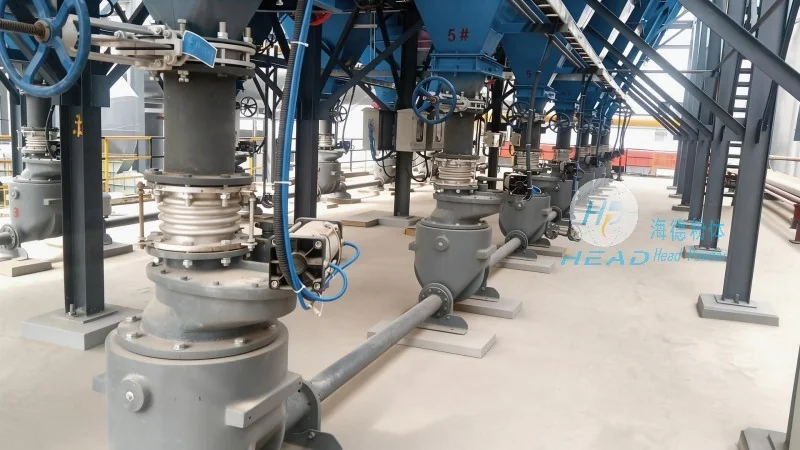
Mechanical conveyance systems use mechanical components to transport ingredients. These systems handle diverse materials, including bulk powders, granules, and some liquid seasonings. Common types include belt conveyors, screw conveyors, and bucket elevators. Belt conveyors use continuous belts for horizontal or slight incline transport, suitable for long-distance movement. Screw conveyors (augers) rotate to push ingredients through tubes, effective for dry, free-flowing powders like salt or pepper. Bucket elevators lift ingredients vertically via buckets on chains or belts, delivering them to processing stages. Mechanical systems offer precise control over speed and direction, ensuring consistent delivery.
Air Conveyance Systems
Air conveyance systems, or pneumatic conveying, use air pressure to transport ingredients. These are best for fine powders and granules prone to dust or contamination. The process creates pressure differentials to draw ingredients into pipelines. Two main types exist: pressure (compressed air pushes) and vacuum (suction pulls). Air systems excel at long-distance transport and multi-stage processing without intermediate transfer points. They maintain product integrity for liquid seasonings or emulsions during transport from mixing tanks to packaging lines.
Hybrid Conveyance Systems
Hybrid systems combine elements of different methods to address complex production needs. These are used in large-scale facilities with varied ingredient types or multi-stage processes. For instance, a hybrid might use a gravity chute for bulk ingredients, feed a screw conveyor, then a pneumatic conveyor to the final stage. This integration optimizes each component for its task, enhancing flexibility and efficiency. Hybrid systems are particularly valuable in environments requiring integration with existing equipment and diverse ingredient handling.
Key Considerations for Selection
Choosing a conveyance method involves evaluating several factors. First, the ingredient's physical properties—particle size, density, and flowability—dictate suitability. High-moisture or clumping ingredients may need specialized equipment like agitated screw conveyors or filtered pneumatic systems. Second, production scale and throughput requirements: small operations benefit from simple gravity/mechanical systems, while large-scale facilities require robust, automated solutions. Third, space constraints and facility layout: available floor space and integration with existing equipment influence system design. Finally, cost of installation, maintenance, and energy consumption must be assessed for long-term economic viability.
Conclusion
Efficient flavoring ingredient conveyance directly impacts product quality and operational efficiency. By selecting the appropriate method—gravity, mechanical, air, or hybrid—manufacturers ensure safe, consistent, and undegraded ingredient transport. Companies like Shandong HeadPowder Engineering Co., Ltd., with expertise in engineering and manufacturing, provide tailored solutions to meet the diverse needs of the flavoring ingredient industry, supporting businesses in achieving optimal production outcomes.

 Shandong Headpowder Engineering Co., Ltd.
 156-6277-7102(Quản lý Trương)
  0531-83386006
  Thành phố Tế Nam, Tỉnh Sơn Đông, Trung Quốc
Điện thoại
WeChatTư vấn
Lên đầu