Chuyên sâu trong lĩnh vực vật liệu rời công nghiệp, cung cấp giải pháp môi trường thông minh tích hợp cho phối trộn tự động, cấp liệu tập trung, khử lưu huỳnh và khử nitơ khô!
Light calcium carbonate, also known as light calcium, is a widely used industrial material in various sectors such as plastics, coatings, and paper. The efficient and reliable transportation of this material is crucial for maintaining production efficiency and product quality. There are several common methods for conveying light calcium, each with its own set of advantages and disadvantages. This article provides a detailed comparison of these methods to help industries choose the most suitable option for their specific needs.

1. Pumping Method: Advantages and Disadvantages
The pumping method is a widely adopted approach for light calcium carbonate transportation, especially in applications where the material is mixed with water or other liquids. This method typically involves using a slurry pump to transport the light calcium in a liquid suspension. The primary advantage of this approach is its ability to handle high volumes of material with relatively low energy consumption. It is particularly effective for long-distance horizontal or slightly inclined transport. However, the pumping method has several drawbacks. One major issue is the risk of clogging in the pump and pipelines, especially if the light calcium has a high solid content or contains impurities. Regular maintenance and cleaning are required to prevent blockages, which can lead to downtime and increased operational costs. Additionally, the pumping method may not be suitable for applications where the material needs to be handled in a dry form, as the presence of water can affect the final product properties.

2. Air-Driven Pneumatic Conveying: Advantages and Disadvantages
Air-driven pneumatic conveying is another common method for light calcium carbonate transport, particularly in applications where the material needs to be moved in a dry state without the use of water. This method utilizes compressed air to transport the material through a pipeline. The main advantage of pneumatic conveying is its ability to handle dry materials efficiently and maintain product purity, as there is no contact with water or other liquids. It is also suitable for transporting light calcium over moderate distances, both horizontally and vertically. However, this method has significant disadvantages. The most notable drawback is the high energy consumption, as compressed air requires substantial power to generate. Additionally, the system can be prone to pressure fluctuations, which may affect the flow rate and cause material degradation. The cost of compressed air generation and the need for regular maintenance of air compressors add to the operational expenses. Moreover, the capacity of pneumatic conveyors is generally lower compared to other methods, making them less suitable for high-volume applications.
3. Screw Conveying: Advantages and Disadvantages
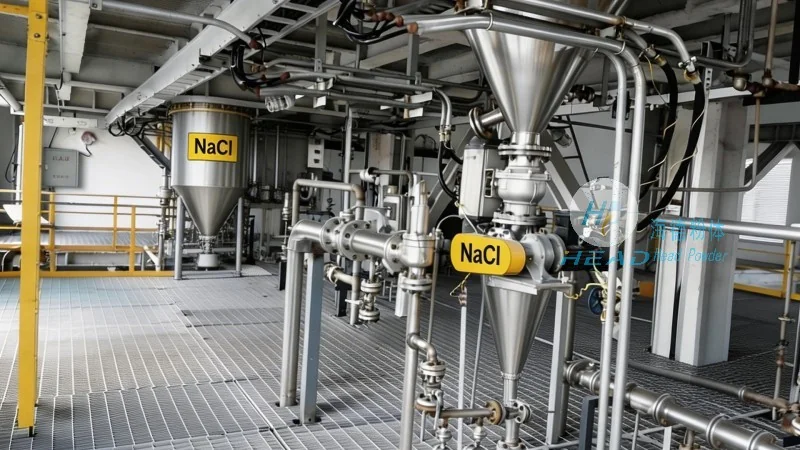
Screw conveying, also known as auger conveying, is a mechanical method used for transporting light calcium carbonate, especially in applications where the material is in a dry, free-flowing state. This method involves a rotating screw (auger) inside a tube or trough, which moves the material forward. The primary advantage of screw conveying is its simplicity and low cost. It requires minimal maintenance and can be easily integrated into existing production lines. Screw conveyors are also effective for vertical or inclined transport, as the rotating screw can lift the material against gravity. However, this method has several limitations. One major disadvantage is the risk of material degradation due to friction between the screw and the material, which can affect the particle size and surface properties of the light calcium. Additionally, screw conveyors have a limited capacity and are not suitable for high-volume or abrasive materials. The design of the screw and the trough also needs to be carefully considered to prevent material buildup and ensure smooth operation.
4. Belt Conveying: Advantages and Disadvantages
Belt conveying is a widely used method for transporting light calcium carbonate, especially in bulk handling applications. This method involves a continuous belt that moves the material along a path, typically supported by rollers. The primary advantage of belt conveying is its high capacity and ability to handle large volumes of material over long distances. It is also suitable for both horizontal and inclined transport and can be easily adapted to different production environments. However, belt conveyors have several disadvantages. One major issue is the risk of material spillage and contamination, especially if the belt is not properly sealed or if the material is abrasive. Regular cleaning and maintenance are required to prevent belt wear and tear, which can increase operational costs. Additionally, belt conveyors require a significant amount of space and may not be suitable for applications with limited floor space. The initial investment for a belt conveyor system is also higher compared to other methods, making it less cost-effective for small-scale operations.
5. Comparison Summary and Recommendations
When choosing a light calcium carbonate conveying method, it is essential to consider several factors, including the material properties, required capacity, distance of transport, and operational costs. The pumping method is suitable for applications with high volume and moderate distances, while pneumatic conveying is better for dry materials and moderate distances. Screw conveying is ideal for dry, free-flowing materials and moderate capacities, and belt conveying is suitable for bulk handling and long distances. Each method has its own advantages and disadvantages, and the best choice depends on the specific requirements of the application.

 Shandong Headpowder Engineering Co., Ltd.
 156-6277-7102(Quản lý Trương)
  0531-83386006
  Thành phố Tế Nam, Tỉnh Sơn Đông, Trung Quốc
Điện thoại
WeChatTư vấn
Lên đầu