Chuyên sâu trong lĩnh vực vật liệu rời công nghiệp, cung cấp giải pháp môi trường thông minh tích hợp cho phối trộn tự động, cấp liệu tập trung, khử lưu huỳnh và khử nitơ khô!
Rare earth mineral powders are crucial components in modern industrial applications, from electronics to renewable energy technologies. The efficient and reliable transportation of these fine powders is essential for maintaining production efficiency and product quality. Various conveying methods are employed in the industry, each with its own advantages and limitations. This article provides a detailed comparison of common rare earth mineral powder conveying methods, focusing on the key aspects that influence their selection and performance.
Introduction to Rare Earth Mineral Powder Conveying
Rare earth minerals, such as neodymium, praseodymium, and cerium, are often processed into fine powders that require specialized handling due to their abrasive nature and potential for dust generation. Conveying these powders involves moving them from one processing stage to another, such as from crushing and grinding to storage or packaging. The choice of conveying method significantly impacts operational costs, material handling efficiency, and environmental safety. Understanding the different options available helps industrial facilities optimize their material handling systems for rare earth mineral powders.
Overview of Conveying Methods for Rare Earth Powders
Several conveying systems are commonly used for rare earth mineral powders, including belt conveyors, pneumatic conveyors, screw conveyors, and hydraulic conveyors. Each method operates on different principles and is suitable for specific operational conditions and material characteristics. The following sections provide a detailed analysis of these methods, highlighting their features, benefits, and typical applications.
Belt Conveyor System for Rare Earth Mineral Powder

Belt conveyors are widely used in the mineral processing industry for transporting bulk materials, including rare earth powders. This system consists of a continuous belt that moves over rollers or pulleys, carrying the material from the loading point to the discharge point. For rare earth mineral powders, belt conveyors are particularly effective when the material is dry and free-flowing. The key advantages of belt conveyors include high capacity, low maintenance costs, and the ability to transport materials over long distances. However, they may not be suitable for very fine or cohesive powders, as these can cause belt slip or material buildup. The design of the belt conveyor, including the type of belt material (e.g., rubber or PVC) and the idler arrangement, is critical to ensure efficient and safe operation. In the context of rare earth mineral powder handling, belt conveyors are often used in conjunction with dust suppression systems to mitigate environmental concerns.
Pneumatic Conveying System for Rare Earth Powders
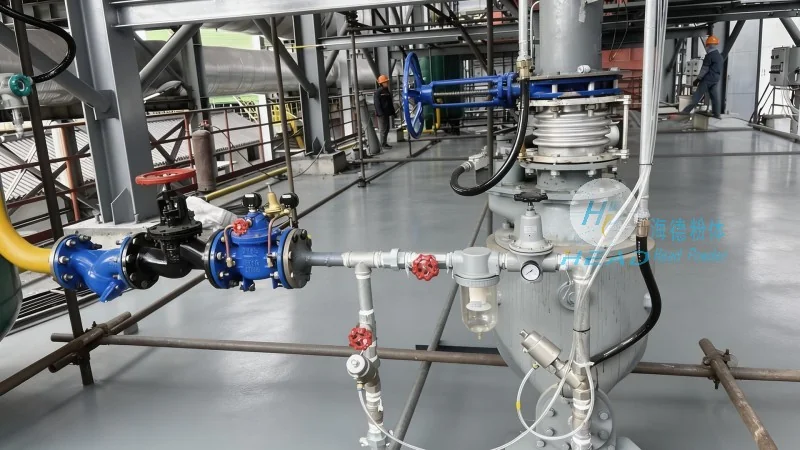
Pneumatic conveying systems use air or other gases to transport powders through a pipeline. This method is particularly advantageous for rare earth mineral powders that are fine and dusty, as it can handle materials with high moisture content or those that are prone to caking. The system typically consists of a blower, a hopper for material storage, and a pipeline network with valves and filters. The primary types of pneumatic conveyors are pressure and vacuum systems. Pressure systems push the material through the pipeline using compressed air, while vacuum systems draw the material into the pipeline using a vacuum pump. Pneumatic conveying offers advantages such as enclosed material handling, which reduces dust exposure and environmental impact. However, it may have higher energy consumption compared to other methods, and the design must account for the potential for material degradation due to friction and air flow. For rare earth powders, pneumatic conveying is often preferred in applications where dust control is a critical requirement, such as in pharmaceutical or food processing industries, though it may not be suitable for very large volumes or high-density materials.
Screw Conveyor System for Rare Earth Mineral Powder
Screw conveyors, also known as auger conveyors, use a rotating screw to move materials along a trough. This method is suitable for transporting rare earth mineral powders that are free-flowing and non-abrasive. The screw, which can be solid or with flights, rotates within a housing, pushing the material forward. Screw conveyors are compact and can be installed in a variety of orientations, making them ideal for confined spaces or when space is limited. They are also relatively simple in design, with fewer moving parts compared to other conveying systems. The main advantages of screw conveyors include low cost, easy maintenance, and the ability to handle materials at various angles. However, they may not be suitable for very fine or cohesive powders, as these can cause the screw to jam or wear out quickly. The speed and pitch of the screw are critical parameters that affect the conveying capacity and material flow. For rare earth mineral powders, screw conveyors are commonly used in small-scale operations or for short-distance transport, such as from a storage bin to a processing machine.
Hydraulic Conveying System for Rare Earth Mineral Powder
Hydraulic conveying systems use water or other liquids to transport powders through a pipeline. This method is particularly effective for handling wet or slurry materials, though it can also be adapted for dry powders by using a slurry of the powder in water. The system typically consists of a pump, a hopper, and a pipeline network with valves and filters. The liquid acts as a carrier, moving the powder through the pipeline under pressure. Hydraulic conveying offers advantages such as high capacity and the ability to transport materials over long distances with minimal energy consumption. However, it requires careful management of the liquid and powder mixture to prevent clogging or corrosion. The system is also more complex and expensive to install and maintain compared to other conveying methods. For rare earth mineral powders, hydraulic conveying is often used in applications where the material is already in a slurry form, such as in the processing of rare earth ores that have been leached or washed. It is less common for dry powders due to the potential for material degradation and the need for additional drying steps.
Selection Considerations for Rare Earth Mineral Powder Conveying
The selection of an appropriate conveying method for rare earth mineral powders depends on several factors, including the material characteristics, operational requirements, and environmental considerations. Key factors to consider include the particle size and shape of the powder, the moisture content, the density and flowability, and the required conveying distance and capacity. The cost of the system, including initial investment and operational expenses, is also a critical factor. Additionally, the need for dust control, safety, and compliance with environmental regulations must be addressed. For example, if the material is very fine and dusty, a pneumatic or enclosed belt conveyor may be preferred to minimize environmental impact. If the material is free-flowing and requires long-distance transport, a belt conveyor or hydraulic system may be more suitable. The choice of conveying method should be based on a thorough analysis of these factors to ensure optimal performance and efficiency.
Conclusion and Company Information
Efficient and reliable conveying of rare earth mineral powders is essential for the success of industrial operations. The choice of conveying method depends on the specific requirements of the application, including material characteristics, operational conditions, and cost considerations. Belt conveyors, pneumatic conveyors, screw conveyors, and hydraulic conveyors each offer unique advantages and are suitable for different scenarios. By carefully evaluating these options, industrial facilities can optimize their material handling systems to improve productivity, reduce costs, and ensure environmental compliance. As a leading provider of engineering solutions for mineral processing, Shandong HeadPowder Engineering Co., Ltd. specializes in designing and implementing customized conveying systems tailored to the needs of rare earth mineral operations. With a focus on innovation and quality, HeadPowder offers advanced solutions that enhance the efficiency and safety of rare earth mineral powder handling. Based in Shandong, China, HeadPowder leverages its expertise to deliver effective and sustainable solutions for the global rare earth industry.

 Shandong Headpowder Engineering Co., Ltd.
 156-6277-7102(Quản lý Trương)
  0531-83386006
  Thành phố Tế Nam, Tỉnh Sơn Đông, Trung Quốc
Điện thoại
WeChatTư vấn
Lên đầu