Chuyên sâu trong lĩnh vực vật liệu rời công nghiệp, cung cấp giải pháp môi trường thông minh tích hợp cho phối trộn tự động, cấp liệu tập trung, khử lưu huỳnh và khử nitơ khô!
Conveying crystal particles is a critical process in various industrial applications, requiring efficient and reliable methods to transport these materials from one location to another. The choice of conveying method depends on several factors, including particle size, material properties, and the specific requirements of the production line. Here, we explore the primary methods used for crystal particle transport, focusing on their mechanisms, advantages, and typical applications.

1. Mechanical Conveying Systems
Mechanical conveying systems are among the most common approaches for transporting crystal particles. These systems utilize mechanical components such as belts, screws, and buckets to move materials. One of the most widely used devices is the belt conveyor, which consists of a continuous belt looped over pulleys. As the belt moves, it carries the crystal particles along the path, making it suitable for horizontal and slightly inclined transport. The belt conveyor is particularly effective for handling larger crystal particles and can be integrated with other equipment like feeders and elevators to enhance the conveying process. Another mechanical option is the screw conveyor, which uses a rotating screw to push particles forward. This method is ideal for vertical or inclined transport and can handle a wide range of particle sizes, from fine powders to larger crystals. Screw conveyors are often used in applications where the material needs to be mixed or blended during transport.
2. Pneumatic Conveying Systems
Pneumatic conveying systems use air or other gases to transport crystal particles. This method is particularly advantageous for handling fine or dusty materials, as it can minimize dust exposure and prevent contamination. There are two main types of pneumatic conveying: pressure and vacuum systems. In pressure systems, compressed air is used to push the particles through a pipeline. The air and particles are separated at the receiving end, typically using a cyclone or filter. This method is suitable for long-distance transport and can handle high volumes of material. Vacuum systems, on the other hand, use a vacuum to draw particles into the pipeline. They are often used for shorter distances and are effective for handling materials that are difficult to push, such as fine powders. Pneumatic conveying is particularly useful for applications where the material needs to be transported in a closed system, reducing environmental impact and improving safety.

3. Hydraulic Conveying Systems
Hydraulic conveying systems utilize water or other liquids to transport crystal particles. This method is commonly used in mining and mineral processing industries, where large quantities of ore or rock need to be moved. The particles are suspended in the liquid and transported through pipelines. The hydraulic system can handle very large particles and high volumes of material, making it suitable for heavy-duty applications. However, hydraulic conveying requires significant energy input and can be more complex to maintain compared to other methods. The system typically includes pumps, pipelines, and a settling tank to separate the particles from the liquid. This method is often used when the material is too abrasive or too heavy for mechanical or pneumatic systems.
4. Air-Liquid Combination Conveying
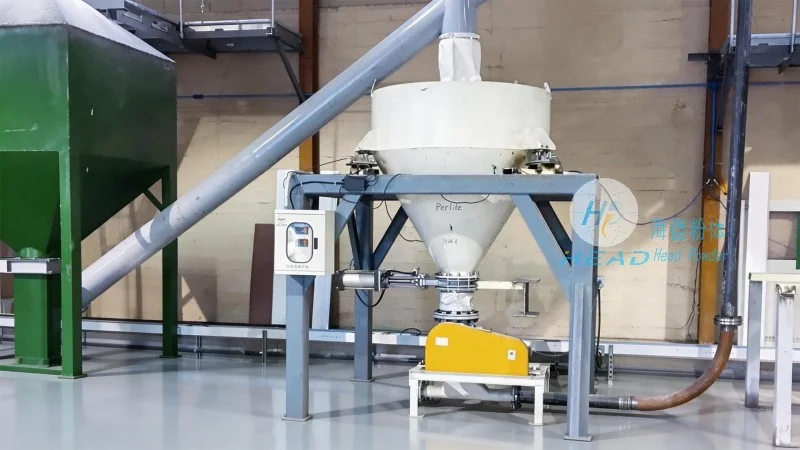
Some applications may require a combination of pneumatic and hydraulic methods to achieve optimal transport. For example, an air-liquid system can use a mixture of air and water to transport crystal particles. This approach combines the advantages of both pneumatic and hydraulic systems, such as efficient transport of fine particles and the ability to handle large volumes. The system typically involves injecting air into the liquid to create a slurry that can be pumped through pipelines. The air helps to keep the particles suspended and reduces the viscosity of the liquid, improving the overall conveying efficiency. This method is particularly useful for applications where the material needs to be transported over long distances while maintaining a high degree of control over the particle size distribution.
5. Specialized Conveying Equipment for Crystal Particles
For specific applications involving crystal particles, specialized conveying equipment may be employed. One such device is the vibratory conveyor, which uses vibrations to move particles along a trough. This method is effective for handling sticky or cohesive materials, as the vibrations prevent the particles from sticking together. Vibratory conveyors are often used in pharmaceutical and food processing industries, where the material needs to be transported without contamination or degradation. Another specialized option is the magnetic conveyor, which uses magnetic fields to attract and move ferromagnetic particles. This method is particularly useful for handling magnetic crystals or particles mixed with non-magnetic materials. The magnetic conveyor can separate the magnetic particles from the rest of the material, making it an effective tool for sorting and conveying.
6. Factors Influencing the Choice of Conveying Method
The selection of the most appropriate conveying method for crystal particles depends on several key factors. Particle size and shape are critical considerations, as different methods are better suited for specific particle characteristics. For example, pneumatic systems are more effective for fine particles, while mechanical systems may be better for larger crystals. Material properties, such as density, moisture content, and abrasiveness, also play a significant role. The required transport distance and speed are other important factors, as some methods are more suitable for long-distance transport, while others are better for short, high-speed applications. Additionally, the cost of the equipment, maintenance requirements, and environmental considerations must be evaluated. Companies like Shandong HeadPowder Engineering Co., Ltd., based in China, specialize in designing and manufacturing customized conveying systems tailored to the specific needs of their clients. Their expertise in mechanical, pneumatic, and specialized conveying equipment ensures that clients receive efficient and reliable solutions for crystal particle transport.

 Shandong Headpowder Engineering Co., Ltd.
 156-6277-7102(Quản lý Trương)
  0531-83386006
  Thành phố Tế Nam, Tỉnh Sơn Đông, Trung Quốc
Điện thoại
WeChatTư vấn
Lên đầu