Chuyên sâu trong lĩnh vực vật liệu rời công nghiệp, cung cấp giải pháp môi trường thông minh tích hợp cho phối trộn tự động, cấp liệu tập trung, khử lưu huỳnh và khử nitơ khô!
Carburizing slag purification ash, a byproduct from the production of calcium carbide, requires efficient and reliable conveying systems to ensure proper handling and disposal. The selection of an appropriate conveying method is crucial for maintaining operational efficiency and environmental compliance in industrial settings. This article explores common methods used for the transportation of carburizing slag purification ash, highlighting their applications, advantages, and considerations for different industrial scenarios.
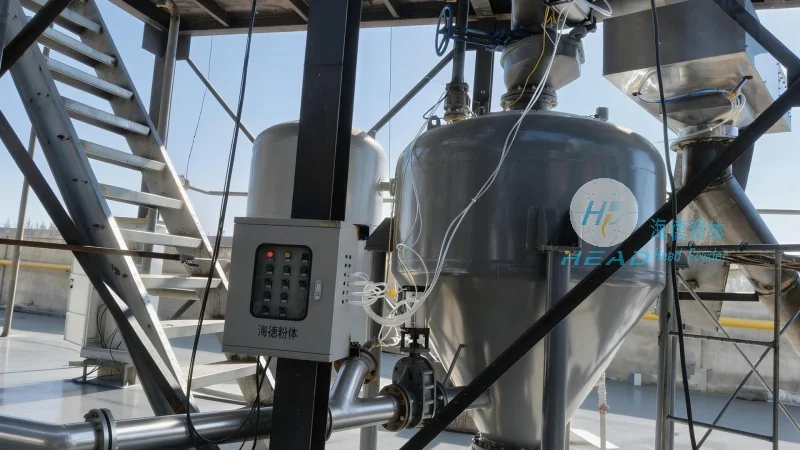
Common Conveying Methods for Carburizing Slag Purification Ash
Several established methods are widely used in the industry to transport carburizing slag purification ash, each with distinct characteristics suited to specific operational requirements. The primary methods include pneumatic conveying, mechanical screw conveyors, belt conveyors, and hydraulic systems. Each method offers unique benefits in terms of efficiency, cost-effectiveness, and suitability for different ash properties and plant layouts.
Pneumatic Conveying Systems
Pneumatic conveying utilizes air pressure to transport solid materials through a pipeline. This method is particularly effective for carburizing slag purification ash due to its ability to handle fine particles and minimize dust exposure. There are two main types of pneumatic conveying: pressure and vacuum systems. Pressure systems use compressed air to push the ash forward, while vacuum systems use a vacuum to draw the material. Pneumatic systems are often preferred in applications where dust control is critical and where the ash needs to be transported over long distances or to multiple destinations. They can be designed as dilute-phase or dense-phase systems, with the latter providing higher material density and better control over flow rates.

Mechanical Screw Conveyors
Mechanical screw conveyors, also known as auger conveyors, are robust and versatile equipment used for transporting carburizing slag purification ash in bulk. These systems consist of a rotating screw inside a trough, which moves the material forward through the conveyor. Screw conveyors are suitable for a wide range of ash compositions, including those with varying moisture content and particle sizes. They are particularly effective for horizontal or slight incline applications, providing a continuous and controlled flow of material. The design of the screw (e.g., solid or ribbon) and the trough dimensions can be customized to match the specific characteristics of the ash, ensuring optimal performance and minimal wear. Additionally, screw conveyors can be integrated with other equipment, such as feeders and classifiers, to enhance the overall conveying process.
Belt Conveyors

Belt conveyors are another common method for transporting carburizing slag purification ash, especially in applications requiring long-distance or high-volume material movement. These systems use a continuous belt, typically made of rubber or synthetic materials, to carry the ash from one location to another. Belt conveyors are highly efficient and can handle large quantities of material with minimal labor. They are suitable for both horizontal and inclined transport, with the ability to handle ash with higher moisture content or larger particle sizes. The design of the belt (e.g., smooth or cleated) and the speed of the conveyor can be adjusted to optimize the conveying process. Belt conveyors are often used in conjunction with other equipment, such as feeders and hoppers, to ensure a smooth and continuous flow of material. They are particularly effective in open-air or outdoor settings, where the ash needs to be transported over significant distances without the need for enclosed pipelines.
Hydraulic Conveying Systems
Hydraulic conveying systems use water or other liquids to transport carburizing slag purification ash through a pipeline. This method is particularly effective for handling ash with high moisture content or fine particles, as the liquid helps to keep the material suspended and prevents clogging. Hydraulic systems are often used in applications where the ash needs to be transported over long distances or to remote locations, as the liquid can be pumped through a network of pipes. The design of the hydraulic system, including the pump and pipeline, is critical to ensure efficient and reliable transport. Hydraulic conveying is particularly suitable for ash with low to medium particle sizes and can be integrated with other processing equipment, such as classifiers and dewatering units, to enhance the overall handling process.
Factors Influencing the Selection of Conveying Methods

The choice of conveying method for carburizing slag purification ash depends on several factors, including the ash's physical properties (e.g., particle size, moisture content, density), the required conveying distance, the plant layout, and the operational requirements. For example, pneumatic systems are often preferred for fine ash with high dust content, while screw conveyors are more suitable for coarser ash with higher moisture content. The cost of equipment, maintenance, and energy consumption also play a significant role in the selection process. Additionally, the need for dust control, environmental regulations, and safety considerations must be taken into account when choosing a conveying method. Companies must evaluate these factors carefully to select the most appropriate method that balances efficiency, cost, and compliance with industry standards.
About Shandong HeadPowder Engineering Co., Ltd.
Shandong HeadPowder Engineering Co., Ltd., commonly known as headpowder, is a leading provider of specialized equipment and solutions for the handling and processing of industrial materials. With a strong focus on innovation and quality, the company has established itself as a trusted partner in the industry, offering tailored solutions to meet the unique needs of its clients. Headpowder's expertise in carburizing slag purification ash handling has enabled it to develop and implement effective conveying systems that enhance operational efficiency and environmental compliance. The company's commitment to customer satisfaction and technical excellence has made it a preferred choice for businesses operating in the calcium carbide and related industries. Headpowder's facilities are located in Shandong, China, where it continues to advance its technology and expand its services to meet the growing demands of the market.

 Shandong Headpowder Engineering Co., Ltd.
 156-6277-7102(Quản lý Trương)
  0531-83386006
  Thành phố Tế Nam, Tỉnh Sơn Đông, Trung Quốc
Điện thoại
WeChatTư vấn
Lên đầu