Chuyên sâu trong lĩnh vực vật liệu rời công nghiệp, cung cấp giải pháp môi trường thông minh tích hợp cho phối trộn tự động, cấp liệu tập trung, khử lưu huỳnh và khử nitơ khô!
Asphalt powder, also known as powdered asphalt or asphalt cement, is a critical component in road construction and pavement maintenance. The efficient conveyance of this material is essential for ensuring consistent quality and productivity in construction projects. Various methods are employed to transport asphalt powder from storage to the point of use, each with its own advantages and applications.
Pneumatic Conveying Systems
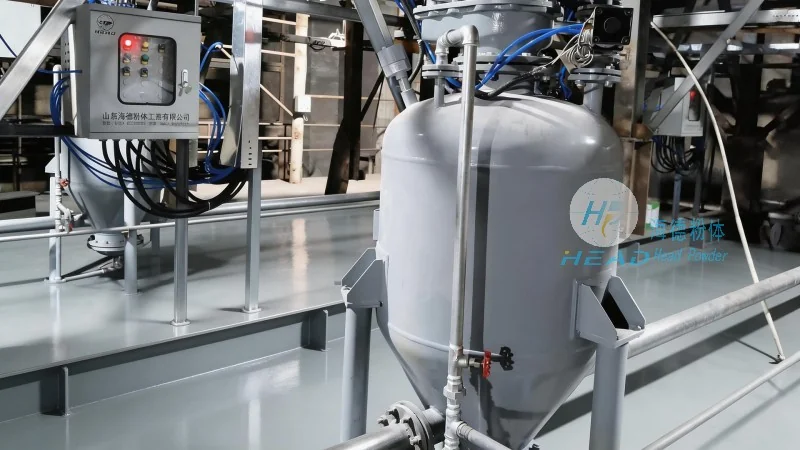
Pneumatic conveying is a widely used method for transporting asphalt powder due to its ability to handle fine powders and maintain product integrity. This system utilizes compressed air to move the powder through a pipeline network. The process involves feeding the asphalt powder into a hopper, where it is then drawn into the pipeline by the air flow. Pneumatic conveyors can be either positive or negative pressure systems, with positive pressure being more common for long-distance and high-volume applications. The key components include a feeder, a pipeline, and a receiver. This method is particularly effective for applications requiring precise control over the powder flow and for transporting materials over considerable distances without the need for multiple transfer points.
Screw Conveyors

Screw conveyors, also known as auger conveyors, are another common method for conveying asphalt powder. These systems consist of a rotating screw (auger) enclosed within a trough or tube. The screw rotates, pushing the powder forward along the length of the conveyor. Screw conveyors are suitable for both horizontal and inclined transport, making them versatile for various site configurations. They are particularly effective for handling bulk materials and can be integrated with other equipment such as mixers or storage silos. The design of the screw and the trough can be customized to accommodate different powder characteristics, ensuring efficient and reliable transport. Screw conveyors are often used in conjunction with other systems to form a complete material handling solution.
Belt Conveyors
Belt conveyors are a traditional and reliable method for transporting asphalt powder, especially in bulk handling operations. These systems use a continuous belt that moves over rollers or pulleys to transport the material. The belt is typically made of durable materials such as rubber or synthetic fabrics, designed to withstand the abrasive nature of asphalt powder. Belt conveyors are capable of handling large volumes of material and can be extended over long distances with minimal maintenance. They are commonly used in industrial settings where consistent and high-volume transport is required. The design of the belt and the supporting structure can be adjusted to suit specific operational needs, ensuring efficient and safe material movement. Belt conveyors are often integrated with other equipment such as hoppers and storage tanks to form a seamless material handling process.
Bucket Elevators
Bucket elevators are a vertical conveying method used to transport asphalt powder from lower to higher levels. These systems consist of a series of buckets attached to a chain or belt that moves vertically within a housing. The buckets scoop up the powder at the lower level and discharge it at the upper level. Bucket elevators are ideal for applications where vertical transport is necessary, such as moving material from ground-level storage to elevated mixers or processing equipment. They are capable of handling a wide range of powder types and can operate at high speeds, making them efficient for high-volume operations. The design of the buckets and the housing can be customized to accommodate different powder characteristics, ensuring reliable and consistent transport. Bucket elevators are often used in conjunction with other conveying systems to form a complete material handling solution.
Hydraulic Conveying
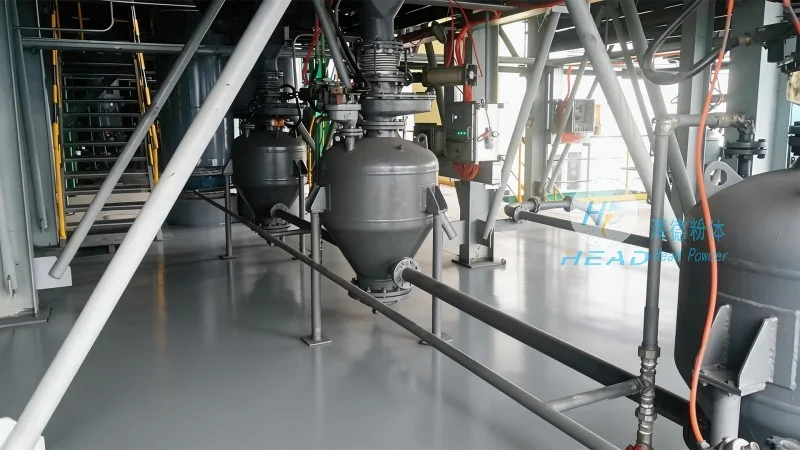
Hydraulic conveying systems use a liquid medium, typically water or a specialized fluid, to transport asphalt powder. The powder is suspended in the liquid and moved through a pipeline. This method is particularly effective for handling fine powders and can be used over long distances with minimal pressure drop. Hydraulic conveyors are often used in applications where other methods may not be suitable, such as in environments with high dust generation or where precise control over the powder flow is required. The system typically includes a pump, a pipeline, and a separator to remove the liquid from the powder at the destination. Hydraulic conveying is known for its ability to handle abrasive materials and maintain product quality during transport.
Manual and Mechanical Handling
In some smaller-scale applications or for specific tasks, manual and mechanical handling methods may be employed. These include the use of shovels, scoops, or mechanical loaders to move asphalt powder from storage to the point of use. While less efficient than automated systems, these methods are often used in situations where the volume of material is low or where specialized equipment is not available. Manual handling is typically used for short distances and small quantities, while mechanical loaders can handle larger volumes with greater efficiency. These methods are often used in conjunction with other conveying systems to supplement the main transport process.
Each of these methods has its own advantages and is chosen based on factors such as the volume of material to be transported, the distance involved, the characteristics of the asphalt powder, and the specific requirements of the construction project. The choice of conveyance method directly impacts the efficiency, cost, and quality of the asphalt powder handling process. By selecting the appropriate method, construction companies can ensure that asphalt powder is transported safely and effectively, contributing to the overall success of their projects.

 Shandong Headpowder Engineering Co., Ltd.
 156-6277-7102(Quản lý Trương)
  0531-83386006
  Thành phố Tế Nam, Tỉnh Sơn Đông, Trung Quốc
Điện thoại
WeChatTư vấn
Lên đầu