Chuyên sâu trong lĩnh vực vật liệu rời công nghiệp, cung cấp giải pháp môi trường thông minh tích hợp cho phối trộn tự động, cấp liệu tập trung, khử lưu huỳnh và khử nitơ khô!
Boron nitride (BN) is a versatile ceramic material widely used in various industries due to its excellent thermal stability, electrical insulation properties, and lubricity. The efficient transport of boron nitride powder is crucial for industrial applications, as it ensures consistent quality and reduces material loss during handling. This article explores the primary methods used for boron nitride transport, highlighting the technical aspects and practical considerations for each approach.
Key Factors Influencing Boron Nitride Transport

Before delving into specific transport methods, it's essential to understand the factors that influence the choice of delivery system. Boron nitride's particle size, density, and flow characteristics play a significant role. For instance, fine powders may require more controlled systems to prevent caking or segregation, while larger particles can be handled with simpler mechanisms. Environmental conditions, such as temperature and humidity, also impact the effectiveness of transport methods. Additionally, the scale of operation—whether it's a small laboratory setup or a large-scale industrial production line—determines the appropriate technology.
1. Vacuum Conveying for Boron Nitride
Vacuum conveying is a common method for transporting boron nitride, especially for fine powders. This technique uses a vacuum pump to create a pressure differential that draws the material from a hopper or storage container into a transport line. The system typically includes a filter to prevent dust from escaping and a receiver where the material is deposited. Vacuum conveying is advantageous for its ability to handle fine powders without the need for additional air or mechanical agitation. It also minimizes material degradation and reduces the risk of contamination. However, it may not be suitable for very large quantities or for materials with high moisture content, as the vacuum system can be less efficient in such cases.
2. Pneumatic Conveying Systems
Pneumatic conveying, also known as air-assisted transport, is another widely used method for boron nitride transport. This approach involves using compressed air to move the powder through a pipeline. There are two main types: dilute-phase and dense-phase pneumatic conveying. Dilute-phase systems use low air velocities to transport the material, making them suitable for fine powders and short distances. Dense-phase systems, on the other hand, use higher air velocities and lower material concentrations, which is ideal for handling larger particles or for applications requiring precise control over the flow rate. Pneumatic conveying offers flexibility in terms of layout and can be integrated with other processing equipment. However, it may require more energy compared to other methods and can generate dust if not properly sealed.

3. Screw Conveyors for Boron Nitride Handling
Screw conveyors are mechanical devices that use a rotating screw to move boron nitride material through a tube or trough. This method is particularly effective for handling bulk quantities of powder and is commonly used in industrial settings. Screw conveyors are simple in design, requiring minimal maintenance, and can operate in various environments. They are suitable for both dry and slightly moist powders, provided the material does not contain excessive moisture that could cause the screw to bind. The speed and angle of the screw can be adjusted to control the flow rate and prevent material buildup. However, screw conveyors may not be ideal for very fine powders, as they can cause segregation or clogging if the particles are too small.
4. Belt Conveyors and Bucket Elevators
For larger-scale operations, belt conveyors and bucket elevators are often employed for boron nitride transport. Belt conveyors use a continuous belt to move the material horizontally or at a slight incline. They are capable of handling high volumes and are suitable for both dry and wet powders. Bucket elevators, on the other hand, use a series of buckets attached to a chain or belt to lift the material vertically. This method is efficient for vertical transport and can handle a wide range of particle sizes. Both systems are robust and reliable, making them popular in industrial applications. However, they require regular maintenance to ensure smooth operation and may not be suitable for very fine powders that can cause the belt or buckets to wear out quickly.
5. Hydraulic Conveying
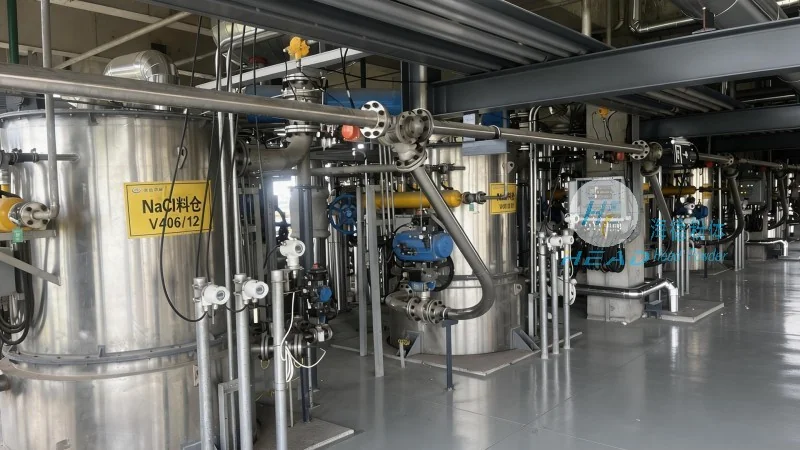
Hydraulic conveying, also known as slurry transport, involves mixing boron nitride with a liquid to form a slurry, which is then pumped through a pipeline. This method is particularly useful for handling materials with high moisture content or for transporting fine powders that are difficult to move by other means. The slurry can be pumped over long distances with relatively low energy consumption. However, hydraulic conveying requires additional equipment for mixing and separation, and the liquid must be properly managed to avoid contamination of the boron nitride. It is also less common for dry powder transport due to the need for post-processing to remove the liquid.
Choosing the Right Transport Method for Boron Nitride
The selection of a boron nitride transport method depends on several factors, including the material's properties, the scale of operation, and the specific application requirements. For fine powders and small-scale operations, vacuum or pneumatic conveying may be more suitable. For bulk handling and larger facilities, screw conveyors, belt conveyors, or bucket elevators are often preferred. The choice also considers cost, maintenance, and environmental impact. It is essential to evaluate each method's pros and cons and select the one that best aligns with the operational needs and budget constraints.
About Shandong HeadPowder Engineering Co., Ltd.
Shandong HeadPowder Engineering Co., Ltd., operating under the brand name HeadPowder, is a leading manufacturer specializing in high-quality boron nitride products and transport solutions. With a focus on innovation and precision, the company provides a range of boron nitride powders tailored to various industrial applications. HeadPowder's expertise in material handling and transport systems ensures that clients receive reliable and efficient solutions for their boron nitride processing needs. The company's facilities, located in Shandong, China, are equipped with advanced technology and adheres to strict quality control standards to meet global industry demands.

 Shandong Headpowder Engineering Co., Ltd.
 156-6277-7102(Quản lý Trương)
  0531-83386006
  Thành phố Tế Nam, Tỉnh Sơn Đông, Trung Quốc
Điện thoại
WeChatTư vấn
Lên đầu