Chuyên sâu trong lĩnh vực vật liệu rời công nghiệp, cung cấp giải pháp môi trường thông minh tích hợp cho phối trộn tự động, cấp liệu tập trung, khử lưu huỳnh và khử nitơ khô!
When it comes to handling and transporting glutinous rice flour, selecting the right conveying method is crucial for maintaining product quality, efficiency, and operational safety. As a leading manufacturer in the field, Shandong HeadPowder Engineering Co., Ltd. specializes in providing tailored solutions that address the unique challenges of glutinous rice flour processing. This article explores the primary conveying methods used in the industry, highlighting their applications, advantages, and considerations for optimal performance.

1. Screw Conveyors: The Traditional Choice for Bulk Handling
Screw conveyors, also known as auger conveyors, are one of the most common and reliable methods for transporting glutinous rice flour. These systems consist of a rotating helical screw inside a tube or trough, which moves the material forward through gravitational force and the screw's rotation. For glutinous rice flour, which can be sticky and prone to caking, the design of the screw and trough is critical. Shandong HeadPowder Engineering Co., Ltd. offers custom screw conveyors with features such as variable speed drives, stainless steel construction, and anti-clogging mechanisms to ensure smooth operation. The screw's pitch and material can be adjusted to control the flow rate and prevent material buildup, making it suitable for both short and long-distance transport within processing facilities.
2. Pneumatic Conveying Systems: Efficient for Drying and Fine Powders
Pneumatic conveying, or air-based transport, is an ideal solution for handling fine, dry powders like glutinous rice flour, especially when combined with drying processes. This method uses air pressure to move the flour through a pipeline, often in a closed system to maintain hygiene and prevent contamination. There are two main types: pressure and vacuum systems. Pressure systems use compressed air to push the flour, while vacuum systems use suction to draw it. Shandong HeadPowder Engineering Co., Ltd. specializes in designing pneumatic conveying systems that integrate with drying equipment, ensuring that the flour is transported without moisture loss or degradation. The system's design, including the size of the air ducts and the type of valves, is tailored to the specific characteristics of glutinous rice flour, such as its moisture content and particle size. This method is particularly effective for long-distance transport and for moving flour from storage silos to processing lines.
3. Belt Conveyors: Versatile for Bulk and Mixed Loads
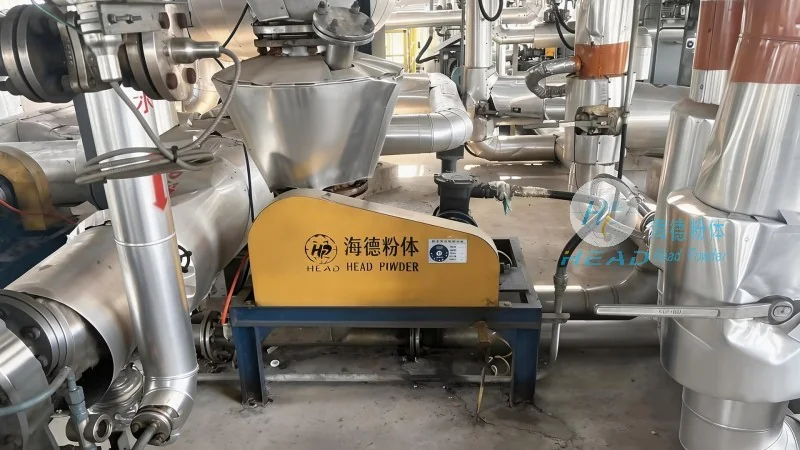
Belt conveyors are a versatile option for transporting glutinous rice flour, especially when dealing with larger volumes or mixed loads that include other ingredients. These systems use a continuous belt that moves over rollers or a flat surface, carrying the flour from one point to another. Belt conveyors are suitable for both horizontal and inclined transport, and can be equipped with side walls or chutes to contain the material. Shandong HeadPowder Engineering Co., Ltd. provides belt conveyors with high-capacity belts, adjustable speed controls, and cleaning mechanisms to prevent flour buildup on the belt surface. The material of the belt and rollers is chosen to be non-stick and easy to clean, which is essential for maintaining product purity in food processing. This method is often used in combination with other conveying systems, such as screw conveyors, to create a seamless material flow from raw material reception to final packaging.
4. Bucket Elevators: Vertical Transport for High-Volume Operations
For vertical transport of glutinous rice flour, bucket elevators are a preferred choice, especially in high-volume processing facilities. These systems use a series of buckets attached to a chain or belt that moves vertically, lifting the flour from lower to upper levels of the facility. The design of the buckets and the speed of the elevator are optimized to handle the bulk density and flow characteristics of glutinous rice flour. Shandong HeadPowder Engineering Co., Ltd. manufactures bucket elevators with durable materials, such as stainless steel, and features like variable speed drives and anti-overload protection to ensure safe and efficient operation. The vertical transport capability of bucket elevators reduces the need for multiple horizontal conveyors, saving space and improving overall system efficiency. This method is particularly useful in facilities where the flour needs to be moved from ground-level storage to elevated processing areas or silos.
5. Hydraulic Conveying: Gentle Handling for Sensitive Products

Hydraulic conveying systems use fluid pressure to move glutinous rice flour, offering a gentle and controlled method of transport that is ideal for sensitive products. This method involves pumping a liquid medium, such as water or a specialized fluid, through a pipeline, with the flour suspended in the fluid. The fluid's pressure and flow rate determine the conveying speed and distance. Shandong HeadPowder Engineering Co., Ltd. designs hydraulic conveying systems with features like adjustable fluid flow and filtration to maintain the purity of the glutinous rice flour. The system's design minimizes friction and impact, which helps preserve the flour's texture and quality. While less common than other methods, hydraulic conveying is particularly effective for transporting flour in a wet or semi-wet state, or when the flour needs to be mixed with other liquids during transport.
6. Considerations for Choosing the Right Conveying Method
When selecting a conveying method for glutinous rice flour, several factors must be considered to ensure optimal performance and product quality. First, the physical properties of the flour, such as its moisture content, particle size, and flowability, play a critical role. Glutinous rice flour is known for its sticky and cohesive nature, which can affect the choice of equipment and system design. Second, the distance and direction of transport (horizontal, vertical, or both) need to be evaluated to determine the most efficient system. Third, the capacity requirements and production volume of the facility must be matched with the conveying system's capabilities. Fourth, hygiene and sanitation standards are paramount in food processing, so the materials used in the conveying equipment must be easy to clean and maintain. Shandong HeadPowder Engineering Co., Ltd. provides comprehensive consultation services to help clients assess these factors and select the most suitable conveying method for their specific needs. By considering these elements, manufacturers can ensure that their glutinous rice flour is transported safely, efficiently, and in compliance with industry standards.

 Shandong Headpowder Engineering Co., Ltd.
 156-6277-7102(Quản lý Trương)
  0531-83386006
  Thành phố Tế Nam, Tỉnh Sơn Đông, Trung Quốc
Điện thoại
WeChatTư vấn
Lên đầu