Chuyên sâu trong lĩnh vực vật liệu rời công nghiệp, cung cấp giải pháp môi trường thông minh tích hợp cho phối trộn tự động, cấp liệu tập trung, khử lưu huỳnh và khử nitơ khô!
For companies in the lithium-ion battery industry, the efficient and safe handling of nanomaterials is crucial. Air-driven conveying systems offer a reliable solution for transporting these materials, especially in the context of battery production. This article will explore the key considerations and design principles for creating an effective air-driven conveying system tailored to the specific needs of lithium-ion battery nanomaterials.

About HeadPowder: A Leader in Engineering Solutions
HeadPowder, or Shandong HeadPowder Engineering Co., Ltd., is a prominent company based in Shandong, China, specializing in the design and implementation of advanced material handling systems. With years of experience in the field, HeadPowder has developed expertise in creating customized air-driven conveying solutions that meet the stringent requirements of the battery manufacturing sector. Their commitment to quality and innovation has positioned them as a trusted partner for businesses seeking to optimize their material handling processes.
Key Design Considerations for Air-Driven Conveying Systems
Designing an air-driven conveying system for lithium-ion battery nanomaterials requires careful consideration of several factors to ensure efficiency, safety, and durability. The first step is to assess the properties of the nanomaterials, such as particle size, density, and moisture content. These characteristics influence the selection of the appropriate conveying method, whether it’s a pressure or vacuum system. For instance, pressure systems are often used for transporting dry, free-flowing materials, while vacuum systems may be more suitable for handling fine powders or materials with higher moisture content.
Another critical aspect is the system’s capacity and flow rate. The conveying system must be able to handle the required volume of nanomaterials without causing blockages or excessive pressure drops. This involves selecting the right type of airlock, cyclone separator, and conveyor components. HeadPowder’s engineers use advanced computational fluid dynamics (CFD) and material flow analysis to model the system and optimize the design for maximum efficiency.
Components of an Effective Air-Driven Conveying System
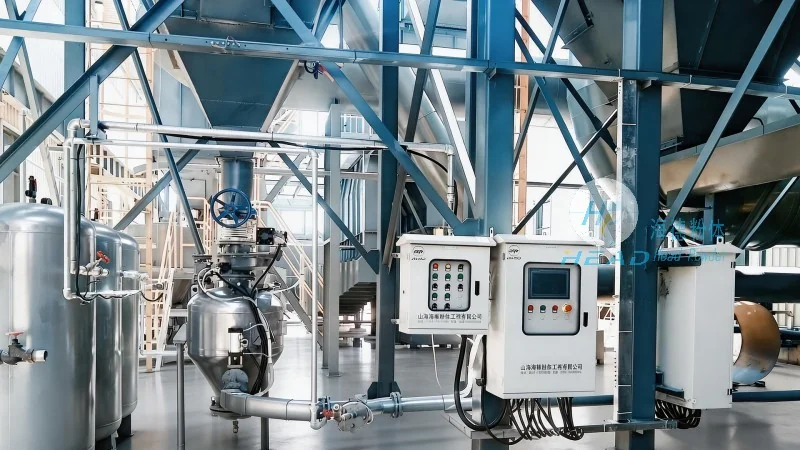
An air-driven conveying system typically consists of several key components that work together to transport nanomaterials from the source to the destination. The main components include the material feed hopper, the air compressor or vacuum pump, the conveying line (usually made of stainless steel or other corrosion-resistant materials), and the collection hopper or cyclone separator. Each component plays a vital role in ensuring the smooth operation of the system.
The material feed hopper is designed to hold the nanomaterials and provide a controlled feed rate to the conveying line. It often includes a feeder mechanism, such as a rotary valve or screw feeder, to regulate the flow of material. The air compressor or vacuum pump generates the necessary air pressure or vacuum to move the material through the conveying line. The conveying line is usually a flexible or rigid tube with a smooth interior to minimize friction and prevent particle buildup. The cyclone separator or collection hopper at the end of the line separates the material from the air stream, allowing the material to be collected in a container while the air is discharged or recycled.
Advantages of Air-Driven Conveying Systems for Lithium-Ion Battery Nanomaterials
Implementing an air-driven conveying system offers several advantages for lithium-ion battery manufacturers. First, it provides a dust-free and enclosed environment, which is essential for maintaining the purity of nanomaterials and preventing contamination. This is particularly important in battery production, where even small amounts of impurities can affect the performance and lifespan of the final product. Second, air-driven systems are flexible and can be easily integrated into existing production lines, allowing for scalability and adaptability as production needs change.
Third, these systems are energy-efficient compared to traditional methods like belt conveyors or bucket elevators. By using compressed air or vacuum, the system minimizes energy consumption while maintaining high throughput. Additionally, air-driven conveying reduces labor costs and improves workplace safety by eliminating the need for manual handling of powders, which can be hazardous. HeadPowder’s systems are designed with these advantages in mind, ensuring that clients receive a solution that not only meets their operational needs but also enhances overall productivity and safety.

Customization and Implementation by HeadPowder
HeadPowder understands that each lithium-ion battery manufacturer has unique requirements, and a one-size-fits-all approach is not effective. Therefore, they offer customized air-driven conveying systems tailored to the specific needs of their clients. The company’s engineering team works closely with clients to assess their production processes, material characteristics, and operational goals to develop a solution that is both efficient and cost-effective.
During the implementation phase, HeadPowder provides comprehensive support, including system installation, commissioning, and training for operators. They also offer maintenance and service plans to ensure the long-term performance and reliability of the system. By partnering with HeadPowder, businesses can benefit from their expertise and experience, reducing the risk of system failures and minimizing downtime.
Conclusion
Designing a reasonable air-driven conveying system for lithium-ion battery nanomaterials is a complex but essential task for manufacturers seeking to optimize their production processes. By considering the properties of the materials, selecting the appropriate components, and working with a reputable engineering partner like HeadPowder, companies can achieve efficient, safe, and reliable material handling. HeadPowder’s commitment to quality and customization ensures that their air-driven conveying systems meet the highest standards in the industry, helping businesses enhance their productivity and maintain a competitive edge in the lithium-ion battery market.

 Shandong Headpowder Engineering Co., Ltd.
 156-6277-7102(Quản lý Trương)
  0531-83386006
  Thành phố Tế Nam, Tỉnh Sơn Đông, Trung Quốc
Điện thoại
WeChatTư vấn
Lên đầu