

How to Design a Reasonable Calcium Phosphate Pneumatic Conveying System Plan?
When designing a pneumatic conveying system for calcium phosphate, it is crucial to consider several key factors to ensure efficiency, reliability, and cost-effectiveness. The process involves selecting the appropriate system type, determining the necessary equipment, and optimizing operational parameters. This article will explore the essential steps and considerations for developing a well-designed system tailored to the specific needs of the application.

About Shandong HeadPowder Engineering Co., Ltd.
Shandong HeadPowder Engineering Co., Ltd., commonly known as headpowder, is a professional engineering company based in Shandong, China. With years of experience in the field of material handling and conveying systems, the company specializes in providing customized solutions for various industrial applications, including the design and implementation of pneumatic conveying systems for calcium phosphate and other similar materials.
Key Factors in System Design for Calcium Phosphate Pneumatic Conveying
The first step in designing a calcium phosphate pneumatic conveying system is to determine the appropriate system type. There are two main categories: pressure and vacuum systems. Pressure systems use positive pressure to move material through the pipeline, while vacuum systems use negative pressure. The choice between these depends on factors such as the distance to be conveyed, the material's properties, and the desired flow rate. For calcium phosphate, which is often a fine powder with good flow characteristics, a pressure system is typically more suitable due to its ability to handle longer distances and higher flow rates efficiently.
Pipeline Design and Sizing
Proper pipeline design is critical to the performance of the pneumatic conveying system. The diameter of the pipeline must be selected based on the material's flow rate, particle size, and the system's pressure. Larger particles may require larger diameters to prevent blockages, while smaller particles can be conveyed in smaller pipes. The pipeline should also be designed with smooth bends and minimal fittings to reduce pressure drop and maintain consistent flow. For calcium phosphate, which is a fine powder, a pipeline diameter of 50-100 mm is commonly used, depending on the required flow rate. The use of flexible hoses or rigid pipes may also be considered based on the application's environment and operational needs.
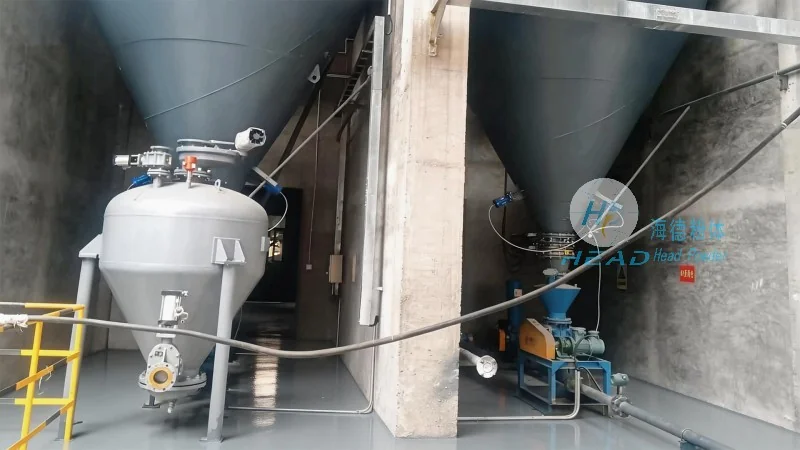
Selection of Air Source and Compressor
The air source, typically a compressor, is a critical component of the pneumatic conveying system. The compressor must be capable of providing the necessary pressure and flow rate to move the calcium phosphate material through the pipeline. The choice of compressor type, such as rotary screw or reciprocating, depends on factors like the system's capacity, pressure requirements, and noise levels. For calcium phosphate applications, a rotary screw compressor is often preferred due to its efficiency and ability to handle continuous operation. The compressor should also be equipped with proper filtration and moisture removal systems to prevent contamination of the material and ensure system longevity.
Selection of Conveying Equipment
Various conveying equipment options are available for calcium phosphate, including screw conveyors, bucket elevators, and pneumatic conveyors. However, for efficient and reliable operation, a pneumatic conveying system is often the best choice. Pneumatic conveyors use air to transport material, which is particularly effective for fine powders like calcium phosphate. The system typically includes a hopper, feeder, and pipeline, with the material being drawn or pushed through the system by the compressor. The selection of the conveying equipment should consider factors such as the material's density, flowability, and the required conveying distance. For example, a positive pressure system may use a blower or a positive displacement blower to generate the necessary pressure, while a vacuum system may use a vacuum pump.

System Control and Safety Measures
Effective control of the pneumatic conveying system is essential to ensure smooth operation and prevent issues such as blockages or overpressure. The system should be equipped with controls that allow for adjustment of the air flow rate and pressure, as well as monitoring of key parameters like pressure and flow. This can be achieved through the use of sensors, valves, and control panels. Additionally, safety measures must be implemented to protect operators and the system from potential hazards. These may include pressure relief valves, explosion-proof components, and proper grounding and electrical safety measures. For calcium phosphate, which is a non-combustible material, the primary safety concerns are related to dust accumulation and potential blockages, which can be mitigated through regular maintenance and proper system design.
Maintenance and Optimization of the System
Regular maintenance is crucial to ensure the long-term performance and reliability of the calcium phosphate pneumatic conveying system. This includes cleaning the pipeline and equipment, replacing worn parts, and checking for leaks or other issues. The system should also be monitored regularly to identify any changes in performance or efficiency. Optimization of the system may involve adjusting the air flow rate, pressure, or other parameters to improve efficiency and reduce energy consumption. For example, if the system is not conveying the material at the desired rate, the air flow rate or pressure may need to be increased. Conversely, if the system is experiencing excessive pressure drop, the pipeline may need to be cleaned or the diameter increased. By regularly maintaining and optimizing the system, the efficiency and lifespan of the calcium phosphate pneumatic conveying system can be maximized.
Conclusion
Designing a reasonable calcium phosphate pneumatic conveying system requires careful consideration of various factors, including system type, pipeline design, air source selection, and equipment choice. By following the steps outlined in this article and working with a professional engineering company like Shandong HeadPowder Engineering Co., Ltd., it is possible to develop a system that meets the specific needs of the application while ensuring efficiency, reliability, and cost-effectiveness. With proper design and maintenance, a pneumatic conveying system can provide a long-lasting and effective solution for transporting calcium phosphate and other similar materials.