Chuyên sâu trong lĩnh vực vật liệu rời công nghiệp, cung cấp giải pháp môi trường thông minh tích hợp cho phối trộn tự động, cấp liệu tập trung, khử lưu huỳnh và khử nitơ khô!
When it comes to transporting quartz sand powder, selecting the right conveying method is crucial for efficiency, cost-effectiveness, and operational safety. Shandong HeadPowder Engineering Co., Ltd., a leading manufacturer based in Shandong, China, offers insights into the common methods used for quartz sand powder transport, highlighting their respective advantages and disadvantages.
1. Pneumatic Conveying Systems
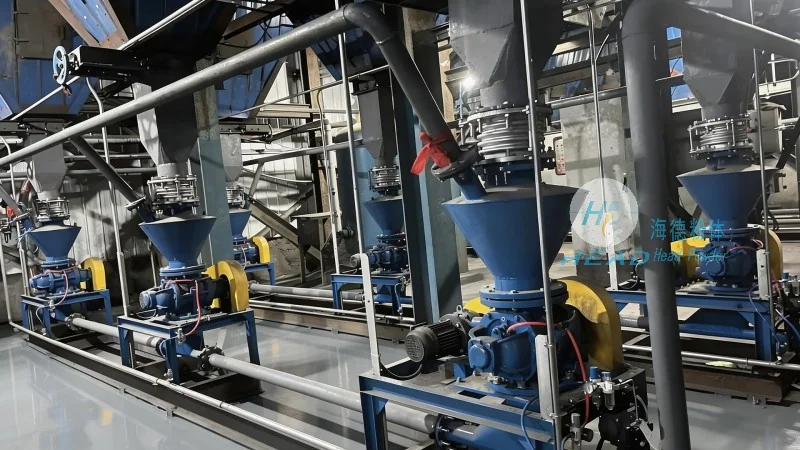
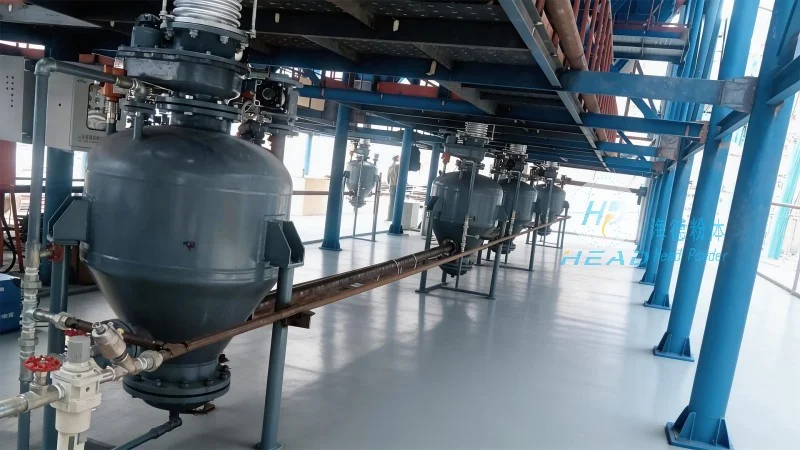
Pneumatic conveying, also known as air-powered conveying, is a popular method for transporting quartz sand powder due to its ability to handle fine powders over long distances. This system uses compressed air to move the material through a pipeline. The primary advantage of pneumatic conveying is its flexibility in handling various powder types, including those with high moisture content or abrasive properties. It also allows for a more compact layout, as the material is conveyed without the need for large mechanical components. However, the disadvantages include higher energy consumption compared to other methods, potential for material degradation if the system is not properly maintained, and the need for regular cleaning to prevent clogging. Additionally, the system may be less suitable for very large quantities of material due to the pressure and air flow requirements.
2. Screw Conveyors

Screw conveyors, or auger conveyors, are another common choice for quartz sand powder transport. These systems use a rotating screw to move material along a trough. The main advantage of screw conveyors is their simplicity and low maintenance requirements. They are particularly effective for horizontal or slightly inclined transport and can handle a wide range of particle sizes. Screw conveyors also provide a relatively low-cost solution for moderate volumes of material. The primary disadvantages include limitations in vertical lift capacity and potential for material degradation due to friction and shear forces. Additionally, they may not be suitable for very fine powders that could cause excessive wear on the screw and trough.
3. Belt Conveyors
Belt conveyors are widely used in bulk material handling, including quartz sand powder. These systems consist of a continuous belt that moves material from one point to another. The main advantage of belt conveyors is their high capacity and ability to transport large quantities of material over long distances. They are also relatively low-cost to install and maintain for horizontal transport. Belt conveyors can handle a variety of materials, including abrasive quartz sand powder, with minimal wear if the right belt material is selected. However, the disadvantages include the need for a significant amount of space, especially for long horizontal runs. They are also less effective for vertical lifting and may require additional equipment for incline or vertical transport. Furthermore, belt conveyors can be susceptible to material buildup and require regular cleaning to prevent clogging.
4. Hydraulic Conveying

Hydraulic conveying systems use a liquid medium, typically water or a slurry, to transport quartz sand powder. This method is particularly useful for handling wet or sticky powders that are difficult to convey with other systems. The main advantage of hydraulic conveying is its ability to handle highly abrasive materials without significant wear on the system components. It also allows for the transport of large quantities of material over long distances with relatively low energy consumption compared to pneumatic systems. However, the disadvantages include the need for a large storage tank for the liquid medium and the risk of material degradation if the slurry is not properly mixed or maintained. Additionally, hydraulic systems require more complex maintenance and may be less suitable for dry powders due to the potential for moisture absorption.
5. Vibrating Conveyors
Vibrating conveyors use an oscillating motion to move quartz sand powder along a trough. These systems are particularly effective for handling fine powders and materials with high moisture content. The main advantage of vibrating conveyors is their ability to handle sticky or cohesive materials without the need for additional lubrication or additives. They also provide a relatively low-cost solution for moderate to high volumes of material transport. Vibrating conveyors are also less susceptible to clogging compared to other systems, as the oscillating motion helps to break up agglomerates. The primary disadvantages include limitations in vertical lift capacity and potential for material degradation due to the high-frequency vibrations. Additionally, they may require more space than other systems and can be noisier, which may be a concern in certain operational environments.
6. Comparison and Selection Criteria
When selecting a conveying method for quartz sand powder, several factors should be considered, including the material properties, transport distance, volume, and budget. Pneumatic conveying is ideal for fine powders over long distances but may be costly. Screw conveyors are simple and effective for moderate volumes but have limitations in vertical lift. Belt conveyors offer high capacity for horizontal transport but require more space. Hydraulic and vibrating conveyors are specialized for specific material characteristics but may be more complex and expensive. Shandong HeadPowder Engineering Co., Ltd. recommends evaluating these factors carefully to choose the most suitable conveying system for a particular application, ensuring optimal performance and operational efficiency.

 Shandong Headpowder Engineering Co., Ltd.
 156-6277-7102(Quản lý Trương)
  0531-83386006
  Thành phố Tế Nam, Tỉnh Sơn Đông, Trung Quốc
Điện thoại
WeChatTư vấn
Lên đầu