Chuyên sâu trong lĩnh vực vật liệu rời công nghiệp, cung cấp giải pháp môi trường thông minh tích hợp cho phối trộn tự động, cấp liệu tập trung, khử lưu huỳnh và khử nitơ khô!
When it comes to managing feed in agricultural and industrial settings, the choice of conveying method is critical. Proper feed handling not only ensures efficient operation but also maintains the quality and integrity of the feed. This article provides a detailed comparison of common feed conveying methods, highlighting their advantages and disadvantages to help you make an informed decision.

1. Screw Conveyor (Auger Conveyor)
The screw conveyor, also known as an auger conveyor, is one of the most widely used feed conveying systems. It consists of a rotating helical screw inside a tube or trough. The primary advantage of this method is its simplicity and low cost. Screw conveyors are highly effective for handling granular or powdered feeds, such as grains, pellets, and other dry materials. They can operate in a vertical or horizontal configuration, making them versatile for various applications. However, screw conveyors have some limitations. They are not suitable for conveying sticky or wet feeds, as this can cause the screw to become clogged. Additionally, the speed of material flow is relatively slow compared to other methods, which may affect throughput in high-demand operations.
2. Pneumatic Conveying System
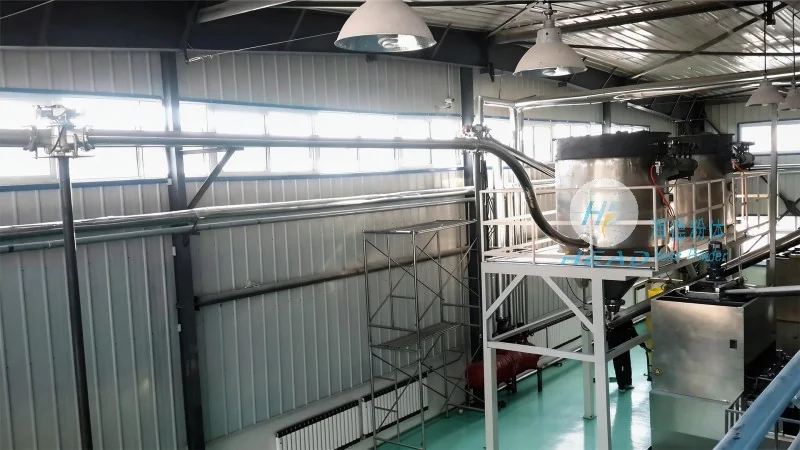
Pneumatic conveying systems use air or other gases to transport feed materials. This method is particularly effective for handling fine powders and dust, as it can transport materials over long distances without the need for multiple transfer points. The main advantage of pneumatic conveying is its ability to handle a wide range of feed types, including fine powders, granules, and even bulk materials. It also offers a relatively clean and hygienic operation, as the feed is contained within a sealed system. However, pneumatic conveying has its drawbacks. It requires a significant amount of energy to operate, as the air pressure and flow rates need to be carefully controlled. Additionally, the system can be more complex to install and maintain compared to other methods, and it may not be suitable for heavy or abrasive materials that could damage the pipes or components.
3. Belt Conveyor
Belt conveyors use a continuous belt to transport feed materials. This method is commonly used in bulk handling operations, such as in feed mills or feedlots. The primary advantage of belt conveyors is their high capacity and ability to transport materials over long distances. They can handle a wide variety of feed types, including bulk materials, and can be easily integrated into existing systems. Belt conveyors are also relatively low maintenance and can operate continuously without frequent stops. However, belt conveyors have some limitations. They require a significant amount of space for installation, which may not be feasible in smaller operations. Additionally, the belt can be prone to wear and tear, especially when handling abrasive or heavy materials, leading to higher maintenance costs over time.
4. Scraper Conveyor (Chain Conveyor)
Scraper conveyors, also known as chain conveyors, use a chain with attached scrapers to move feed materials along a trough. This method is particularly effective for handling sticky or wet feeds, as the scrapers can push the material along the conveyor. The main advantage of scraper conveyors is their ability to handle a wide range of feed types, including those that are difficult to convey with other methods. They are also relatively simple to install and maintain, and can operate continuously without frequent stops. However, scraper conveyors have some drawbacks. They are not suitable for conveying fine powders or dust, as the material can easily fall through the gaps between the chain and the trough. Additionally, the system can be noisy and may require more maintenance compared to other methods, as the chain and scrapers can wear out over time.

5. Comparison and Recommendations
When choosing a feed conveying method, it is essential to consider the specific requirements of your operation. The screw conveyor is an excellent choice for simple, low-cost applications involving dry, granular feeds. The pneumatic conveying system is ideal for handling fine powders and long-distance transport. The belt conveyor is suitable for high-capacity bulk handling operations. The scraper conveyor is best for sticky or wet feeds. Ultimately, the best method depends on factors such as feed type, distance, capacity, and budget. It is recommended to consult with a professional, such as Shandong HeadPowder Engineering Co., Ltd., to determine the most suitable feed conveying system for your specific needs.

 Shandong Headpowder Engineering Co., Ltd.
 156-6277-7102(Quản lý Trương)
  0531-83386006
  Thành phố Tế Nam, Tỉnh Sơn Đông, Trung Quốc
Điện thoại
WeChatTư vấn
Lên đầu