Chuyên sâu trong lĩnh vực vật liệu rời công nghiệp, cung cấp giải pháp môi trường thông minh tích hợp cho phối trộn tự động, cấp liệu tập trung, khử lưu huỳnh và khử nitơ khô!
When it comes to the efficient handling and transportation of calcium carbonate powder, selecting the right conveying method is crucial for maintaining product quality, minimizing downtime, and optimizing operational costs. Calcium carbonate, a widely used industrial material in applications ranging from plastics and coatings to paper and construction materials, requires specialized handling due to its fine particle size and potential for dust generation. This article provides a detailed comparison of common calcium carbonate powder conveying methods, highlighting their advantages, limitations, and suitability for different industrial scenarios. The information is presented by Shandong HeadPowder Engineering Co., Ltd., a leading manufacturer based in China, known for providing tailored material handling solutions.
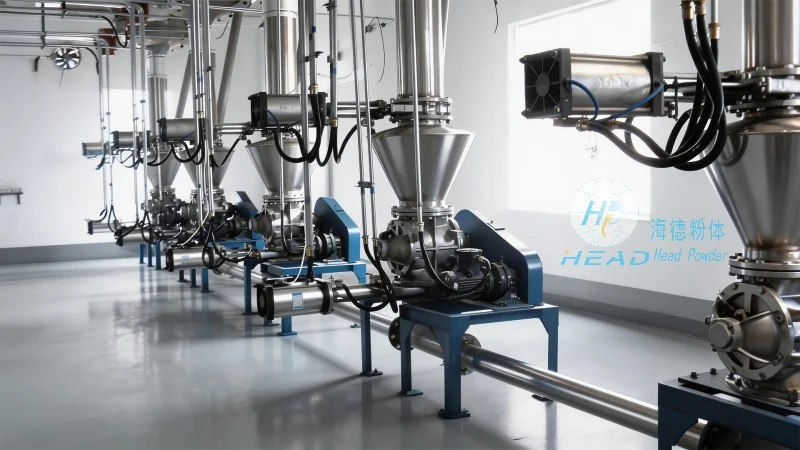
1. Air-Driven Pneumatic Conveying Systems
Pneumatic conveying, or air-driven systems, are among the most common methods for transporting calcium carbonate powder due to their ability to handle fine powders over moderate distances. These systems use compressed air to move material through a network of pipes, often employing positive displacement blowers or rotary lobe pumps to generate the necessary pressure. There are two primary types of pneumatic conveying: dilute phase and dense phase. Dilute phase systems are suitable for short to medium distances (typically up to 100 meters) and low to medium material flow rates, while dense phase systems are preferred for longer distances and higher flow rates, as they provide better control over material velocity and reduce the risk of product degradation.
Advantages of pneumatic conveying for calcium carbonate powder include its ability to transport material without direct contact with equipment, which minimizes contamination and wear. It also allows for the integration of dust collection and filtration systems, ensuring compliance with environmental regulations. However, the system requires a significant amount of energy to operate, and the initial investment can be higher compared to mechanical systems. Additionally, the pressure drop in long pipelines can lead to reduced flow rates and increased maintenance for air compressors.
2. Screw Conveyors (Auger Conveyors)
Screw conveyors, also known as auger conveyors, are mechanical devices that use a rotating helical screw to move material along a trough or pipe. These systems are widely used for calcium carbonate powder due to their simplicity, reliability, and ability to handle dry, free-flowing powders. Screw conveyors are particularly effective for horizontal or slightly inclined transport, with the pitch and speed of the screw determining the material's velocity and capacity. They are suitable for short to medium distances (typically up to 30 meters) and moderate flow rates, making them ideal for applications such as feeding hoppers, blending, and transferring material within a production line.

One of the key advantages of screw conveyors is their low maintenance requirements and relatively low operating costs. They can be easily integrated into existing facilities and are capable of handling a wide range of particle sizes, including fine calcium carbonate powders. However, screw conveyors are not suitable for vertical transport due to the risk of material bridging or clogging. They also require regular cleaning to prevent material buildup and may not be effective for very fine powders that tend to settle or create excessive friction.
3. Bucket Elevators (Chain and Flight Conveyors)
Bucket elevators, or chain and flight conveyors, are vertical or inclined mechanical systems that use a chain with attached buckets to lift and transport material. These systems are commonly used for calcium carbonate powder when vertical transport is required, such as moving material from a storage silo to a processing plant. The buckets are filled with material as they travel up the conveyor, and the material is discharged at the top. Bucket elevators are capable of handling high flow rates and can transport material over long vertical distances (up to several hundred meters), making them suitable for large-scale industrial applications.
The primary advantage of bucket elevators is their high capacity and ability to handle abrasive materials without significant wear. They are also relatively simple to operate and maintain, with minimal moving parts exposed to the material. However, bucket elevators require more space than horizontal systems and may experience issues with material bridging or clogging, especially with very fine powders. Additionally, the system can be noisy and may generate dust during operation, necessitating proper sealing and dust collection measures.
4. Belt Conveyors

Belt conveyors are another mechanical option for calcium carbonate powder transport, particularly for horizontal or slightly inclined applications over longer distances. These systems use a continuous belt that moves over rollers or pulleys to transport material. Belt conveyors are capable of handling large volumes of material and can be configured with multiple sections, inclines, and declines to meet specific process requirements. They are commonly used in industries such as mining, construction, and manufacturing for bulk material handling.
Advantages of belt conveyors include their high capacity, low maintenance, and ability to transport material over long distances (up to several hundred meters) with minimal energy consumption. They are also suitable for transporting wet or sticky materials, which can be an issue with other conveying systems. However, belt conveyors are not ideal for fine powders due to the risk of material spillage and the need for regular cleaning to prevent buildup. Additionally, they require a significant amount of space and may not be suitable for vertical transport.
5. Comparison and Selection Criteria
When selecting a conveying method for calcium carbonate powder, several factors must be considered to ensure optimal performance and cost-effectiveness. The most critical factors include the distance and elevation change required, the material flow rate and particle size, the available space and budget, and the environmental regulations in the operating area. For short horizontal distances and moderate flow rates, screw conveyors or belt conveyors may be sufficient. For longer distances or vertical transport, pneumatic conveying or bucket elevators are more appropriate. The choice also depends on the specific properties of the calcium carbonate powder, such as its moisture content, dust generation, and potential for caking or bridging.
Shandong HeadPowder Engineering Co., Ltd. offers customized conveying solutions tailored to the unique needs of each client. Our engineers work closely with customers to assess their material handling requirements, evaluate the pros and cons of different systems, and recommend the most efficient and cost-effective solution. Whether you need a pneumatic system for dust-free transport or a screw conveyor for simple horizontal transfer, our team provides comprehensive support from design and installation to maintenance and troubleshooting. By choosing HeadPowder, you can ensure that your calcium carbonate powder is handled safely, efficiently, and in compliance with industry standards.

 Shandong Headpowder Engineering Co., Ltd.
 156-6277-7102(Quản lý Trương)
  0531-83386006
  Thành phố Tế Nam, Tỉnh Sơn Đông, Trung Quốc
Điện thoại
WeChatTư vấn
Lên đầu