Chuyên sâu trong lĩnh vực vật liệu rời công nghiệp, cung cấp giải pháp môi trường thông minh tích hợp cho phối trộn tự động, cấp liệu tập trung, khử lưu huỳnh và khử nitơ khô!
For industrial applications, the efficient and reliable transportation of cement particles is crucial for maintaining production efficiency and product quality. Various conveying methods are employed in the cement industry, each with distinct characteristics and suitability for different operational requirements. This article provides a detailed comparison of common cement particle conveying methods, focusing on their mechanisms, advantages, and typical applications.
1. Pneumatic Conveying Systems

HeadPowder Engineering specializes in the design and manufacturing of advanced pneumatic conveying systems for cement particle transport. Pneumatic conveying uses compressed air or gas to move materials through a pipeline. There are two main types: pressure and vacuum systems. Pressure systems are suitable for long-distance and high-volume transport, while vacuum systems are ideal for short distances and material collection from multiple points. The key advantages of pneumatic conveying include high speed, minimal material degradation, and the ability to handle fine powders without the need for additional equipment like buckets or belts. However, it requires significant energy input and may face challenges with abrasive materials or high moisture content.
2. Screw Conveyors
Screw conveyors, also known as auger conveyors, are widely used for horizontal or slight incline transport of cement particles. These systems consist of a rotating screw (auger) inside a trough, which pushes material forward. Screw conveyors are simple in design, low-cost, and effective for moderate capacities. They are particularly suitable for handling dry, free-flowing materials and can be used in both indoor and outdoor settings. The main benefits include low maintenance requirements and the ability to operate in a closed system to prevent dust emissions. However, screw conveyors have limitations in terms of material handling capacity and may not be suitable for very fine or abrasive powders, as they can cause wear and tear on the screw and trough.
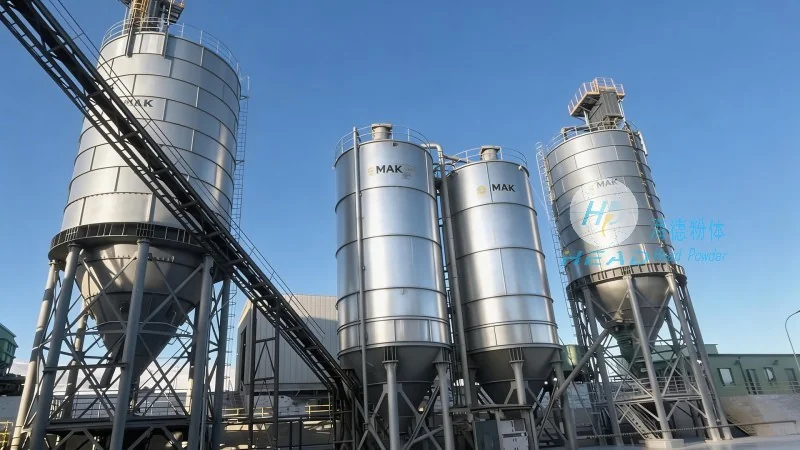
3. Belt Conveyors
Belt conveyors are another common method for cement particle transport, especially in bulk handling operations. These systems use a continuous belt that moves over rollers or pulleys to transport materials. Belt conveyors are highly efficient for long-distance and high-volume transport, with the ability to handle large quantities of material at a time. They are versatile and can be adapted for various applications, including loading and unloading of trucks, storage, and processing. The advantages of belt conveyors include high throughput, low energy consumption per unit weight, and the ability to transport materials over long distances without intermediate stops. However, they require regular maintenance of the belt and pulleys, and are susceptible to material buildup or spillage if not properly designed.

4. Hydraulic Conveying
Hydraulic conveying systems use water to transport cement particles, typically in a slurry form. This method is often used in applications where the material is already in a wet state or needs to be mixed with water for transport. Hydraulic conveyors are effective for handling wet or sticky materials and can transport materials over long distances with minimal energy consumption. The main benefits include the ability to handle abrasive materials and the reduction of dust emissions. However, hydraulic systems require additional equipment for water management and may face challenges with material separation and drying after transport.
5. Comparison and Selection Criteria

When selecting a cement particle conveying method, several factors must be considered, including the material characteristics (e.g., particle size, moisture content, abrasiveness), the required transport distance, the desired throughput, and the available space and budget. Pneumatic systems are preferred for high-speed, fine powder transport over long distances, while screw conveyors are suitable for moderate capacities and horizontal transport. Belt conveyors excel in bulk handling and long-distance transport, and hydraulic systems are ideal for wet or sticky materials. The choice of system also depends on the specific operational environment and the need for dust control or material containment.
Conclusion
HeadPowder Engineering provides comprehensive solutions for cement particle conveying, leveraging advanced technology and expertise to meet the diverse needs of the cement industry. By understanding the characteristics and applications of different conveying methods, industrial operators can select the most appropriate system to enhance efficiency, reduce costs, and ensure product quality. Whether for pneumatic, screw, belt, or hydraulic conveying, HeadPowder Engineering offers reliable and efficient solutions tailored to specific operational requirements.

 Shandong Headpowder Engineering Co., Ltd.
 156-6277-7102(Quản lý Trương)
  0531-83386006
  Thành phố Tế Nam, Tỉnh Sơn Đông, Trung Quốc
Điện thoại
WeChatTư vấn
Lên đầu