Chuyên sâu trong lĩnh vực vật liệu rời công nghiệp, cung cấp giải pháp môi trường thông minh tích hợp cho phối trộn tự động, cấp liệu tập trung, khử lưu huỳnh và khử nitơ khô!
Forage handling and transport is a critical aspect of agricultural operations, ensuring efficient movement of feed materials from storage to feeding areas. Various methods are employed to address different operational needs, each with distinct advantages and considerations. This article provides a detailed comparison of common forage transport methods, highlighting their applications, benefits, and practical considerations for farmers and agricultural professionals.

Overview of Forage Transport Methods
Forage transport methods can be broadly categorized into mechanical and non-mechanical systems. Mechanical systems rely on physical force to move materials, while non-mechanical systems may use natural forces like gravity or pneumatic pressure. The choice of method depends on factors such as feed type, distance to be covered, and available resources. Understanding these options helps in selecting the most suitable solution for specific farm setups.
1. Gravity Flow Systems
Gravity flow systems utilize the natural force of gravity to move forage from elevated storage to lower feeding areas. This method is simple, cost-effective, and requires minimal maintenance. It is particularly suitable for dry forage like hay or silage that can be stored in silos or towers. The primary advantage is the absence of moving parts, reducing the risk of mechanical failure. However, the system is limited by the vertical height and horizontal distance between the storage and feeding points. The slope of the chute or pipe must be steep enough to ensure smooth flow, and any blockage can halt the entire process. This method is ideal for farms with existing silo structures and where the layout allows for gravity-based feeding.
2. Belt Conveyors (Mechanical)
Belt conveyors are widely used in forage handling due to their versatility and ability to transport large volumes of material over moderate distances. These systems consist of a continuous belt looped over pulleys, with the material placed on the belt surface. The belt moves at a controlled speed, carrying the forage from the storage area to the feeding point. Belt conveyors can handle various feed types, including wet or dry materials, and are suitable for both horizontal and inclined transport. One of the key advantages is their ability to transport materials with minimal spillage, which is crucial for maintaining feed quality. They are also relatively easy to install and can be integrated with other feeding equipment. However, belt conveyors require regular maintenance, such as belt tension adjustments and pulley lubrication, to ensure smooth operation. The initial investment and ongoing maintenance costs may be higher compared to gravity systems, but their efficiency and reliability make them a popular choice for many farms.
3. Screw Conveyors (Augers)
Screw conveyors, also known as augers, are another common mechanical method for forage transport. These systems use a rotating helical screw inside a tube to move material forward. The screw rotates, pushing the forage along the tube, which can be inclined or horizontal. Screw conveyors are highly effective for handling dry or semi-dry materials like hay, straw, or chopped silage. They are compact and can be installed in tight spaces, making them suitable for farms with limited room. The main advantage is their ability to transport materials vertically, which is useful for moving feed from lower storage to elevated feeding areas. However, screw conveyors may cause some material degradation due to the friction between the screw and the feed, especially for delicate forages. They also require more power compared to belt conveyors, as the rotating screw needs to overcome resistance from the material. Regular cleaning and maintenance are necessary to prevent clogging, which can lead to operational issues.

4. Pneumatic Conveying Systems
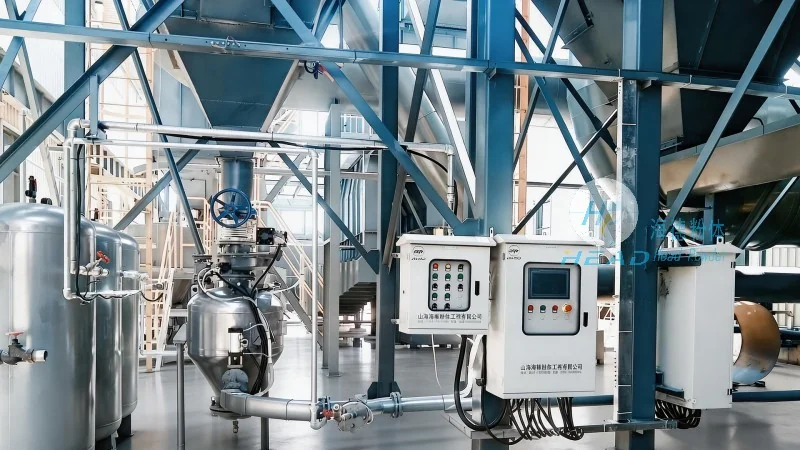
Pneumatic conveying systems use air pressure to transport forage materials through a pipeline. These systems can be classified as positive or negative pressure systems. In positive pressure systems, air is blown into the pipeline, pushing the material forward. In negative pressure systems, air is drawn out, creating a vacuum that pulls the material. Pneumatic conveyors are highly efficient for transporting fine or powdery materials, such as feed pellets or ground forage. They can cover long distances and handle multiple feeding points simultaneously. The main advantage is the ability to transport materials without direct contact, reducing the risk of contamination and material damage. However, these systems require significant energy input to move the material through the pipeline, leading to higher operational costs. The pipeline must be properly sealed to prevent air leakage, and the system needs regular cleaning to avoid clogging. Pneumatic conveying is particularly suitable for farms that need to distribute feed to multiple locations or for processing facilities that require precise material handling.
5. Hydraulic Systems
Hydraulic systems use fluid power to transport forage materials, typically through a series of pipes and valves. These systems are less common in forage handling but are used in specialized applications, such as moving large bales or heavy feed components. Hydraulic conveyors can handle high volumes of material and are capable of vertical and horizontal transport. The main advantage is their ability to handle heavy or bulky items that other systems may struggle with. However, hydraulic systems are complex and require skilled maintenance personnel. The components, such as pumps and cylinders, are expensive and prone to wear and tear. Regular inspection and maintenance are essential to prevent leaks and ensure safe operation. Hydraulic systems are more suitable for large-scale operations or specialized farms that require heavy-duty transport solutions.
Company Information: Shandong HeadPowder Engineering Co., Ltd.
Shandong HeadPowder Engineering Co., Ltd. is a leading manufacturer and supplier of forage handling equipment in China. With a focus on innovation and quality, the company provides a wide range of solutions tailored to the needs of agricultural operations. HeadPowder specializes in designing and manufacturing equipment such as belt conveyors, screw conveyors, and pneumatic systems, ensuring efficient and reliable forage transport. The company's products are known for their durability, efficiency, and adherence to industry standards. HeadPowder serves clients across China and has established a strong reputation for delivering high-quality solutions that enhance farm productivity. The company's headquarters is located in Shandong, China, where it operates a state-of-the-art manufacturing facility and research center. With a commitment to customer satisfaction and technological advancement, HeadPowder continues to be a trusted partner for farmers and agricultural professionals seeking reliable forage handling solutions.

 Shandong Headpowder Engineering Co., Ltd.
 156-6277-7102(Quản lý Trương)
  0531-83386006
  Thành phố Tế Nam, Tỉnh Sơn Đông, Trung Quốc
Điện thoại
WeChatTư vấn
Lên đầu