Chuyên sâu trong lĩnh vực vật liệu rời công nghiệp, cung cấp giải pháp môi trường thông minh tích hợp cho phối trộn tự động, cấp liệu tập trung, khử lưu huỳnh và khử nitơ khô!
Borax, a vital industrial chemical, is widely utilized in sectors such as glass manufacturing, detergents, and textile processing. Efficient and reliable granule conveying is essential for maintaining production flow and ensuring product quality. This article explores the primary methods used for borax granule conveying, highlighting key considerations and applications for each approach.
1. Belt Conveyor Systems for Borax Granule Transport
Belt conveyors are among the most common and versatile solutions for transporting borax granules. These systems utilize a continuous loop of material (typically rubber or PVC) that moves over rollers or pulleys, carrying the granules from the source to the destination. The design can be customized to handle different loads and distances, making it suitable for both short and long-distance conveying. For borax, which is often handled in bulk, belt conveyors provide a stable and low-maintenance option. They are particularly effective in environments where dust control is a priority, as the enclosed or covered design minimizes particle dispersion. The smooth operation of belt conveyors also helps maintain the integrity of the granules, preventing breakage or segregation during transport.
2. Screw Conveyors for Borax Granule Handling
Screw conveyors, also known as auger conveyors, are another popular method for borax granule transport. These systems consist of a rotating screw (auger) inside a cylindrical housing, which moves the material forward through the tube. Screw conveyors are ideal for vertical or inclined transport, allowing for elevation changes without the need for additional equipment. They are particularly effective for handling dry, free-flowing granules like borax, as the screw’s rotation creates a continuous flow. The compact design of screw conveyors makes them suitable for installations with limited space, and they can be easily integrated into existing production lines. However, it is important to consider the material’s density and potential for clogging when selecting a screw conveyor, as borax can sometimes stick to the screw surface if not properly lubricated or designed.

3. Pneumatic Conveying Systems for Borax Granule Transfer
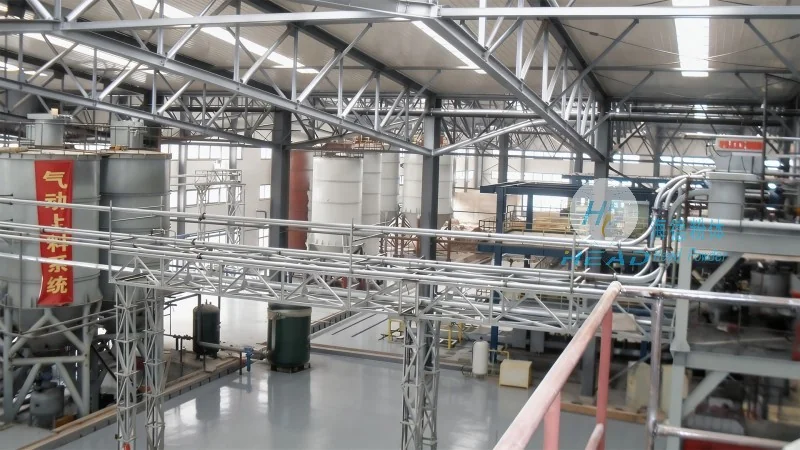
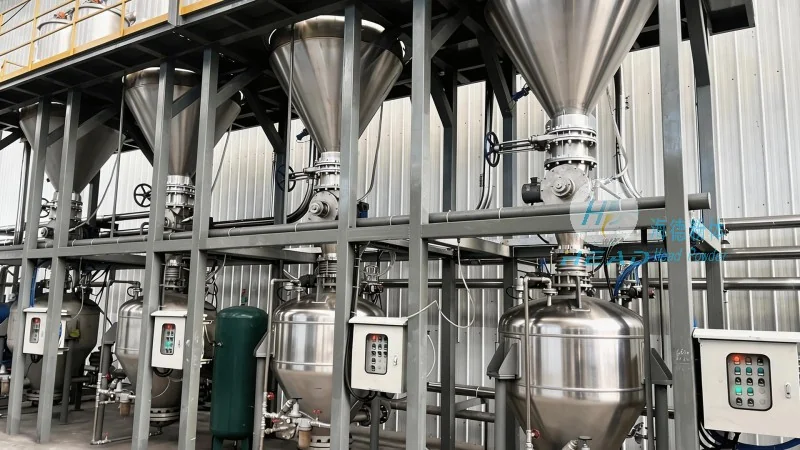
Pneumatic conveying, or air-based transport, is a method that uses compressed air to move borax granules through a pipeline. This approach is particularly useful for applications requiring dust-free or enclosed transport, as the material is contained within the pipeline. There are two main types of pneumatic conveying systems: positive displacement and pressure systems. Positive displacement systems use a pump to create a vacuum or pressure, drawing the granules into the pipeline and moving them to the destination. Pressure systems, on the other hand, use compressed air to push the material through the line. Pneumatic conveying is highly effective for transporting borax in a controlled environment, reducing the risk of contamination and ensuring consistent flow rates. However, it requires careful consideration of air pressure and pipeline design to prevent material degradation or system inefficiencies.
4. Hydraulic Conveying for Borax Granule Handling
Hydraulic conveying systems use water or a liquid medium to transport borax granules. This method is particularly suitable for applications where the material needs to be mixed with a liquid or transported over long distances in a slurry form. The system typically involves a pump that moves the slurry through pipes, with the borax granules suspended in the liquid. Hydraulic conveying is effective for handling wet or sticky borax, as the liquid helps prevent clogging and ensures smooth flow. However, it requires additional equipment for slurry preparation and separation, making it more complex and costly compared to other methods. The system is often used in industries where borax is processed in a wet environment, such as in the production of detergents or glass.
5. Vibrating Conveyors for Borax Granule Transport
Vibrating conveyors utilize vibration to move borax granules along a trough or conveyor bed. These systems consist of a conveyor surface that is vibrated at a specific frequency and amplitude, causing the material to move forward. Vibrating conveyors are particularly effective for handling bulk materials with varying sizes or shapes, as the vibration helps prevent material buildup and ensures consistent flow. They are also suitable for inclined or horizontal transport, making them versatile for different production layouts. The design of vibrating conveyors can be adjusted to accommodate different material properties, such as the density and abrasiveness of borax granules. This adaptability makes them a reliable choice for continuous production lines, where consistent conveying performance is critical.
6. Choosing the Right Borax Granule Conveying Method
When selecting a borax granule conveying method, several factors must be considered to ensure optimal performance and efficiency. The first consideration is the distance and layout of the transport route, as different systems are better suited for short or long distances. For example, belt conveyors are ideal for long-distance horizontal transport, while screw conveyors are more suitable for vertical or inclined transport. The second factor is the material characteristics of borax, including its density, moisture content, and flowability. These properties will determine the type of equipment needed to prevent clogging or material degradation. The third consideration is the environmental requirements, such as dust control or enclosed transport, which may influence the choice between open and enclosed systems. Additionally, the budget and maintenance requirements should be evaluated, as different conveying methods have varying costs and maintenance needs. By carefully assessing these factors, industrial facilities can select the most appropriate borax granule conveying method to meet their specific needs and ensure smooth production operations.
Company Introduction: Shandong HeadPowder Engineering Co., Ltd.
Shandong HeadPowder Engineering Co., Ltd., commonly known as HeadPowder, is a leading provider of industrial conveying solutions specializing in borax and other bulk materials. With a focus on innovation and customer satisfaction, HeadPowder offers a range of conveying systems tailored to the unique needs of each client. The company’s expertise lies in designing and manufacturing efficient, reliable, and cost-effective solutions that enhance production efficiency and product quality. HeadPowder’s team of engineers and technicians work closely with clients to understand their specific requirements and develop customized solutions that meet industry standards. The company’s commitment to quality and service has made it a trusted partner for many industrial facilities worldwide, providing them with the tools they need to optimize their borax granule conveying processes. Based in Shandong, China, HeadPowder leverages its local expertise and resources to deliver high-quality products and services to clients globally.

 Shandong Headpowder Engineering Co., Ltd.
 156-6277-7102(Quản lý Trương)
  0531-83386006
  Thành phố Tế Nam, Tỉnh Sơn Đông, Trung Quốc
Điện thoại
WeChatTư vấn
Lên đầu