

Comparison of Common Melamine Powder Conveying Methods: Advantages and Disadvantages
Melamine powder, a critical raw material in industries such as coatings, plastics, and adhesives, demands efficient and reliable conveying systems to ensure seamless production processes. The choice of conveying method directly impacts operational efficiency, material quality, and overall cost-effectiveness. This article provides a detailed comparison of common melamine powder conveying methods, highlighting their advantages and disadvantages to assist industries in selecting the most suitable solution.
1. Screw Conveyors for Melamine Powder

Screw conveyors, also known as auger conveyors, are widely utilized for melamine powder due to their simplicity and effectiveness. These systems feature a rotating helical screw inside a trough, which moves material forward through the conveyor. For melamine powder, screw conveyors offer several advantages. They are relatively low-cost to install and maintain, making them an attractive option for small to medium-sized operations. Additionally, screw conveyors can handle a wide range of particle sizes and moisture content, providing flexibility in material handling. However, there are notable disadvantages. Melamine powder, being a fine powder, causes significant wear on the screw and trough components over time, leading to higher maintenance costs and potential downtime for repairs. Moreover, screw conveyors are not ideal for long-distance or vertical conveying, as the material may segregate or become compacted, reducing efficiency. The head loss in screw conveyors is also higher compared to other methods, which may require more power input.
2. Pneumatic Conveying Systems
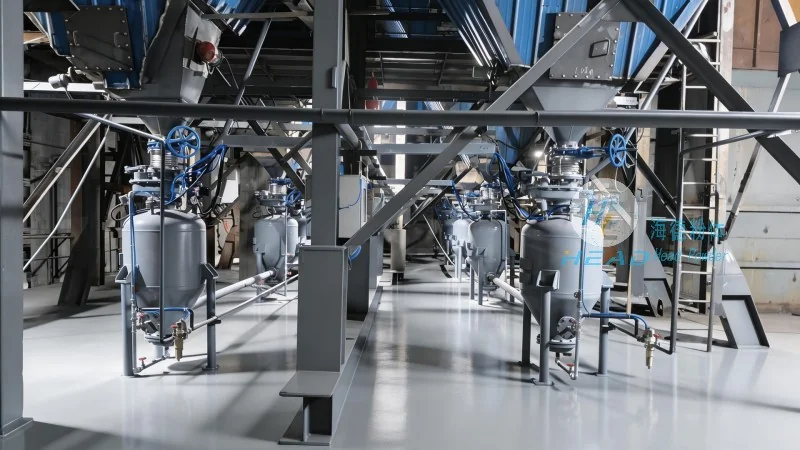
Pneumatic conveying, or air-powered systems, use compressed air to transport melamine powder through a pipeline. This method is particularly effective for high-volume and long-distance conveying. One of the primary advantages of pneumatic conveying is its ability to handle fine powders without mechanical components that come into direct contact with the material, reducing wear and tear and lowering maintenance costs. Additionally, pneumatic systems can be designed for both dilute and dense phase conveying, offering flexibility in application. For example, dilute phase systems are suitable for short distances and moderate volumes, while dense phase systems are ideal for longer distances and higher material loads. However, pneumatic conveying has several drawbacks. The most significant is high energy consumption, as compressed air requires substantial power to generate, increasing operational costs for large-scale operations. Another disadvantage is the potential for material degradation due to friction and impact within the pipeline. Melamine powder, sensitive to moisture and temperature, may degrade if not handled carefully. Furthermore, pneumatic systems are more complex to install and maintain, requiring expertise in air pressure management and system sealing.
3. Pumping Systems for Melamine Powder
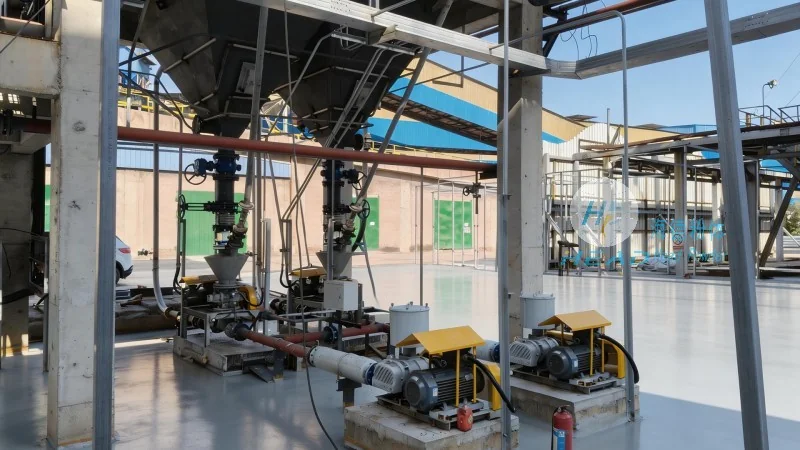
Pumping systems, such as positive displacement pumps or centrifugal pumps, are used to transport melamine powder in slurry form. This method is particularly effective for handling wet or sticky melamine powders that cannot be conveyed dry. One of the main advantages of pumping systems is their ability to handle high-viscosity slurries, ensuring consistent flow and preventing blockages. This is crucial for operations where the melamine powder is mixed with liquids or other additives. Additionally, pumping systems can be integrated with existing pipelines, making them suitable for retrofitting into existing production lines. However, there are significant disadvantages. Pumping systems require a continuous supply of liquid to maintain the slurry, increasing overall material handling complexity and raising costs for raw materials and waste management. Furthermore, pumping systems are more prone to wear and tear due to the abrasive nature of melamine powder, leading to higher maintenance and replacement costs. The risk of clogging and blockages is also higher compared to other methods, as the slurry can settle or solidify if not properly maintained.
4. Comparison and Selection Criteria
When selecting a melamine powder conveying method, several factors must be considered to ensure the best fit for the application. The first criterion is the distance and height of the conveying system. For short distances and horizontal movement, screw conveyors may be sufficient. However, for long distances or vertical lifting, pneumatic or pumping systems are more appropriate. The second criterion is the material characteristics, including particle size, moisture content, and bulk density. Fine powders with high moisture content may require pneumatic systems to avoid clogging. The third criterion is the operational cost, including energy consumption, maintenance, and equipment life. Screw conveyors are generally the most cost-effective for short-term applications, while pneumatic systems are more suitable for long-term, high-volume operations. The fourth criterion is space availability and system complexity. Screw conveyors require less space and are simpler to install, ideal for compact production areas. In contrast, pneumatic and pumping systems require more space and complex infrastructure.

HeadPowder Engineering: Expert Solutions for Melamine Powder Conveying
Shandong HeadPowder Engineering Co., Ltd., a leading manufacturer of industrial conveying equipment, specializes in providing customized solutions for melamine powder handling. With years of experience in the industry, HeadPowder offers a range of products tailored to meet specific application needs. The company's screw conveyors are designed with durable materials and advanced wear-resistant coatings to minimize maintenance and maximize efficiency. For pneumatic conveying, HeadPowder provides high-quality air compressors and pipeline systems that ensure reliable operation and low energy consumption. The company's pumping systems are equipped with advanced control mechanisms to maintain consistent slurry flow and prevent clogging. HeadPowder's team of engineers works closely with clients to assess requirements and recommend the most suitable conveying method. The company's commitment to quality and customer satisfaction has made it a trusted partner for industries including coatings, plastics, and adhesives. By choosing HeadPowder, clients can ensure efficient, reliable, and cost-effective melamine powder conveying systems, contributing to improved overall productivity.