

Comparison of Common Positive Electrode Handling Methods for Lithium-Ion Batteries
For manufacturers of lithium-ion batteries, the efficient and reliable handling of positive electrodes is a critical process that directly impacts production efficiency, product quality, and overall operational costs. The choice of handling method for positive electrodes is a key decision that influences various aspects of battery production, from raw material processing to cell assembly. This article provides a detailed comparison of common positive electrode handling methods, focusing on their characteristics, advantages, and typical applications. The information is presented by Shandong HeadPowder Engineering Co., Ltd., a leading provider of material handling solutions in China, with a focus on practical industry applications.
Vibrating Conveyors: Traditional and Versatile Solutions

Vibrating conveyors are one of the most widely used positive electrode handling methods due to their versatility and reliability. These systems operate by using an oscillating motion to move materials along a trough or pipe. The key advantages of vibrating conveyors include their ability to handle a wide range of particle sizes and shapes, low maintenance requirements, and minimal product degradation. They are particularly suitable for applications where gentle material handling is required, such as in the initial stages of electrode production where delicate materials are processed. The smooth, continuous flow provided by vibrating conveyors ensures consistent material delivery, which is crucial for maintaining uniformity in battery cell production. Additionally, these systems can be easily integrated into existing production lines, making them a cost-effective solution for many manufacturers.
Screw Conveyors: Compact and Efficient for Bulk Handling
Screw conveyors, also known as auger conveyors, are another common method for handling positive electrodes. These systems use a rotating screw to move materials through a tube or trough. Screw conveyors are particularly effective for bulk material handling, as they can transport large volumes of material with minimal space requirements. The compact design of screw conveyors makes them ideal for applications where floor space is limited, such as in battery production facilities with tight layouts. One of the main advantages of screw conveyors is their ability to handle materials with varying moisture content and particle sizes, without the need for additional equipment. However, they may not be suitable for very fine or delicate materials, as the screw can cause some friction and potential degradation. Despite this, screw conveyors remain a popular choice for many manufacturers due to their efficiency and low operational costs.

Pneumatic Conveying Systems: High-Speed and Flexible Transport
Pneumatic conveying systems use air pressure to transport positive electrodes, making them a high-speed and flexible handling solution. These systems are particularly effective for applications where long-distance transport or vertical movement is required, as they can move materials over significant distances without the need for multiple transfer points. The main advantage of pneumatic conveying is its ability to handle fine powders and granules, which are often challenging to transport with other methods. Pneumatic systems can also be designed to handle materials with high moisture content or corrosive properties, as the enclosed system prevents contamination and material degradation. However, pneumatic conveying may require more energy compared to other methods, and the system can be more complex to install and maintain. Despite these considerations, pneumatic conveying is widely used in battery production for its speed and flexibility, especially in large-scale manufacturing facilities.
Belt Conveyors: High-Capacity and Continuous Transport
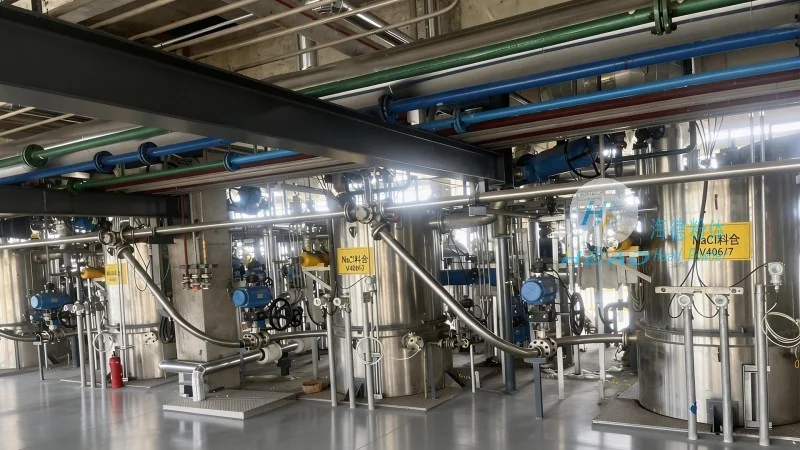
Belt conveyors are commonly used for handling positive electrodes in high-volume production environments. These systems use a continuous belt to transport materials from one point to another, providing a high-capacity and reliable transport solution. Belt conveyors are particularly effective for applications where large quantities of material need to be moved over long distances, such as in the final stages of electrode production where bulk materials are transferred to cell assembly lines. The main advantages of belt conveyors include their ability to handle heavy loads, low maintenance costs, and the ability to integrate with other production equipment. Belt conveyors can also be designed with multiple inclines and declines, making them suitable for complex production layouts. However, they may not be suitable for very fine or delicate materials, as the belt can cause some friction and potential damage. Additionally, belt conveyors require regular cleaning and maintenance to prevent material buildup and ensure smooth operation.
When selecting a positive electrode handling method, manufacturers must consider several factors, including the material properties, production volume, space constraints, and operational costs. Vibrating conveyors are ideal for delicate materials and low to medium production volumes, while screw conveyors are suitable for bulk handling and compact spaces. Pneumatic conveying is preferred for high-speed and long-distance transport, especially for fine powders. Belt conveyors are best for high-capacity and continuous transport in large-scale production facilities. By understanding the characteristics and applications of each method, manufacturers can choose the most appropriate solution to optimize their battery production process. Shandong HeadPowder Engineering Co., Ltd. offers a range of material handling solutions tailored to the specific needs of lithium-ion battery manufacturers, ensuring efficient and reliable handling of positive electrodes throughout the production process.