

Common Crystal Particle Conveying Methods: An Overview of Pneumatic Conveying for Crystal Particles
When it comes to transporting crystal particles, selecting the right conveying method is crucial for efficiency, cost-effectiveness, and product integrity. Various techniques are employed in industrial settings, each with its own advantages and applications. This article, presented by Shandong HeadPowder Engineering Co., Ltd. (headpowder), explores common crystal particle conveying methods, with a focus on the benefits and operational aspects of pneumatic conveying, a widely used approach in the industry.
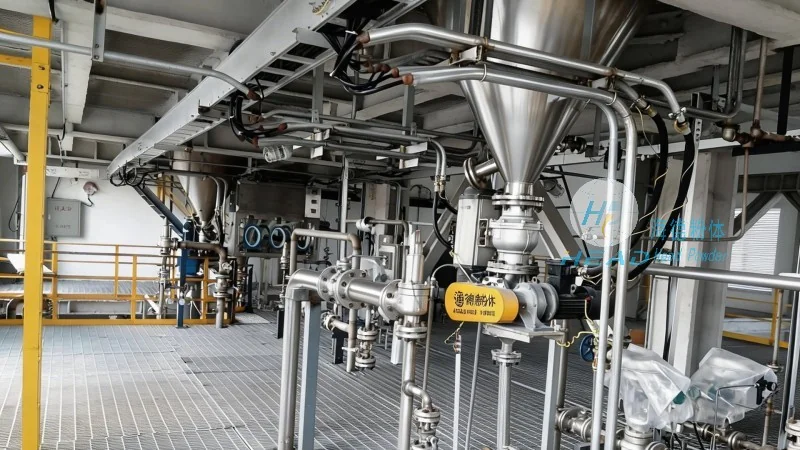
Pneumatic Conveying: A Detailed Overview
Pneumatic conveying, also known as air conveying, is a method that uses pressurized or vacuum air to transport solid particles, including crystal powders, through a pipeline. This technology is particularly suitable for crystal particles due to its ability to handle fine, abrasive, or hygroscopic materials without causing excessive wear or degradation. The process typically involves a conveying line, a blower or vacuum pump to generate airflow, and a hopper or feeder to introduce the particles into the system.
One of the key advantages of pneumatic conveying for crystal particles is its ability to maintain product quality. Unlike mechanical conveying systems, which may cause attrition or contamination, pneumatic systems can transport materials in a closed environment, reducing exposure to air, moisture, or contaminants. This is especially important for sensitive crystal products where purity and particle size distribution are critical.
There are two main types of pneumatic conveying systems: pressure and vacuum. Pressure systems use a positive pressure blower to push air and particles through the pipeline, while vacuum systems use a vacuum pump to draw particles from the source into the line. For crystal particles, pressure systems are often preferred as they can handle higher material loads and longer distances with less pressure drop. The choice between the two depends on factors such as the distance between the source and destination, the particle size, and the required flow rate.
Other Conveying Methods for Crystal Particles
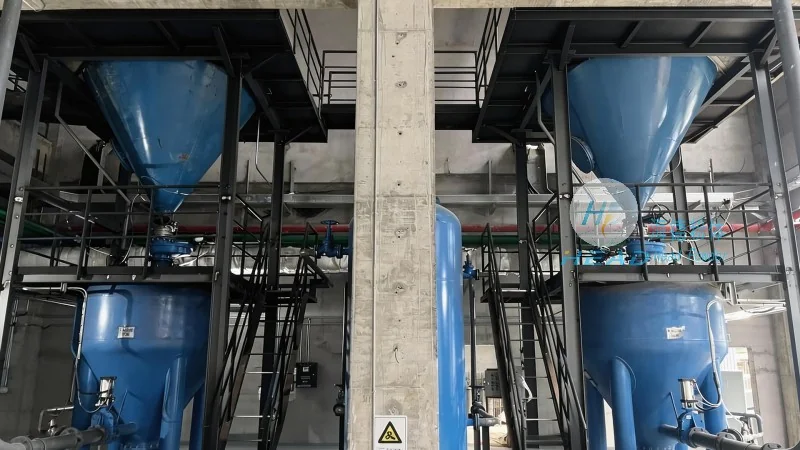
While pneumatic conveying is a popular choice, other methods are also used for crystal particle transport. Mechanical conveying systems, such as screw conveyors, belt conveyors, and bucket elevators, are common in many industrial applications. These systems rely on mechanical components to move particles and are often more cost-effective for short distances or bulk materials. However, they may not be suitable for fine or abrasive crystal particles, as they can cause significant wear and product degradation over time.
Another option is hydraulic conveying, which uses water or other liquids to transport particles. This method is typically used for larger, heavier particles or in applications where the material is highly soluble in water. However, for most crystal particles, hydraulic conveying is less common due to the potential for moisture absorption and the need for additional drying steps.
Factors to Consider When Choosing a Conveying Method
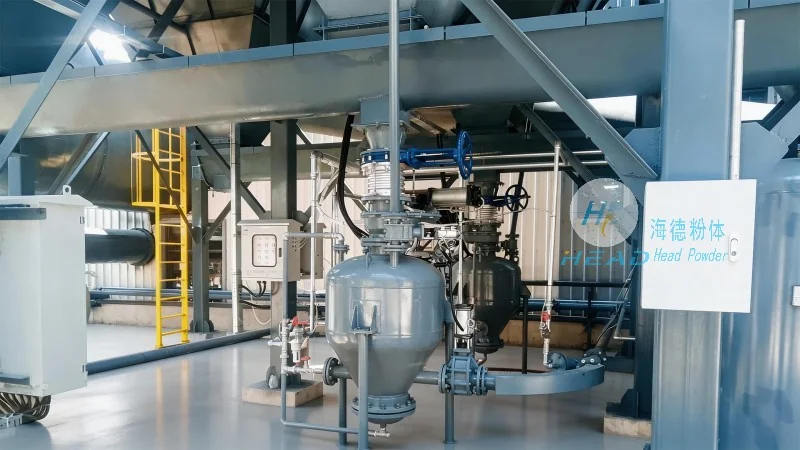
When selecting a conveying method for crystal particles, several factors must be considered to ensure optimal performance and product quality. The first is the particle size and properties. Fine, high-density particles may require more energy to transport and may be better suited for pressure pneumatic systems. Coarser particles, on the other hand, may be handled more efficiently by mechanical systems.
The distance between the source and destination is another critical factor. For short distances, mechanical conveyors may be sufficient, but for longer distances, pneumatic conveying is often more efficient and cost-effective. The required flow rate and throughput also play a role, as higher flow rates may necessitate larger-diameter pipelines or more powerful blower systems.
Cost and maintenance are also important considerations. Mechanical systems generally have lower initial costs and simpler maintenance requirements compared to pneumatic systems, which may require more frequent filter changes and blower maintenance. However, the long-term operational costs of pneumatic systems can be lower due to reduced product loss and lower energy consumption in some cases.
Conclusion
Choosing the right crystal particle conveying method is essential for maintaining product quality and operational efficiency in industrial processes. Pneumatic conveying, with its ability to handle fine, abrasive materials in a closed system, is a popular choice for many applications. However, other methods, such as mechanical or hydraulic conveying, may be more suitable depending on the specific requirements of the process. By considering factors such as particle properties, distance, flow rate, and cost, manufacturers can select the most appropriate conveying method to meet their needs.