

Comparison of Common Inorganic Salt Crystal Transport Methods
Understanding the optimal transport methods for inorganic salt crystals is crucial in various industrial applications, from chemical processing to pharmaceutical manufacturing. The efficiency and reliability of the chosen system directly impact production costs, product quality, and operational safety. This article provides a detailed comparison of common inorganic salt crystal transport methods, highlighting their working principles, advantages, limitations, and ideal applications.
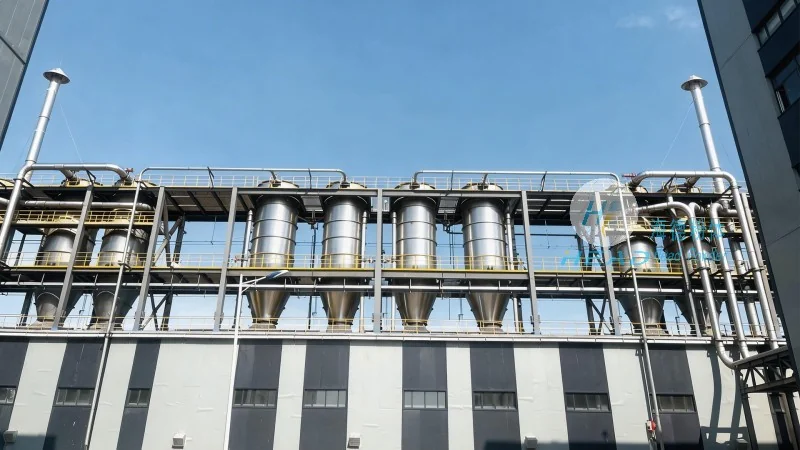
Gravity Flow Systems: A Simple yet Effective Option
Gravity flow systems rely on the natural force of gravity to move inorganic salt crystals from one point to another. Typically, these systems consist of inclined chutes or hoppers that allow the material to slide down due to its weight. This method is particularly suitable for short to medium distances where the slope of the conveyor can be adjusted to control the flow rate. One of the primary advantages of gravity flow is its low energy consumption, as it does not require any external power source. Additionally, the simplicity of the design reduces maintenance requirements and operational costs. However, gravity flow systems are highly dependent on the slope of the chute and the characteristics of the crystal, such as particle size and density. For instance, larger or denser crystals may require a steeper slope to achieve the desired flow rate, which can limit the flexibility of the system. Moreover, controlling the flow rate precisely can be challenging, as it is often influenced by factors like the angle of the incline and the material's friction properties. Consequently, gravity flow is best suited for applications where the distance is short, the crystal size is relatively uniform, and the flow rate is not critical, such as in small-scale batch processing or in situations where the material is already in a hopper ready for discharge.
Pump-Driven Transport Solutions: Precision and Control
Pump-driven systems use mechanical pumps to transport inorganic salt crystals, often in a slurry or suspension form. The most common types of pumps used for this purpose include centrifugal pumps and positive displacement pumps. Centrifugal pumps are ideal for handling larger volumes of material at lower pressures, making them suitable for applications where the crystal is mixed with a liquid carrier, such as in the processing of salt solutions. These pumps work by converting rotational energy into kinetic energy, which propels the slurry through the system. Positive displacement pumps, on the other hand, are better suited for high-viscosity or high-density slurries, as they provide a more consistent flow rate and higher pressure. The main advantage of pump-driven transport is the ability to precisely control the flow rate and pressure, ensuring that the material is delivered at the required speed and under the appropriate conditions. This level of control is essential in processes where the crystal's properties, such as moisture content or particle size distribution, need to be maintained. However, pump-driven systems come with higher operational costs due to the need for regular maintenance, energy consumption, and potential wear and tear on pump components. Additionally, the presence of a liquid carrier can complicate downstream processing, as the material may need to be separated from the liquid, adding another step to the overall process. Despite these drawbacks, pump-driven transport remains a popular choice in industries where the crystal's characteristics require careful handling and consistent delivery.
Pneumatic Conveying Systems: Clean and Contact-Free Transport

Pneumatic conveying systems use air or other gases to transport inorganic salt crystals in a dry or semi-dry state. This method is particularly advantageous for materials that are sensitive to moisture or contamination, as the material is never in direct contact with external surfaces. The system typically consists of a hopper, a venturi or a rotary airlock, and a receiver, with the crystals being drawn into the system by the moving air. The air velocity is carefully controlled to ensure that the crystals are carried without breaking or degrading. One of the key benefits of pneumatic conveying is its ability to handle a wide range of crystal sizes and shapes, from fine powders to larger granules. It also allows for the transport of materials over longer distances compared to gravity flow systems, as the air pressure can be adjusted to maintain the flow. However, pneumatic conveying systems have significant energy requirements, as the air must be compressed to a high pressure to move the material. This results in higher operational costs and potential issues with air leakage or pressure loss along the line. Additionally, the system can be more complex to install and maintain, as it involves components like air compressors, filters, and control valves. The pressure drop along the conveying line is another critical factor, as it can affect the flow rate and require additional energy to overcome. Despite these challenges, pneumatic conveying is widely used in industries such as food processing and pharmaceuticals, where the cleanliness and sterility of the transport system are paramount.
Mechanical Conveyors and Screw Feeders: Versatile and Reliable
Mechanical conveyors, such as belt conveyors or screw feeders, are another common method for transporting inorganic salt crystals. Screw feeders, in particular, are widely used for their ability to handle a variety of materials, including those with high moisture content or sticky properties. These systems consist of a rotating screw inside a housing, which pushes the material forward as it rotates. The speed of the screw can be adjusted to control the flow rate, making them suitable for both small and large volumes. The main advantage of mechanical conveyors is their versatility and reliability. They can be easily integrated into existing production lines and are relatively simple to operate and maintain. Additionally, screw feeders can handle materials that are difficult to transport using other methods, such as those with high viscosity or that tend to clog. However, mechanical conveyors have limitations when it comes to handling very fine or abrasive crystals, as the screw and housing can wear out quickly, leading to increased maintenance costs. The design of the screw and housing also needs to be carefully considered to prevent material buildup or blockages, especially for materials with high friction properties. Moreover, the speed of the conveyor may not be adjustable in real-time, which can affect the precision of the flow rate. Despite these limitations, mechanical conveyors remain a popular choice for medium to high-volume applications, where the material is relatively uniform and the distance is moderate.
Key Factors in Selecting the Right Transport Method

Choosing the appropriate inorganic salt crystal transport method requires a thorough evaluation of several factors, including the physical properties of the crystal, the distance to be covered, the required flow rate, and the environmental conditions. The particle size and density of the crystal are critical, as they determine the flow characteristics and the type of equipment needed. For example, fine powders may require pneumatic conveying to avoid clogging, while larger granules may be better suited for mechanical conveyors. The distance between the source and the destination is another important consideration, as gravity flow is limited to short distances, while pneumatic and pump-driven systems can handle longer distances. The required flow rate and pressure also play a role, as some systems are better at maintaining high flow rates, while others are more efficient at low flow rates. Environmental factors, such as the need for a clean or sterile environment, can also influence the choice of transport method. For instance, in pharmaceutical applications, pneumatic conveying is preferred due to its ability to maintain sterility, while in chemical processing, pump-driven systems may be more suitable for handling corrosive or high-viscosity slurries. Ultimately, the best transport method is one that balances the operational requirements with the cost and maintenance considerations, ensuring that the material is delivered efficiently and safely.
HeadPowder Engineering: Customized Solutions for Crystal Transport
At Shandong HeadPowder Engineering Co., Ltd., we understand that every industrial application has unique requirements when it comes to transporting inorganic salt crystals. Our company, known as HeadPowder, specializes in providing tailored transport solutions that meet the specific needs of our clients. With our headquarters in Shandong, China, we leverage our expertise and experience to design and implement systems that optimize the efficiency and reliability of crystal transport. We work closely with clients to assess their material properties, operational goals, and budget constraints, and then recommend the most suitable transport method. Whether it's a gravity flow system for a small-scale operation or a complex pneumatic conveying system for a large industrial plant, our team of engineers and technicians is equipped to handle the entire process, from design and installation to maintenance and support. Our commitment to quality and customer satisfaction has made us a trusted partner in the industry, helping businesses improve their production processes and reduce costs. By choosing HeadPowder, you can be confident that your inorganic salt crystal transport needs will be addressed with professionalism and expertise.