

Common Sodium Sulphate Conveying Methods: A Comparative Overview
When it comes to the efficient handling and transportation of sodium sulphate, also known as Glauber's salt, selecting the right conveying method is crucial for industrial operations. This article provides a detailed comparison of common sodium sulphate conveying methods, highlighting their advantages, limitations, and suitability for different applications. The information is presented by Shandong HeadPowder Engineering Co., Ltd., a leading manufacturer and supplier of sodium sulphate products based in China.

Overview of Sodium Sulphate Conveying Systems
Sodium sulphate, a white crystalline solid, is widely used in various industries including chemical manufacturing, paper production, and glassmaking. Its bulk handling and transportation require specialized equipment to ensure safety, efficiency, and minimal product degradation. The choice of conveying method depends on factors such as the material's bulk density, flow characteristics, and the distance over which it needs to be transported. Below, we explore several common methods used in the industry.
1. Gravity Conveying Systems
Gravity conveying, also known as bucket elevators or inclined chutes, relies on the force of gravity to move sodium sulphate from one level to another. This method is ideal for short vertical or horizontal distances where the material can flow freely. The system typically consists of a hopper at the top, a conveyor belt or bucket elevator, and a discharge point at the bottom. The primary advantage of gravity conveying is its low energy consumption and simplicity, making it suitable for applications with minimal vertical lift requirements. However, it is limited by the material's flowability; if the sodium sulphate is too fine or cohesive, it may not flow properly, leading to blockages or uneven discharge. For headpowder's sodium sulphate products, gravity systems are often used in processing plants where the material is transferred from storage silos to processing units.
2. Mechanical Conveying Systems
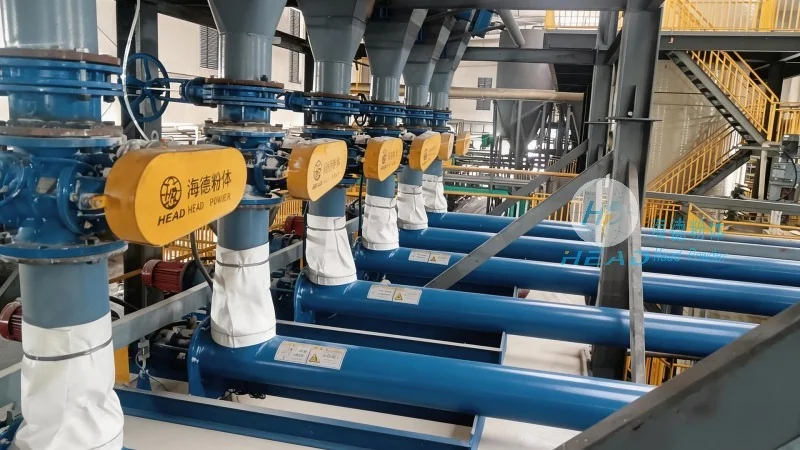
Mechanical conveying methods, including screw conveyors, chain conveyors, and belt conveyors, use mechanical power to move sodium sulphate. Screw conveyors, for instance, consist of a rotating screw inside a trough, which pushes the material forward. This method is versatile and can handle both dry and slightly moist sodium sulphate, making it suitable for horizontal or inclined transport. The main benefits include consistent flow rates and the ability to transport materials over longer distances compared to gravity systems. However, mechanical conveyors require regular maintenance to prevent wear and tear, and they may generate dust if the material is fine. For Shandong HeadPowder Engineering Co., Ltd.'s sodium sulphate, screw conveyors are commonly used in production lines to move raw material from storage to processing equipment.
3. Pneumatic Conveying Systems
Pneumatic conveying uses air or gas to transport sodium sulphate through a pipeline. This method is particularly effective for fine or dusty sodium sulphate, as it can handle materials that are difficult to convey mechanically. There are two main types: pressure and vacuum systems. Pressure systems push the material using compressed air, while vacuum systems pull it using a vacuum pump. Pneumatic conveying offers advantages such as the ability to transport materials over long distances and to integrate with existing piping systems. However, it requires more energy than mechanical or gravity systems and may cause product degradation if the material is sensitive to air exposure. For headpowder's sodium sulphate, pneumatic systems are often used in applications where dust control is critical, such as in food or pharmaceutical processing plants.

4. Hydraulic Conveying Systems
Hydraulic conveying employs water or other liquids to transport sodium sulphate, typically in a slurry form. This method is suitable for materials that are difficult to handle dry, such as very fine or cohesive sodium sulphate. The system involves mixing the material with water to create a slurry, which is then pumped through pipelines. Hydraulic conveying can handle high volumes and long distances, but it requires additional equipment for slurry preparation and separation. The main advantage is the ability to transport materials that are otherwise difficult to convey mechanically. However, it is less common for sodium sulphate due to the need for additional water management and potential environmental concerns. Shandong HeadPowder Engineering Co., Ltd. may use hydraulic systems in specialized applications where the material's properties necessitate slurry transport.
5. Combination Conveying Systems
In many industrial settings, a combination of conveying methods is used to optimize efficiency. For example, a gravity system might be used for the initial vertical lift, followed by a mechanical conveyor for horizontal transport, and a pneumatic system for final delivery. This approach allows for flexibility and can handle varying material conditions. The choice of combination depends on the specific process requirements, including the distance, height, and material characteristics. For headpowder's sodium sulphate products, combination systems are often employed in large-scale production facilities to ensure smooth and continuous operation.
Conclusion and Recommendations
Choosing the right sodium sulphate conveying method is essential for maintaining operational efficiency and product quality. Gravity systems are ideal for short distances and free-flowing materials, while mechanical systems offer versatility and longer transport capabilities. Pneumatic systems excel in handling fine or dusty materials, and hydraulic systems are suitable for slurry applications. For industrial operations, it is recommended to evaluate the material's properties, transport distance, and energy requirements before selecting a conveying method. Shandong HeadPowder Engineering Co., Ltd. provides a range of sodium sulphate products and can assist in selecting the appropriate conveying system based on specific application needs.