

Common Methods for Transporting Lithium Fluoride: Advantages and Disadvantages
When it comes to the transportation of lithium fluoride, selecting the right method is crucial for ensuring efficiency, safety, and cost-effectiveness in industrial applications. Lithium fluoride (LiF) is a chemical compound widely used in various industries, including nuclear energy, glass manufacturing, and as a flux in metallurgy. The choice of conveying method depends on factors such as the material's properties, the scale of operation, and the specific requirements of the process. This article provides a detailed comparison of common lithium fluoride conveying methods, highlighting their advantages and disadvantages, to help industry professionals make informed decisions.

1. Pneumatic Conveying Systems
Pneumatic conveying, also known as air-assisted transport, is a widely used method for moving dry powders like lithium fluoride. This technique involves transporting the material using a stream of air or gas. There are two main types: dilute-phase and dense-phase pneumatic conveying. In dilute-phase systems, the material is suspended in the air stream and transported through pipelines. Dense-phase systems, on the other hand, use higher air pressure to push the material in a more concentrated form, reducing the risk of material degradation and clogging. The primary advantage of pneumatic conveying is its ability to transport materials over long distances without the need for mechanical components like belts or buckets. It also allows for a more controlled and hygienic environment, which is particularly important for handling lithium fluoride, which can be hygroscopic and reactive under certain conditions. However, pneumatic conveying has its drawbacks. It requires a significant amount of energy to operate, as the air or gas needs to be compressed and maintained at high pressure. Additionally, the system can be prone to material degradation due to friction and abrasion, especially for abrasive materials like lithium fluoride. Moreover, the cost of installation and maintenance can be high, and the system may not be suitable for very fine powders that tend to cause blockages in the pipelines.
2. Screw Conveyors
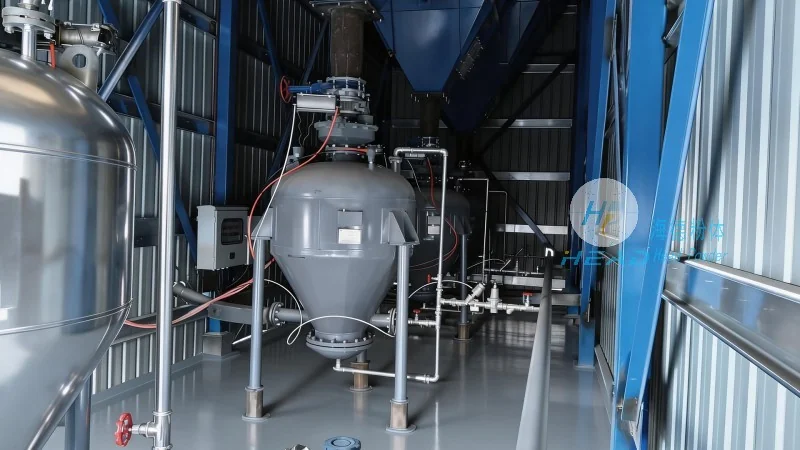
Screw conveyors, also known as auger conveyors, are another common method for transporting lithium fluoride. These systems consist of a rotating screw (auger) inside a tube or trough, which moves the material forward by rotating. Screw conveyors are particularly effective for handling bulk materials and can be used in both horizontal and inclined orientations. One of the main advantages of screw conveyors is their simplicity and reliability. They are relatively low-cost to install and maintain, and they can handle a wide range of materials, including abrasive ones like lithium fluoride. Screw conveyors also provide a continuous and uniform flow of material, which is beneficial for processes that require consistent feed rates. However, screw conveyors have limitations. They are not suitable for very fine powders or materials that are prone to clogging, as the screw can easily become blocked. The material may also experience some degree of attrition due to friction with the screw and the trough, which can affect the quality of the lithium fluoride. Additionally, screw conveyors are not ideal for long-distance transport, as the material may settle or the conveyor may become too long and inefficient. They are best suited for short to medium distances and for applications where the material is relatively free-flowing and not too abrasive.
3. Belt Conveyors
Belt conveyors are a classic and widely used method for transporting various materials, including lithium fluoride. These systems consist of a continuous belt that moves over rollers or pulleys, transporting the material from one point to another. Belt conveyors are particularly effective for handling large volumes of material and can be used in both horizontal and inclined configurations. The primary advantage of belt conveyors is their high capacity and ability to transport materials over long distances with minimal energy consumption. They are also relatively low-cost to operate and maintain, as the system is simple and robust. Belt conveyors can handle a wide range of materials, including those that are abrasive or have high moisture content. However, belt conveyors have their disadvantages. They require regular maintenance to ensure the belt remains in good condition, as the material can cause wear and tear on the belt and rollers. The system can also be prone to material spillage, especially if the belt is not properly aligned or if the material is too heavy. Additionally, belt conveyors are not suitable for very fine powders or materials that are prone to clogging, as the material may accumulate on the belt and cause blockages. The system also requires a significant amount of space for installation, which may not be feasible in some industrial settings. Overall, belt conveyors are a reliable and efficient option for transporting lithium fluoride, especially when dealing with large volumes and long distances.
4. Vacuum Conveying
Vacuum conveying is a method that uses a vacuum to draw the material from a source to a destination. This technique is particularly useful for handling fine powders like lithium fluoride, as it can minimize the risk of dust dispersion and contamination. The system typically consists of a vacuum pump, a hopper, and a conveying line. The material is drawn into the hopper and then transported through the line using the vacuum created by the pump. One of the main advantages of vacuum conveying is its ability to handle fine powders without the need for mechanical components that can cause abrasion or clogging. It also provides a more controlled and hygienic environment, as the material is contained within the system and does not come into contact with the air. The system is also relatively low-cost to operate, as it does not require high air pressure or complex machinery. However, vacuum conveying has its limitations. It is not suitable for very large volumes of material, as the vacuum pump may not be able to handle the material flow rate. The system can also be prone to material degradation due to the long residence time in the conveying line, especially for heat-sensitive materials like lithium fluoride. Additionally, the cost of installation can be high, as the system requires specialized equipment and a well-designed layout. Vacuum conveying is best suited for applications where the material is fine, and the distance to be covered is relatively short.
5. Hydraulic Conveying

Hydraulic conveying is a method that uses a liquid medium, such as water or a specific fluid, to transport the material. This technique is particularly effective for handling wet or sticky materials, but it can also be used for dry powders like lithium fluoride. The system consists of a pump that moves the liquid through a pipeline, carrying the material along with it. The primary advantage of hydraulic conveying is its ability to handle abrasive materials without causing excessive wear and tear on the system components. It also provides a high capacity and can transport materials over long distances with minimal energy consumption. The system is also relatively low-cost to operate, as the fluid can be recycled and reused. However, hydraulic conveying has its drawbacks. It requires a significant amount of fluid, which can be costly and may need to be treated and disposed of properly. The system can also be prone to material degradation due to the interaction with the liquid medium, especially for materials that are sensitive to moisture or chemicals. Additionally, the cost of installation and maintenance can be high, as the system requires specialized equipment and regular maintenance to prevent corrosion and blockages. Hydraulic conveying is best suited for applications where the material is abrasive and needs to be transported over long distances, but it is not ideal for fine powders or materials that are sensitive to moisture.
6. Comparison and Recommendations
When choosing a conveying method for lithium fluoride, it is essential to consider the specific requirements of the application. Pneumatic conveying is suitable for long-distance transport and fine powders, but it requires high energy and can cause material degradation. Screw conveyors are simple and reliable but are not suitable for fine powders or long distances. Belt conveyors are efficient for large volumes and long distances but require regular maintenance. Vacuum conveying is ideal for fine powders and controlled environments but is limited by volume and distance. Hydraulic conveying is effective for abrasive materials and long distances but requires significant fluid and maintenance. The choice of method should be based on factors such as the material's properties, the distance to be covered, the required capacity, and the available budget. For example, if the application involves transporting fine lithium fluoride over a long distance in a controlled environment, pneumatic conveying or vacuum conveying may be the best options. If the application requires handling large volumes of bulk material over short to medium distances, screw or belt conveyors may be more suitable. Ultimately, the goal is to select a conveying method that maximizes efficiency, safety, and cost-effectiveness while ensuring the quality of the lithium fluoride is maintained throughout the process.