

Common Sulfur Pellet Conveying Methods: An Introduction to Sulfur Pellet Pneumatic Conveying
When it comes to handling and transporting sulfur pellets, selecting the right conveying method is crucial for efficiency, safety, and cost-effectiveness. As a leading provider in the field, Shandong HeadPowder Engineering Co., Ltd. specializes in advanced solutions for material handling, including various sulfur pellet conveying systems. This article explores the common methods used for sulfur pellet transport and provides an overview of pneumatic conveying, a popular and effective approach.
Understanding Sulfur Pellet Conveying: Key Considerations
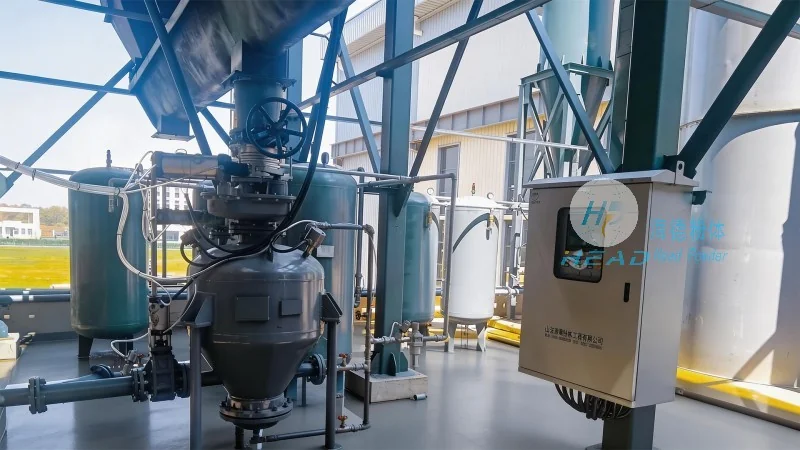
Before delving into specific conveying methods, it's essential to understand the factors that influence the choice of system. Sulfur pellets, typically produced through processes like sulfur recovery or chemical synthesis, have unique properties that affect their handling. These properties include particle size, density, moisture content, and chemical reactivity. The conveying method must be compatible with these characteristics to ensure smooth operation and prevent issues such as clogging, degradation, or dust generation. Additionally, operational requirements like distance, throughput, and environmental regulations play a significant role in determining the most suitable conveying solution.
Common Sulfur Pellet Conveying Methods
Several methods are commonly employed for sulfur pellet transport, each with its own advantages and limitations. The primary categories include mechanical conveying systems and pneumatic conveying systems. Mechanical systems, such as belt conveyors, screw conveyors, and bucket elevators, rely on physical components to move materials. These systems are often suitable for short to medium distances and moderate throughput. However, they may face challenges with sulfur pellets due to their tendency to stick or cause wear on equipment. Pneumatic conveying, on the other hand, uses air or gas to transport materials through a pipeline, offering greater flexibility and efficiency for longer distances and higher capacities.

Pneumatic Conveying: A Detailed Overview
Pneumatic conveying is a widely used method for sulfur pellet transport, especially in industrial applications where large volumes need to be moved over considerable distances. This technology involves creating a flow of air or gas within a pipeline, which carries the sulfur pellets along with it. There are two main types of pneumatic conveying: pressure and vacuum systems. Pressure systems use compressed air to push the material through the pipeline, while vacuum systems use a vacuum to draw the material from the source. The choice between these systems depends on factors like the distance to be covered, the amount of material to be conveyed, and the layout of the facility.
One of the key advantages of pneumatic conveying for sulfur pellets is its ability to handle fine or dusty materials without the need for additional equipment. The enclosed pipeline system also helps in controlling dust and preventing environmental contamination. Furthermore, pneumatic systems can be designed to operate at different pressures, allowing for customization based on specific operational needs. For example, low-pressure systems are suitable for short distances and moderate capacities, while high-pressure systems are used for longer distances and higher throughput.
Factors Influencing the Selection of a Conveying System
When selecting a sulfur pellet conveying system, several factors must be considered to ensure optimal performance. The first factor is the distance between the source and the destination. For short distances, mechanical systems like belt conveyors may be sufficient. However, for longer distances, pneumatic conveying is often the preferred choice due to its efficiency and ability to handle large volumes. The second factor is the throughput or the amount of material to be conveyed per hour. Higher throughput may require more robust systems, such as high-capacity pneumatic conveyors or multiple mechanical systems working in parallel. The third factor is the material properties, as mentioned earlier. Sulfur pellets may have varying characteristics, and the conveying system must be designed to accommodate these variations. For instance, if the pellets are prone to sticking, anti-stick coatings or special materials may be required for the conveyor components.

Another important consideration is the environmental impact and safety requirements. Pneumatic conveying systems are generally more enclosed, reducing the risk of dust exposure and environmental pollution compared to open mechanical systems. This is particularly important in industries where air quality regulations are strict. Additionally, the system must be designed to prevent the buildup of static electricity, as sulfur pellets can be prone to static discharge, which may cause sparks and fire hazards. Proper grounding and bonding of the equipment are essential to mitigate these risks.
Shandong HeadPowder Engineering Co., Ltd.: Your Partner in Sulfur Pellet Conveying Solutions
As a leading manufacturer and supplier of material handling equipment, Shandong HeadPowder Engineering Co., Ltd. offers a range of pneumatic conveying systems tailored to the specific needs of sulfur pellet producers. Our expertise lies in designing and manufacturing high-quality conveying equipment that ensures efficient, safe, and reliable transport of sulfur pellets. We understand the unique challenges associated with handling sulfur pellets and have developed solutions that address these issues effectively. Our team of engineers and technicians works closely with clients to assess their operational requirements and provide customized solutions that meet their specific needs.
Our pneumatic conveying systems are designed with durability and efficiency in mind. We use high-quality materials, such as stainless steel and corrosion-resistant alloys, to ensure long-term performance and resistance to the chemical properties of sulfur pellets. The systems are also equipped with advanced control systems that allow for precise regulation of air flow, pressure, and material flow, ensuring optimal operation. Additionally, our equipment is easy to maintain and service, reducing downtime and maintenance costs for our clients.
Shandong HeadPowder Engineering Co., Ltd. is committed to providing top-notch service and support to our clients. We offer comprehensive after-sales services, including installation, commissioning, and maintenance. Our technical support team is available to assist with any questions or issues that may arise during the operation of our conveying systems. We also provide training to our clients' staff to ensure they can operate and maintain the equipment effectively.
With our headquarters in Shandong, China, we are well-positioned to serve clients globally. Our state-of-the-art manufacturing facilities and rigorous quality control processes ensure that our products meet the highest standards. We are dedicated to delivering reliable and efficient sulfur pellet conveying solutions that help our clients improve their operational efficiency and reduce costs.