

Common Rubber Powder Conveying Methods: An Introduction to Rubber Powder Pneumatic Conveying
Rubber powder, a critical component in various industrial applications, requires efficient and reliable transportation systems to support smooth production workflows. The selection of an appropriate conveying method significantly impacts operational efficiency, material handling costs, and overall product quality. Among the diverse options available, pneumatic conveying emerges as a highly effective solution for rubber powder handling. This article explores common rubber powder conveying methods, with a particular focus on the principles and advantages of pneumatic conveying.
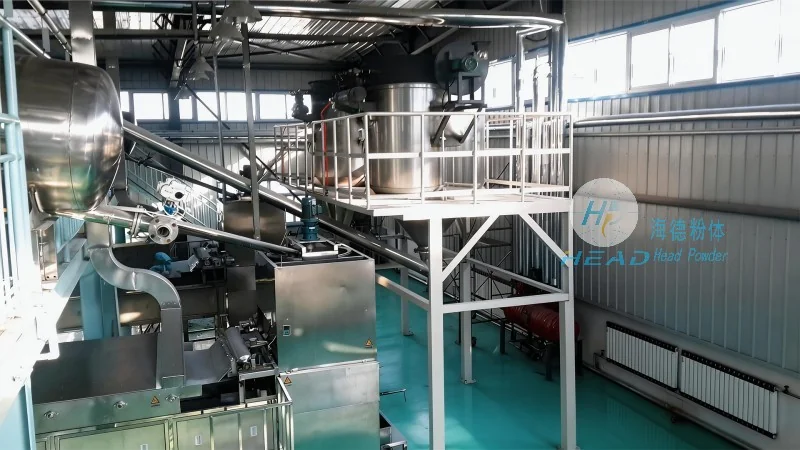
Overview of Rubber Powder Conveying Methods
Conveying rubber powder involves transporting fine particles from one location to another within industrial settings. Several methods are commonly employed, each with distinct advantages and limitations. Gravity-based systems rely on the natural downward movement of materials, making them suitable for short vertical or horizontal distances. Mechanical conveyors, such as belt or screw conveyors, utilize mechanical components to move materials. However, these systems may encounter challenges with fine powders due to issues like material buildup and clogging. Pneumatic conveying, by contrast, uses compressed air to transport materials, offering a more flexible and efficient solution for rubber powder management.
Pneumatic Conveying: A Detailed Explanation
Pneumatic conveying, also known as air conveying, is a technology that employs compressed air to move rubber powder through a pipeline. This method is widely adopted in the rubber industry due to its ability to handle fine powders without mechanical parts that can cause wear or clogging. The process typically involves a hopper or feeder that feeds the rubber powder into a pipeline, where it is carried by a stream of air. The air pressure and velocity are carefully controlled to ensure the material is transported smoothly without degradation or loss. Two primary types of pneumatic conveying systems exist: pressure and vacuum systems. Pressure systems use compressed air to push the material forward, while vacuum systems utilize a vacuum to pull the material through the pipeline. Both systems can be adapted to suit different production requirements and material characteristics.

Advantages of Pneumatic Conveying for Rubber Powder
Compared to other conveying methods, pneumatic conveying offers several key advantages that make it an ideal choice for rubber powder handling. One major benefit is its ability to handle fine and abrasive materials without causing damage or degradation. The absence of mechanical components reduces the risk of clogging and wear, leading to lower maintenance costs and longer equipment lifespan. Additionally, pneumatic systems provide precise control over material flow, enabling consistent dosing and product quality. The flexibility of pneumatic conveying also allows for the integration of multiple conveying lines, facilitating complex production workflows. Furthermore, these systems can be easily scaled to accommodate varying production volumes, making them suitable for both small-scale and large-scale operations.
Applications in Rubber Powder Processing

Pneumatic conveying is extensively utilized in various stages of rubber powder processing. In raw material handling, it efficiently transports rubber powder from storage silos to processing equipment. During mixing and compounding, pneumatic systems ensure uniform distribution of rubber powder, contributing to consistent product properties. In the final packaging phase, pneumatic conveying can transfer rubber powder into containers or bags. The ability to handle fine powders without segregation or loss makes it particularly valuable in applications where material quality is critical, such as in the production of rubber compounds for tires, seals, and other industrial products.
Considerations for Implementing Pneumatic Conveying Systems
When implementing pneumatic conveying systems for rubber powder handling, several factors must be considered. The first is the material characteristics of the rubber powder, including particle size, density, and moisture content. These factors influence the selection of appropriate air velocity and pressure to prevent material degradation or blockages. The system design must also account for the distance and layout of the conveying line, as longer distances may require additional air pressure or intermediate boosters. Maintenance and cleaning are critical, as fine powders can accumulate in pipelines and affect performance. Regular cleaning and inspection are necessary to ensure efficient and reliable operation. Additionally, the choice of materials for the pipeline and components is important to prevent corrosion or wear from abrasive rubber powder.
Conclusion
In conclusion, pneumatic conveying is a highly effective and versatile method for rubber powder transportation. Its ability to handle fine, abrasive materials with minimal wear and clogging makes it a preferred choice in the rubber industry. By understanding the principles and advantages of pneumatic conveying, manufacturers can optimize their material handling processes, improve operational efficiency, and maintain consistent product quality. As the demand for efficient and reliable conveying solutions grows, pneumatic systems remain a key technology in rubber powder processing. Shandong HeadPowder Engineering Co., Ltd., a leading provider in this field, specializes in designing and manufacturing advanced pneumatic conveying systems tailored to the specific needs of rubber powder processing. With a focus on innovation and quality, HeadPowder ensures its solutions meet the highest standards of performance and reliability, supporting the success of its clients in the competitive rubber industry.