

Comparison of Common Dry Powder Conveying Methods: Advantages and Disadvantages
For industrial operations involving the handling of dry powders, selecting the appropriate conveying method is crucial for efficiency, cost-effectiveness, and safety. Various technologies are available, each with distinct characteristics that make them suitable for different applications. This article provides a detailed comparison of common dry powder conveying methods, highlighting their advantages and disadvantages, to assist in informed decision-making for material handling systems.
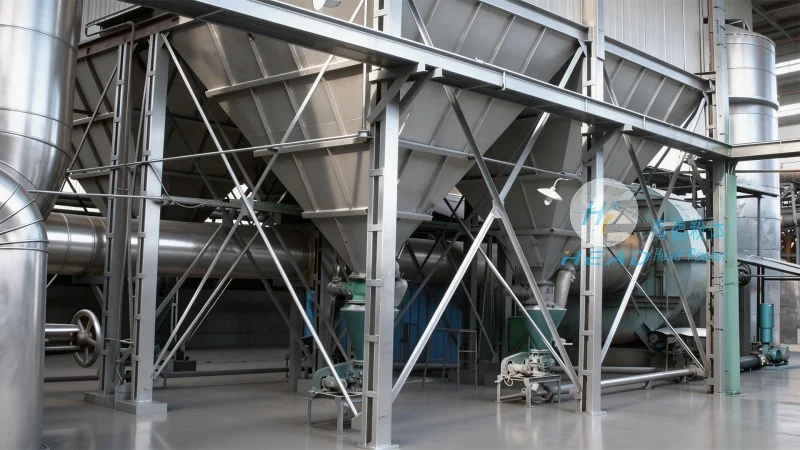
Introduction to Dry Powder Conveying
Dry powder conveying is a critical process in industries such as pharmaceuticals, food processing, chemicals, and mining. The goal is to transport bulk dry powders from one location to another without degradation, contamination, or loss. Different conveying methods are employed based on factors like material properties, distance, volume, and environmental considerations. Understanding the pros and cons of each method helps in selecting the most suitable solution for specific operational needs.
Company Profile: Shandong HeadPowder Engineering Co., Ltd.
Shandong HeadPowder Engineering Co., Ltd., a leading provider of material handling solutions, specializes in designing and manufacturing efficient dry powder conveying systems. With a focus on innovation and customer-centric solutions, the company serves a wide range of industries, ensuring reliable and cost-effective material transport. Based in Shandong, China, HeadPowder Engineering leverages advanced technology and expertise to deliver high-quality conveying equipment tailored to client requirements.
1. Pneumatic Conveying Systems
Pneumatic conveying, also known as air conveying, is a widely used method for transporting dry powders. It involves the use of air or other gases to move material through a pipeline. There are two main types: pressure and vacuum systems. Pressure systems use compressed air to push the material, while vacuum systems use suction to draw it. This method is ideal for applications requiring high speed, low maintenance, and the ability to handle fine powders. However, it has limitations, such as higher energy consumption and potential for material degradation due to friction and particle separation.
Advantages of Pneumatic Conveying

One of the primary advantages of pneumatic conveying is its ability to transport powders over long distances with minimal equipment. It can handle a wide range of particle sizes and shapes, making it suitable for diverse materials. The system is also relatively compact and can be integrated into existing facilities. Additionally, it offers flexibility in routing, allowing for changes in the conveying path without major modifications. Pneumatic conveying is particularly effective for applications where dust control is critical, as the material is contained within the pipeline.
Disadvantages of Pneumatic Conveying
Despite its benefits, pneumatic conveying has several drawbacks. The most significant is its high energy consumption, as it requires continuous air flow to maintain pressure or vacuum. This leads to higher operational costs, especially for large-scale operations. Another disadvantage is the potential for material degradation, particularly for heat-sensitive or fragile powders, due to friction and particle impact within the system. Furthermore, the system can be prone to blockages if the material is too fine or has high moisture content, requiring regular maintenance and cleaning. Additionally, the cost of installation and maintenance can be substantial, especially for complex systems with multiple branches.
2. Screw Conveyors
Screw conveyors, also known as auger conveyors, are mechanical devices that use a rotating screw to move dry powders. The screw, which is typically made of stainless steel or other corrosion-resistant materials, is enclosed in a tube or trough. As the screw rotates, it pushes the material forward, similar to an Archimedes screw. This method is commonly used for short to medium distances and is suitable for handling a variety of materials, including bulk solids and powders.
Advantages of Screw Conveyors
Screw conveyors offer several advantages, including low energy consumption and simple design. They are relatively inexpensive to install and maintain, making them a cost-effective solution for many applications. The system is also enclosed, which helps in dust control and preventing material loss. Additionally, screw conveyors can handle a wide range of materials, including those with high moisture content or abrasive properties. They are also suitable for vertical lifting, allowing for elevation changes without the need for additional equipment.

Disadvantages of Screw Conveyors
However, screw conveyors have limitations that must be considered. The primary drawback is their limited capacity for fine powders, as the screw can cause particle separation and segregation. This can lead to uneven material flow and potential blockages. Another disadvantage is the risk of material degradation due to friction and heat generation, especially for heat-sensitive materials. Additionally, the system may not be suitable for long-distance transport, as the material can degrade or the conveyor may become too long and inefficient. Maintenance is also required for the screw and bearings, which can be costly over time.
3. Belt Conveyors
Belt conveyors are another common method for transporting dry powders, particularly in bulk handling applications. They consist of a continuous belt that moves over rollers or pulleys, transporting the material from one point to another. The belt is typically made of rubber or other durable materials and can be customized to handle various particle sizes and weights. Belt conveyors are widely used in industries such as mining, agriculture, and manufacturing.
Advantages of Belt Conveyors
Belt conveyors offer high capacity and efficiency, making them suitable for large-scale operations. They can transport materials over long distances with minimal energy consumption compared to pneumatic systems. The system is also relatively simple and easy to maintain, with fewer moving parts compared to other methods. Additionally, belt conveyors can handle a wide range of materials, including heavy and abrasive powders, without causing significant wear. They are also suitable for vertical lifting and can be integrated with other equipment, such as feeders and sorters.
Disadvantages of Belt Conveyors
Despite their advantages, belt conveyors have several drawbacks. The primary limitation is their susceptibility to material spillage and dust generation, especially when transporting fine powders. This can lead to environmental issues and contamination risks. Another disadvantage is the need for regular maintenance, particularly for the belt and rollers, which can be costly and time-consuming. Additionally, belt conveyors may not be suitable for applications requiring high precision or low dust levels, as the system can cause particle segregation and uneven flow. The initial cost of installation can also be high, especially for long or complex systems.
4. Hydraulic Conveying
Hydraulic conveying uses a liquid medium, typically water or oil, to transport dry powders. The material is mixed with the liquid to form a slurry, which is then pumped through a pipeline. This method is commonly used for transporting materials over long distances, particularly in mining and construction applications. Hydraulic conveying is particularly effective for handling coarse and abrasive materials that are difficult to transport by other methods.
Advantages of Hydraulic Conveying
One of the main advantages of hydraulic conveying is its ability to transport materials over long distances with high efficiency. The system can handle large volumes of material and is suitable for applications requiring high capacity. Additionally, it can transport materials with high moisture content or high abrasiveness without causing significant wear or degradation. The system is also relatively simple and easy to maintain, with fewer moving parts compared to pneumatic systems. Hydraulic conveying is also cost-effective for long-distance transport, as it requires less energy compared to pneumatic systems.
Disadvantages of Hydraulic Conveying
However, hydraulic conveying has several limitations. The primary drawback is the need for a liquid medium, which can lead to environmental concerns and the need for additional treatment systems to manage the slurry. The system is also prone to clogging and blockages, especially if the material is too fine or has high moisture content. Additionally, the equipment required for hydraulic conveying is more complex and expensive compared to other methods. Maintenance is also required for the pumps and pipelines, which can be costly and time-consuming. Furthermore, the system may not be suitable for applications requiring low dust levels or precise material handling.
Conclusion
Selecting the appropriate dry powder conveying method depends on various factors, including material properties, distance, volume, and operational requirements. Pneumatic conveying offers high speed and flexibility but has higher energy costs. Screw conveyors are cost-effective and simple but have limitations for fine powders. Belt conveyors provide high capacity and efficiency but may cause dust and spillage. Hydraulic conveying is suitable for long-distance transport of coarse materials but requires a liquid medium and more complex equipment. Understanding these advantages and disadvantages is crucial for selecting the most suitable conveying system for specific industrial applications. Shandong HeadPowder Engineering Co., Ltd. provides expert guidance and customized solutions to help clients choose the right conveying method for their needs, ensuring efficient and reliable material handling.