

Comparison of Common Chromium(III) Oxide Transport Methods
When handling Chromium(III) oxide, selecting the appropriate transport method is crucial for ensuring safety, efficiency, and product integrity. This article provides a detailed comparison of common transport methods used in industrial applications, focusing on the key factors that influence the choice of each method. The information is presented by Shandong HeadPowder Engineering Co., Ltd., a leading supplier in the field, with a focus on practical considerations for industrial users.

Key Factors Influencing Transport Method Selection
Before delving into specific transport methods, it is essential to understand the key factors that influence the selection process. These factors include the physical properties of the material, such as particle size, density, and moisture content, as well as operational requirements like distance, throughput, and environmental regulations. The choice of transport method must align with these factors to ensure optimal performance and compliance with safety standards.
Pipeline Transport for Chromium(III) Oxide
Pipeline transport is a widely used method for moving Chromium(III) oxide, especially in applications where the material is in a liquid or slurry form. This method involves pumping the material through a closed system of pipes, which can be made of materials like stainless steel or polyethylene to prevent corrosion. The primary advantage of pipeline transport is its ability to handle high volumes of material over long distances with minimal loss. However, it requires a significant initial investment in infrastructure and is less flexible for changing flow rates. Shandong HeadPowder Engineering Co., Ltd. specializes in designing and implementing pipeline systems tailored to the specific needs of clients, ensuring reliable and efficient transport of Chromium(III) oxide.
Air-Driven Pneumatic Conveying

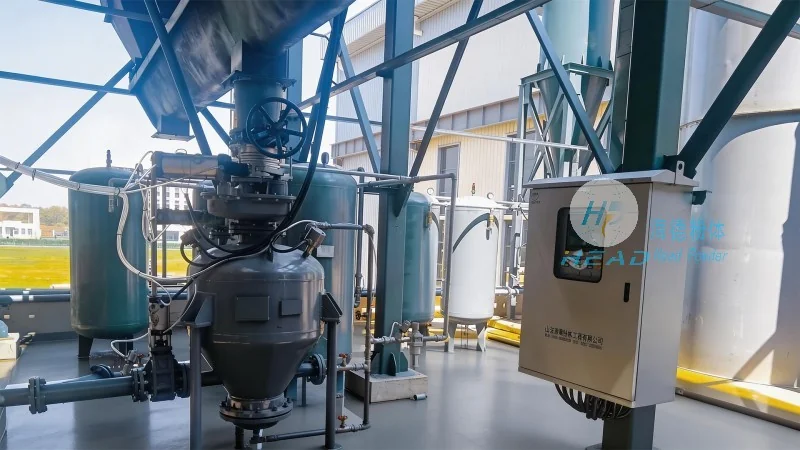
Air-driven pneumatic conveying is another common method for transporting Chromium(III) oxide, particularly when the material is in a dry powder form. This technique uses compressed air to move the powder through a pipeline, creating a flow that carries the material from the source to the destination. The advantages of pneumatic conveying include high flexibility, as it can be easily adjusted to accommodate changes in production rates, and the ability to transport materials over relatively long distances without the need for complex infrastructure. However, it may not be suitable for very fine powders, as they can cause blockages or degrade the conveying system. The efficiency of this method depends on the particle size distribution and the air pressure used, making it essential to optimize these parameters for consistent performance.
Mechanical Conveying Systems
Mechanical conveying systems, such as belt conveyors, screw conveyors, and bucket elevators, are also used for transporting Chromium(III) oxide. These systems rely on mechanical components to move the material, often in a bulk or granular form. Belt conveyors are particularly effective for transporting larger particles or bulk quantities over short to medium distances. Screw conveyors are ideal for handling materials with a moderate flow rate and are commonly used in processing plants. Bucket elevators are suitable for vertical transport, allowing materials to be lifted to higher levels. The main advantages of mechanical conveyors are their simplicity and low maintenance costs. However, they may not be as efficient for fine powders and can generate dust, which requires proper ventilation and dust control measures. Shandong HeadPowder Engineering Co., Ltd. offers a range of mechanical conveying solutions that are designed to handle the specific characteristics of Chromium(III) oxide, ensuring safe and reliable operation.
Comparison of Transport Methods
When comparing the different transport methods for Chromium(III) oxide, several factors must be considered. Pipeline transport is generally the most efficient for high-volume, long-distance transport but requires significant capital investment. Pneumatic conveying offers flexibility and is suitable for dry powders but may have limitations with fine particles. Mechanical conveyors are cost-effective and simple to operate but may not be as efficient for fine powders and can generate dust. The choice of method ultimately depends on the specific application, material properties, and operational requirements. For example, a chemical plant producing large quantities of Chromium(III) oxide over long distances may opt for pipeline transport, while a smaller facility handling dry powders may prefer pneumatic conveying. Shandong HeadPowder Engineering Co., Ltd. provides expert advice and customized solutions to help clients select the most appropriate transport method for their needs.
Conclusion
In conclusion, the selection of a transport method for Chromium(III) oxide is a critical decision that impacts operational efficiency, safety, and cost. By understanding the advantages and limitations of each method, industrial users can make informed choices that align with their specific requirements. Shandong HeadPowder Engineering Co., Ltd. is committed to providing high-quality transport solutions and technical support to ensure the safe and efficient handling of Chromium(III) oxide in various industrial applications.